Lifetime VPS Europe
 Lifetime VPS Asia
 Lifetime WooCommerce Hosting
 Lifetime Hosting
 Lifetime Game Dedicated Servers
 Chicago, US
 Tokyo, Japan
 Singapore
 Hong Kong
 Seoul, South Korea
 Amsterdem, Netherlands
 London, UK
 Stockholm, Sweden
 Oslo, Norway
 Vienna, Austria
 Zurich, Switzerland
 Sydney, Australia
 Wordpress Hosting
 VPS Hosting
 DDOS Protection
 Submit Ticket
 Full Management
 Guides
 Videos and Podcasts
 Discover Creative Ideas
 Voxfor Autonomous AI Workers
 Voxfor Mega Menu
 Voxfor Advanced Price Management For WooCommerce
 Voxfor Secure Live Chat and AI Support
 Voxfor Multilanguage
 Voxfor AI Content Summary
 Voxfor Autopilot

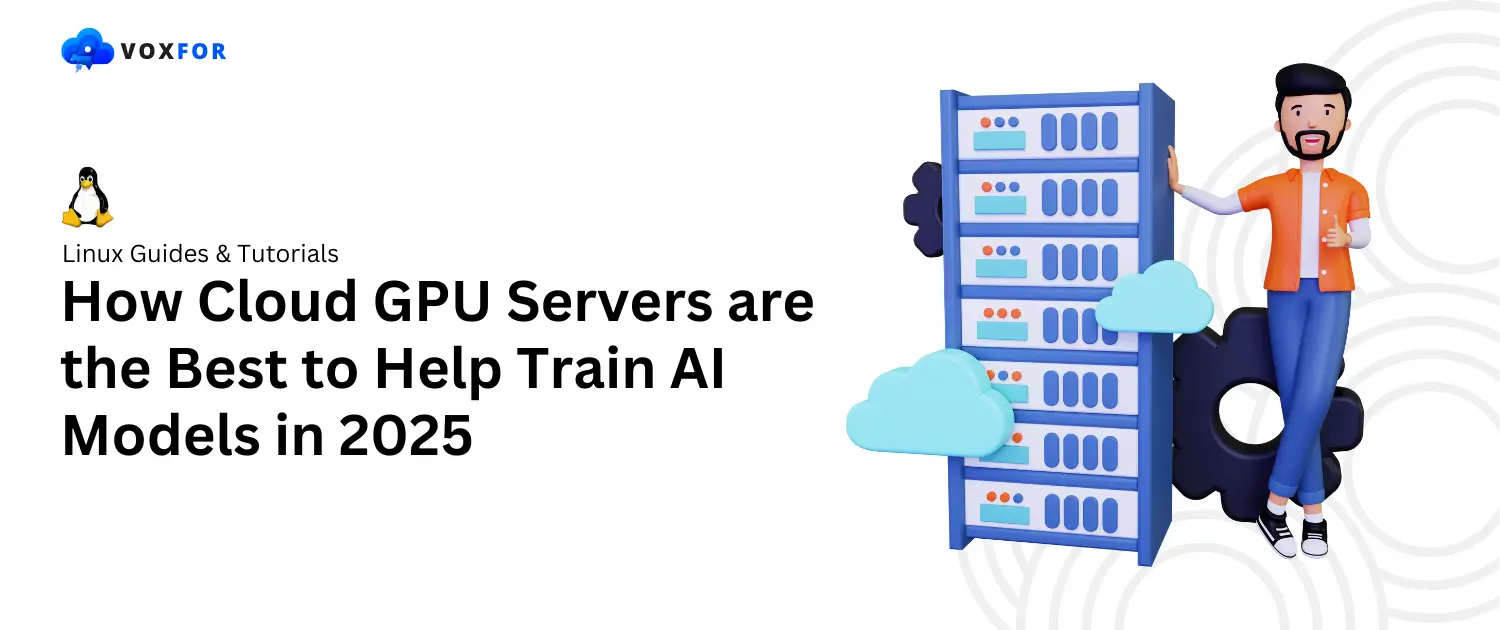
The rise of data-intensive applications and artificial intelligence (AI) has fueled the demand for high-performance computing resources. Virtual GPUs (vGPUs) are revolutionary for providing scalable, efficient, and cost-effective computational power. By virtualizing GPU hardware, businesses can run demanding applications in the cloud without investing in expensive infrastructure.
This guide explores how vGPUs drive real business success, particularly in AI-driven workflows, and highlights practical strategies for incorporating them virtually.

1. What Are Virtual GPUs?
A Virtual GPUs (vGPU) enables multiple virtual machines to share a single physical GPU. This technology allows for the advantages of GPUs for computation at the architectural level and grants access to them as needed on the cloud platforms.
Key Features:
- Resource Sharing: Partition of a single GPU into multiple instances for diverse tasks.
- Seamless Integration: Works with major cloud platforms like AWS, Azure, and Google Cloud.
- Dynamic Allocation: Allocate resources flexibly based on workload demands.
For AI-driven organizations, this allows for neural network training, high-quality rendering, and complex analysis with unrivaled flexibility.
2. Core Benefits of Virtual GPUs
2.1 Scalability and Cost Efficiency
vGPUs eliminate the need for costly on-premise GPU hardware by enabling a pay-as-you-go model. Organizations can scale resources as needed.
2.2 Increased Performance
From AI training to real-time simulations, vGPUs deliver the computational power required for the most demanding applications.
2.3 Flexibility for Remote Work
vGPUs enable global teams to access high-performance resources from anywhere, supporting seamless collaboration.
2.4 AI Integration
vGPUs are helpful for image processing, language models, and predictive analyses; hence, vGPUs are essential tools for any organization adopting AI.
3. AI Applications of vGPUs
Virtual GPUs are critical for driving AI and using ML applications forward. They enhance AI model training by offering adequate service for parallel processing.
3.1 AI Model Training and Inference
vGPUs help train deep learning models more quickly, thus fastening iteration cycles. They are equally effective in those areas, such as inferences that involve the production of predictions in real time by trained models.
3.2 Computer Vision
Everything from self-driving cars to diagnostic imaging utilizes vGPUs to manage the volume of real-time image computation and analysis dimly.
3.3 Natural Language Processing (NLP)
GPU-based tools include End-user applications such as chatbots, virtual assistants, and sentiment analysis, all of which require GPUs to handle large data sets.
3.4 Generative AI
Technologies like GPT-4 and Stable Diffusion benefit from vGPUs’ ability to handle complex neural networks, creating art, Text, or simulations.
4. GPU-Driven Cloud Solutions
Cloud-based GPU solutions have become essential For businesses in the digital age. They provide the foundation for deploying and scaling innovative solutions across industries.
4.1 Multi-Cloud Strategies
vGPUs in cloud environments enable new multi-cloud strategies that provide better performance for enterprise applications at a lower cost.
4.2 Edge AI
As edge computing gains traction, vGPUs are crucial for real-time processing in IoT devices and autonomous systems.
4.3 Hybrid GPU Deployments
Some organizations adopt hybrid GPU models, combining on-premise and cloud GPU resources for maximum flexibility.
5. Case Studies: Business Impact of vGPUs
Case Study 1: AI Startups
A startup company using Artificial Intelligence employed vGPUs to train computationally intensive natural language models, cutting computer expenses in half while delivering superior performance.
Case Study 2: Gaming Industry
A game development company adopted vGPUs for real-time rendering during game testing. This improved rendering speed by 35% and provided scalability for multiplayer server loads.
Case Study 3: Healthcare
The machine learning applied diagnostic tool was successfully implemented in a hospital system on cloud vGPUs, thus enhancing the possible detection of critical illnesses.
6. Future Trends in vGPU Technology
6.1 Advanced AI Workloads
As AI models become more complex, vGPUs will evolve to handle these next-generation workloads.
6.2 Edge Integration
vGPUs will continue to be extended to edge computing, which brings the power of GPUs closer to the data.
6.3 Energy Efficiency
Cloud providers are concerned with delivering energy-efficient vGPUs that meet sustainable living standards globally.
6.4 AI-Optimized GPUs
Expect innovations like GPUs specifically designed to accelerate AI tasks, further enhancing the performance of vGPU solutions.
7. Optimizing vGPU Usage
7.1 Choosing the Right Platform
Make a cost and performance analysis considering the GPU’s ability to integrate with other systems and expense. AWS, Azure, and Google Cloud have firm GPU support from the cloud platforms.
7.2 Monitoring Resource Utilization
Regularly monitor GPU usage to provide optimal performance. Use tools that allow real-time tracking and adjustment of resources.
7.3 Enhancing Security
Ensure your cloud environment is secure by following best practices like HTTPS redirection and VPNs.
7.4 Leveraging Automation
Automate resource allocation and scaling with platforms like Coolify to simplify workflows.
- Related Link: Install and Set Up Coolify on Voxfor Lifetime VPS
Conclusion
Cloud vGPU is a revolutionary technology for business models that desire to transform and grow their operations. For applications requiring high-end computing power, such as handling artificial intelligence models, massive data analyses, or running demanding applications, vGPUs are the answer to today’s requirements.
Businesses can unlock new growth opportunities by leveraging vGPU technology and combining it strategically. Explore how cloud-based vGPUs can revolutionize your workflows today.
About the writer

Vinayak Baranwal wrote this article. Use the provided link to connect with Vinayak on LinkedIn for more insightful content or collaboration opportunities.