Lifetime VPS Europe
 Lifetime VPS Asia
 Lifetime WooCommerce Hosting
 Lifetime Hosting
 Lifetime Game Dedicated Servers
 Chicago, US
 Tokyo, Japan
 Singapore
 Hong Kong
 Seoul, South Korea
 Amsterdem, Netherlands
 London, UK
 Stockholm, Sweden
 Oslo, Norway
 Vienna, Austria
 Zurich, Switzerland
 Sydney, Australia
 Wordpress Hosting
 VPS Hosting
 DDOS Protection
 Submit Ticket
 Full Management
 Guides
 Videos and Podcasts
 Discover Creative Ideas
 Cybersecurity Services
 Voxfor Mega Menu
 Voxfor Advanced Price Management For WooCommerce
 Voxfor Secure Live Chat and AI Support
 Voxfor Multilanguage
 Voxfor AI Content Summary
 Voxfor Autopilot
Security
nft --check Is Not the Whole Firewall Reload Test
nft --check accepted the candidate ruleset reproduced for this article and left the active stateless ruleset hash unchanged. That was only the…

Securing data encryption methods, we delve into the strategies and technologies designed to safeguard your online presence and assets. Stay informed, stay secure.
nft --check accepted the candidate ruleset reproduced for this article and left the active stateless ruleset hash unchanged. That was only the…
Which server will ssh app-prod actually contact? The answer is not necessarily the last Host block you remember editing. OpenSSH may combine…
Successful admission is the wrong place to stop an NGINX mutual TLS test. The useful proof is the three-outcome contract around that…
visudo -c can return “parsed OK” for a rule that authorizes more than its reviewer intended. That is not a parser defect.…
SMB signing can be supported on both endpoints and still not be required. That distinction matters because a policy screen that says…
An OK result from systemd-analyze security is not proof that a daemon is safe, and an EXPOSED result is not proof that…
dkim=fail (body hash did not verify) is not a generic instruction to replace a DNS record. It means the receiver canonicalized the…
Changing an age recipient in SOPS is an access migration, not a one-command key swap. A safe rotation keeps the existing identity…
Rotating WordPress security salts has one precise security effect: cookies and nonces created with the old secrets stop validating. That can end…
AIDE can tell you that a Linux file changed, but it cannot tell you whether the change was malicious, approved, or already…
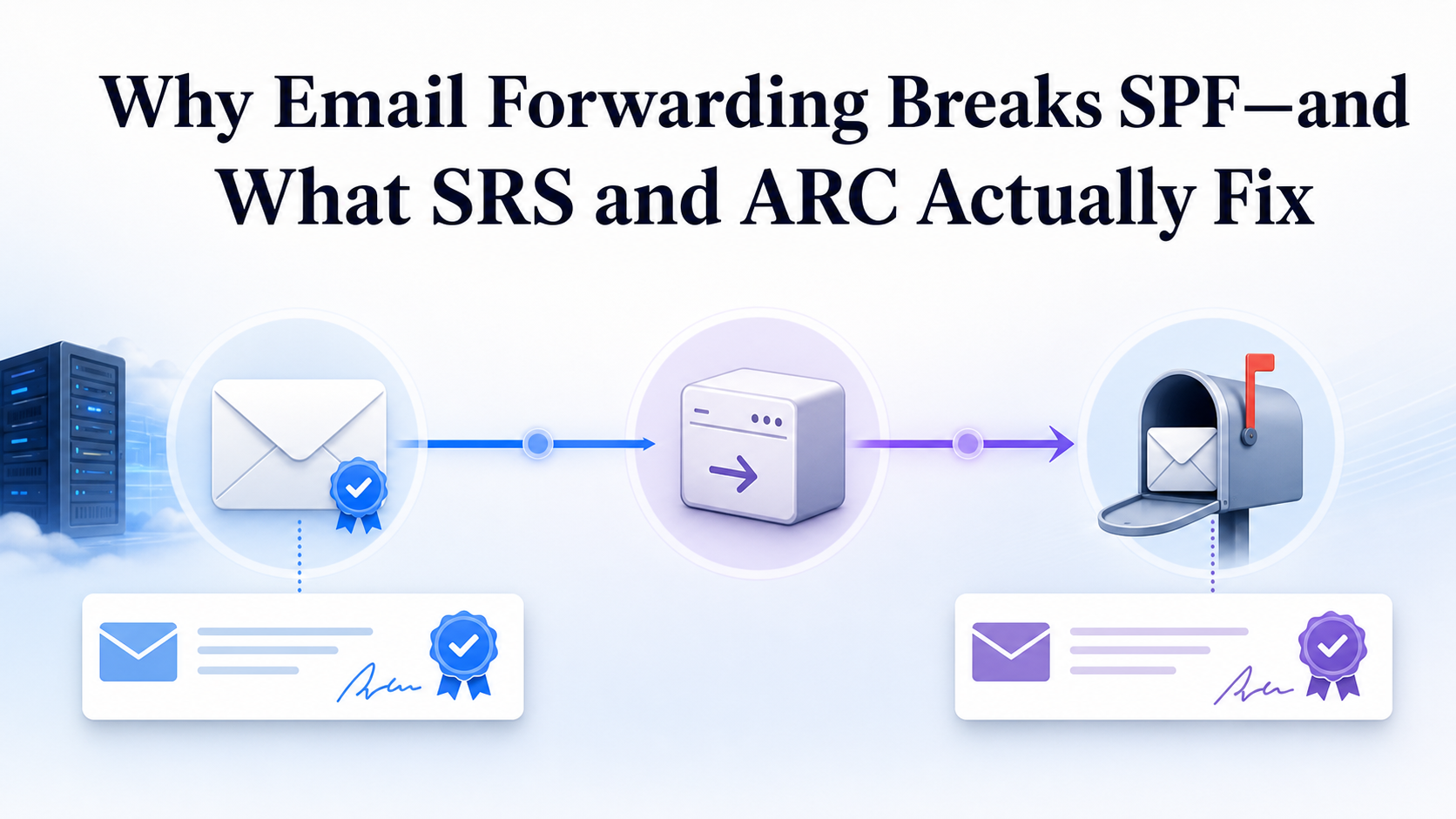
Email forwarding creates a second SMTP delivery. The original sender connected to the forwarding provider, then the forwarding provider connected to the…
An absent CAA record is valid. A failed CAA lookup is not. When an ACME order reports SERVFAIL looking up CAA, the…
A correct public key can sit in the expected authorized_keys file while OpenSSH still rejects it. With StrictModes yes, sshd checks ownership…
A successful renewal proves that a certificate authority issued a new certificate and that some file or certificate store changed. It does…
When auditctl -s shows a larger lost value than the previous sample, the Linux Audit trail already has a gap. Those discarded…
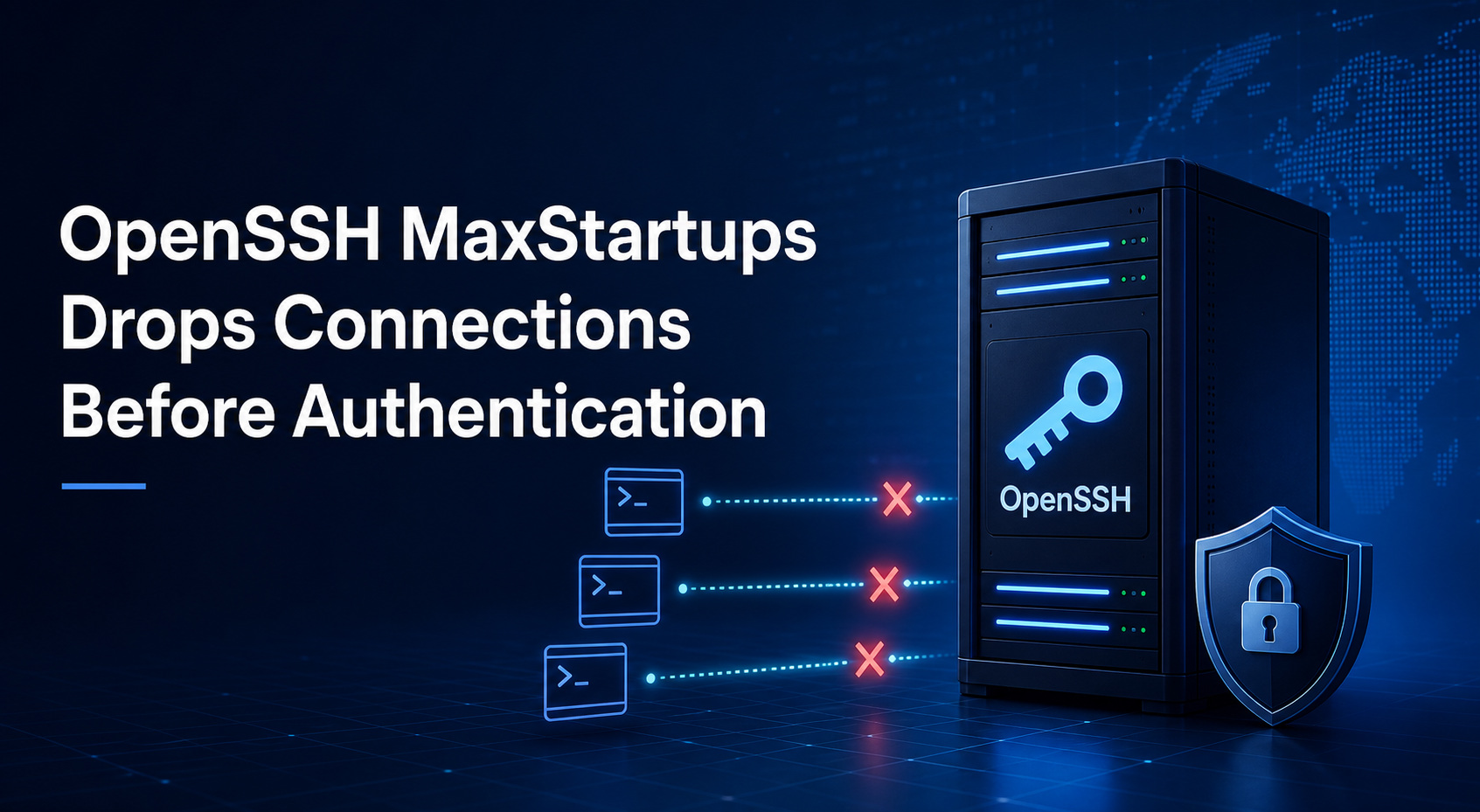
kex_exchange_identification: read: Connection reset by peer does not prove an SSH password, key or account problem. When the server log also reports…
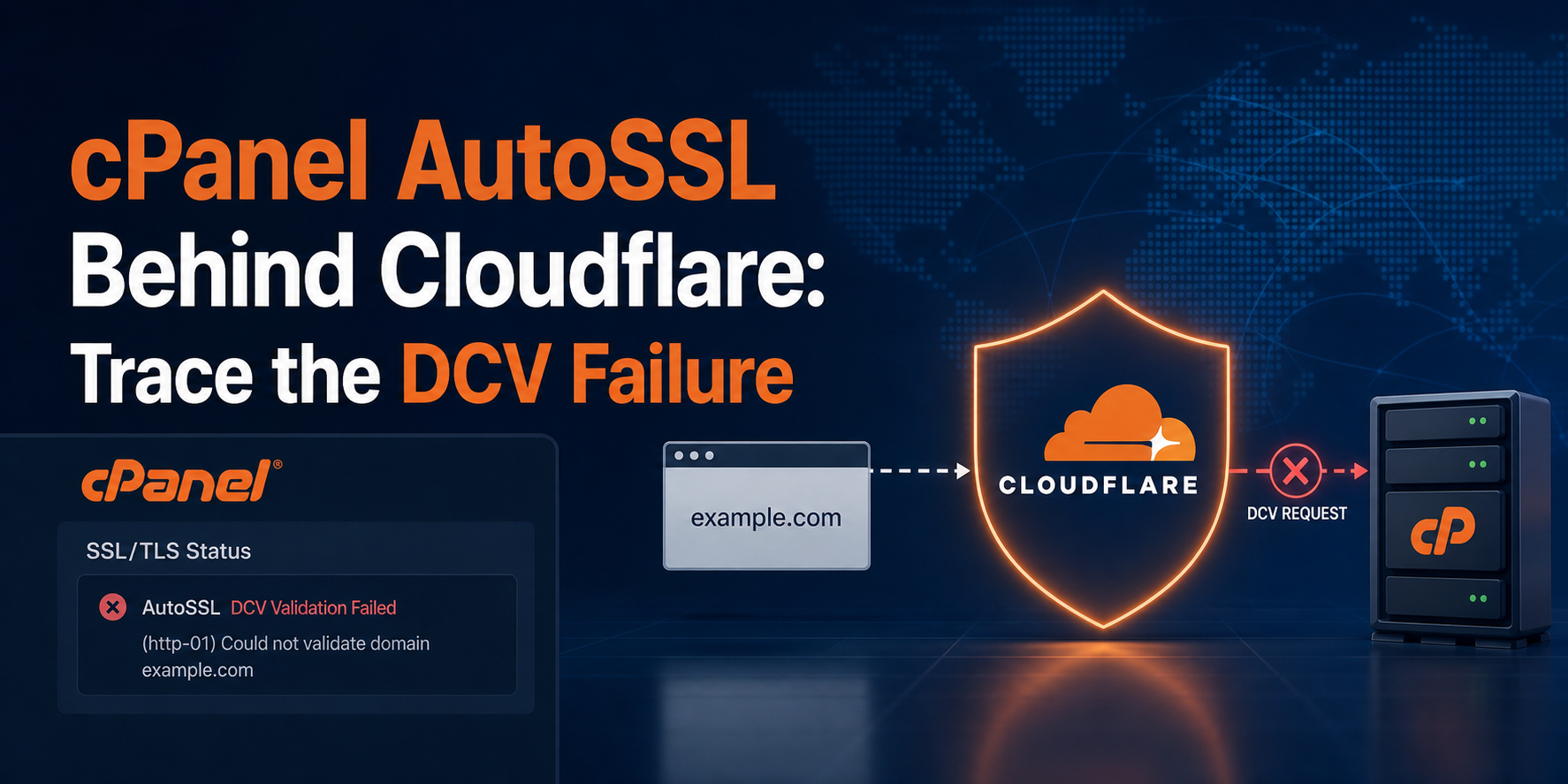
cPanel AutoSSL does not fail “because of Cloudflare” as one indivisible problem. A failed run means one requested hostname could not prove…
A Fail2ban ban can look successful while blocking nothing. Behind Cloudflare or another reverse proxy, the web server may receive the proxy…
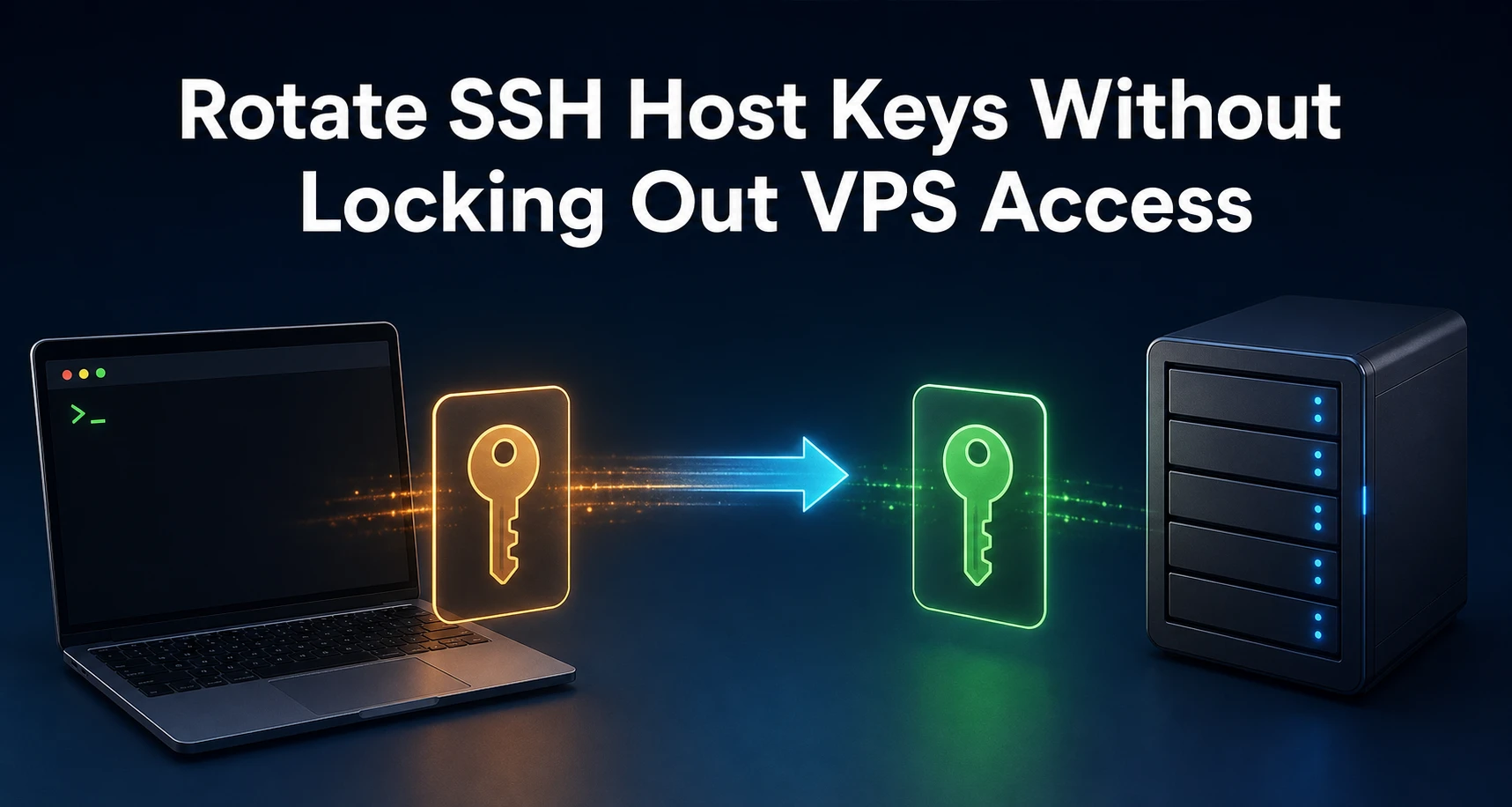
Do not overwrite active SSH host-key files in one step. Generate replacement keys under new filenames, load old and new identities together,…
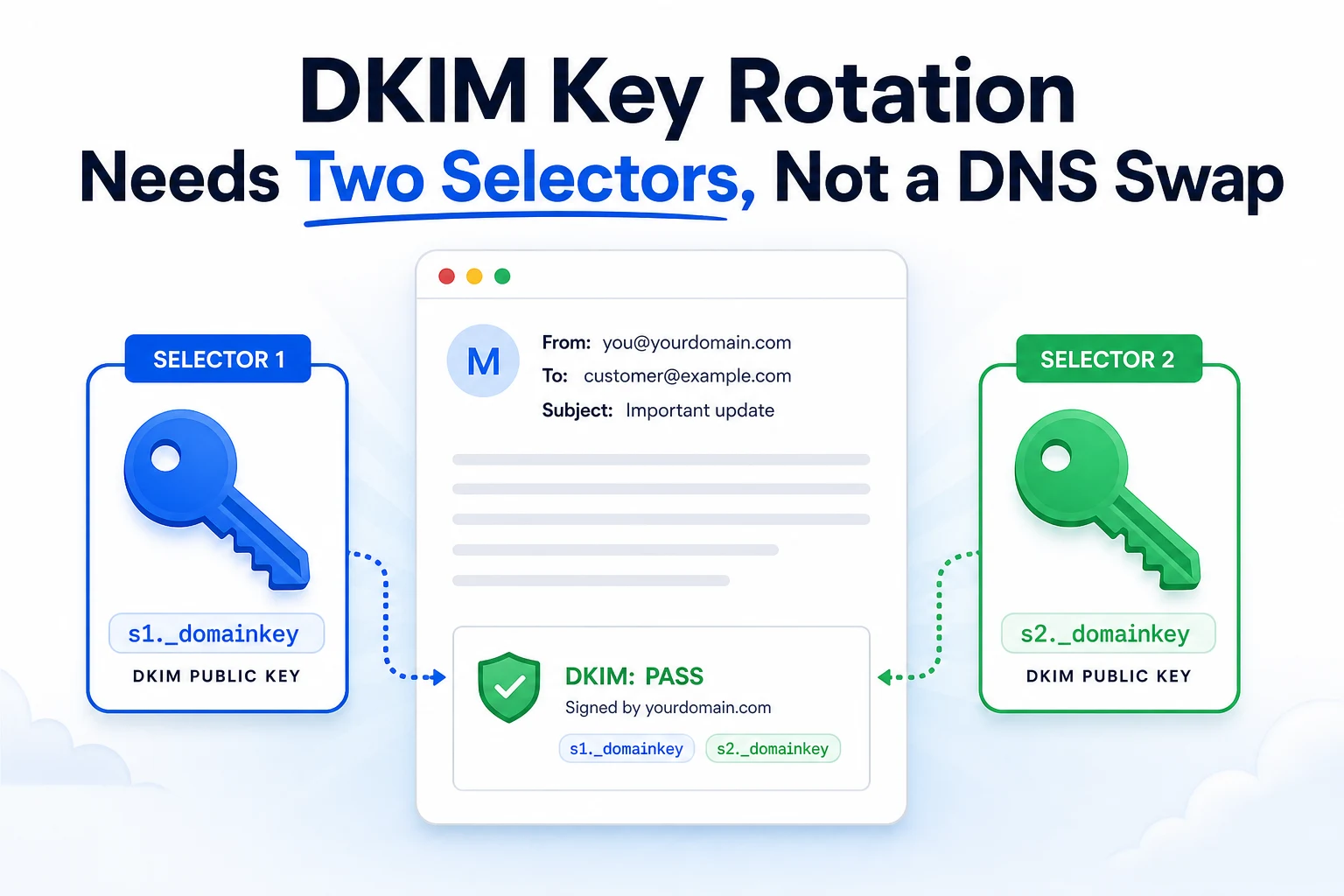
A safe DKIM key rotation is an overlap between two selector names, not an in-place replacement of one DNS value. Publish and…
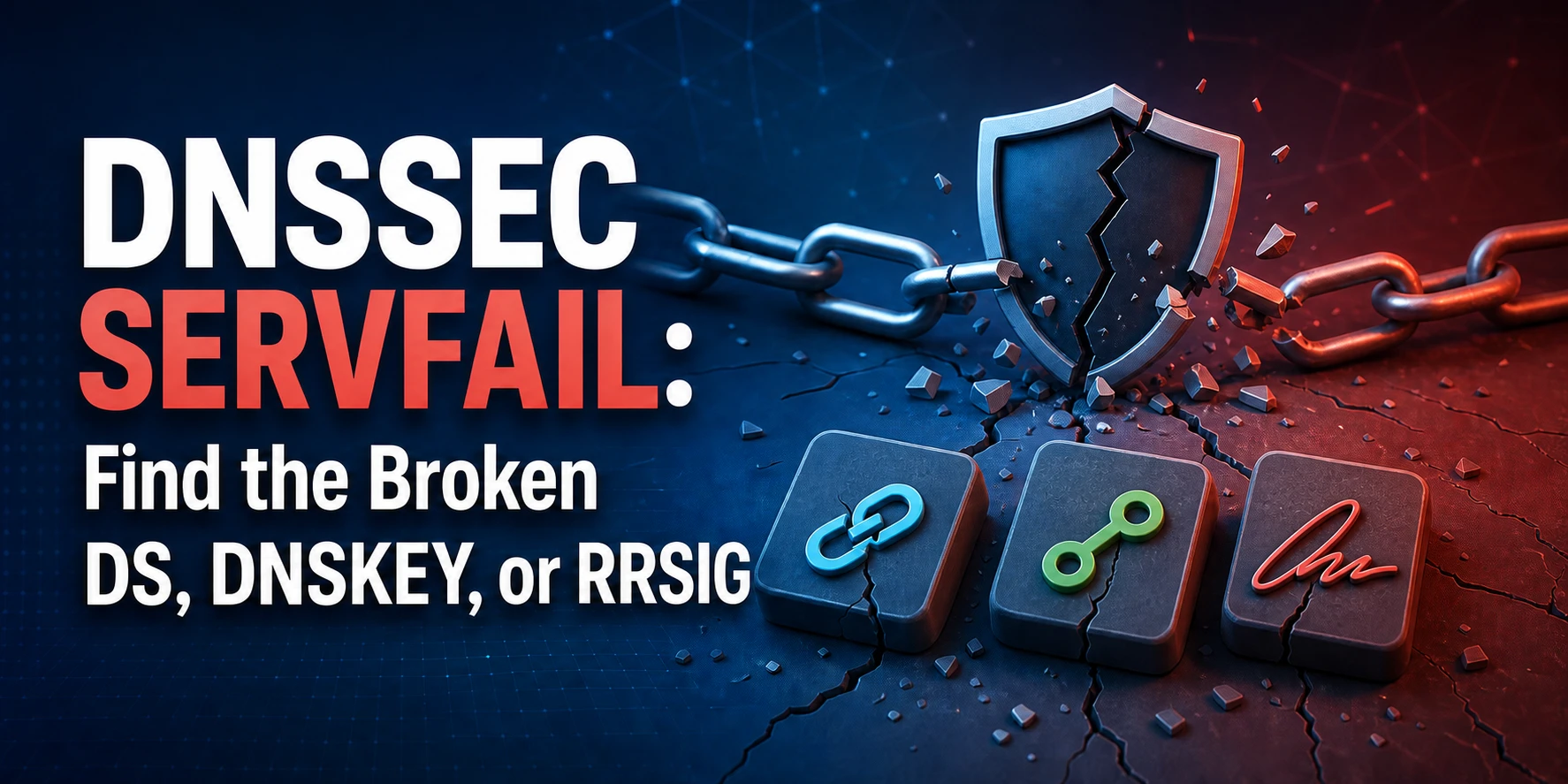
SERVFAIL is frustrating because it names a result, not an owner. The fastest useful split is a paired query against the same…