 Lifetime VPS Europe
 Lifetime VPS Asia
 Lifetime WooCommerce Hosting
 Lifetime Hosting
 Lifetime Game Dedicated Servers
 Chicago, US
 Tokyo, Japan
 Singapore
 Hong Kong
 Seoul, South Korea
 Amsterdem, Netherlands
 London, UK
 Stockholm, Sweden
 Oslo, Norway
 Vienna, Austria
 Zurich, Switzerland
 Sydney, Australia
 Wordpress Hosting
 VPS Hosting
 DDOS Protection
 Submit Ticket
 Full Management
 Guides
 Videos and Podcasts
 Discover Creative Ideas
 Voxfor Autonomous AI Workers
 Voxfor Mega Menu
 Voxfor Advanced Price Management For WooCommerce
 Voxfor Secure Live Chat and AI Support
 Voxfor Multilanguage
 Voxfor AI Content Summary
 Voxfor Autopilot

Strategic internal link hierarchies transform websites from disconnected content into authoritative ecosystems. Pillar-cluster content models combined with quality backlinks doubled client website traffic in three months, while well-structured hierarchies improve SEO performance by 5-10% according to documented case studies. 94% of clicks go to organic search results, making hierarchical organization critical for capturing that traffic.
Why Internal Link Hierarchy Matters
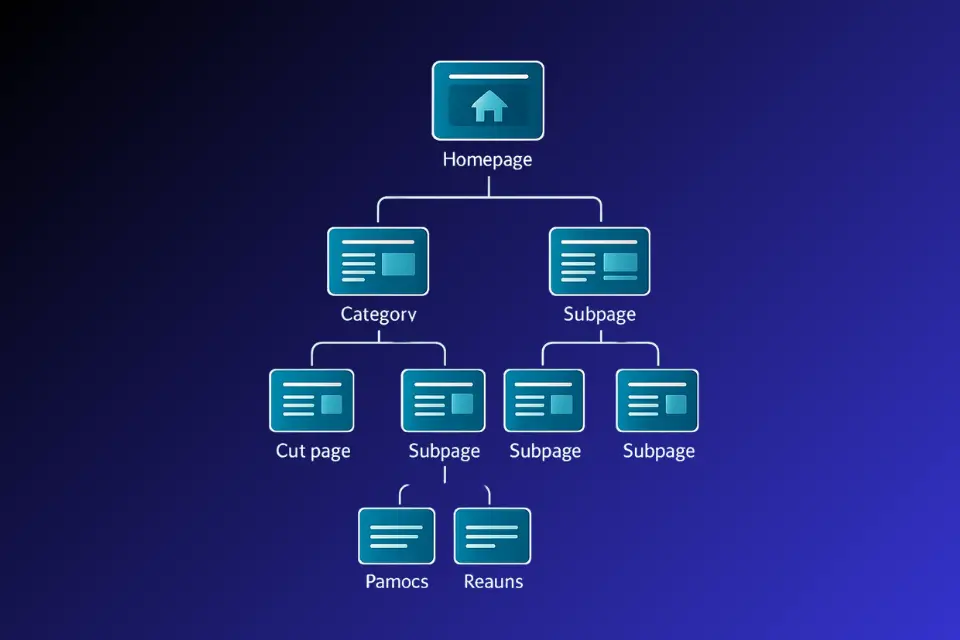
Internal links help search engine crawlers as well as users navigate the logical structure of your site to build topical authority and enhance discoverability. John Mueller, a Google employee, affirmed that internal linking is of paramount importance to SEO, but few websites are hierarchically organized.
Having a proper hierarchy helps search engines to understand the relationships between pages and to rank link equity well, and focus on crawling your most valuable material. In addition to SEO, rational structuring lowers the bouncing rates and enhances user interactivity by creating user-intuitive navigation.
Understanding Pillar-Cluster Architecture
Pillar Pages: Comprehensive, high-value guides covering broad topics comprehensively, pillar pages serve as authoritative anchors for topic clusters. Pillar content requires a minimum of 2,000 words to serve as a detailed resource. These pages target high-volume keywords and attract significant traffic and backlinks.
Cluster Pages: Supporting content addressing specific subtopics related to pillar themes, cluster pages dive deeper into focused areas. Each cluster page links back to its pillar while connecting to related clusters where contextually appropriate.
The Connection: Pillar pages link to all cluster content; cluster pages link back to pillars and each other, creating interconnected networks signaling topical authority. This structure prevents keyword cannibalization and clarifies content relationships for both users and algorithms.
Site Architecture Principles
Crawl Depth Optimization: Every important page should be reachable within 3 clicks from the homepage. Deeper pages risk insufficient crawling and lower indexation priority.
Balanced Hierarchy: Avoid both flat structures (losing importance signals) and deep hierarchies (burying valuable content). Strike a balance, ensuring pillar pages are 1-2 clicks from the homepage, clusters logically beneath.
Clear URL Structure: Clean, descriptive URLs mirroring hierarchy improve both user understanding and crawler comprehension—for example: /digital-marketing/seo/keyword-research.
Creating Your Hierarchy
1. Identify Core Topics: Map your business expertise to topics where you want authority recognition and rankings.
2. Research Keywords: Understand search volume, competition, and user intent for pillar and cluster keywords.
3. Build Pillar Pages: Create comprehensive 2,000+ word resources addressing topics from multiple angles with keyword integration.
4. Develop Cluster Content: Create detailed articles exploring specific subtopics, answering “who, what, where, when, why” questions comprehensively.
5. Strategic Internal Linking: Link pillar pages to clusters, clusters back to pillars, and related clusters to each other—using descriptive anchor text naturally integrated into content.
Advanced Techniques
Authority Sculpting: Direct your site’s ranking power to priority pages, increase links to key conversion points while trimming links to less important pages.
Authority Page Linking: Connection between existing pages that have a high ranking and new or poor pages, which rapidly increase visibility and authority. This source of power method hastens the ranking enhancement of new material.
Semantic Relevance: Include related terms naturally throughout content rather than keyword repetition, helping search engines understand topical depth.
Content Hierarchy Markup: Use proper H1, H2, H3 heading structure, establishing clear hierarchical relationships search engines use for ranking.
Measuring Impact
Real-life case studies provide empirical evidence: one site has received 150K additional annual visits following the introduction of AI-driven internal linking optimization; another ecommerce brand has received 24% more traffic by bridging deep subcategory pages with level-one categories.
Track these KPIs:
- Crawl efficiency and indexation rates
- Ranking improvements for priority pages
- Organic traffic increases for linked content
- Conversion rate changes for targeted pages
- Pages-per-session improvements
Common Pitfalls
Over-Linking: After 45-50 internal links per page, effectiveness reverses as link equity dilutes. Quality over quantity always wins.
Haphazard Linking: Links without a strategic purpose confuse search engines and users, wasting SEO potential. Establish hierarchy first.
Broken Links: Dead links waste crawl budget and frustrate users. Regular audits catch and fix these immediately.
Ignoring New Content: New pages must integrate into existing hierarchies through strategic linking from established pages and clusters.
Tools & Maintenance
Internal links and under-linked pages are suggested by such WordPress plugins as Yoast SEO and Rank Math. Hierarchy audit is done by enterprise tools (such as Ahrefs and Semrush), which find orphaned pages and crawl depth concerns.
Establish internal linking guidelines, ensuring consistency, document best practices for new content, and schedule regular reviews to maintain hierarchy quality.
Conclusion
Learning the hierarchy of internal links will turn the messy content into authoritative ecosystems. Having a tracked traffic of 24-150K per year, an enhanced use of SEO of 5-10 percent, the pillar-cluster models of doubled traffic, and 94 percent of the clicks going into organic search, it is critical to implement a systematic hierarchy.