Lifetime VPS Europe
 Lifetime VPS Asia
 Lifetime WooCommerce Hosting
 Lifetime Hosting
 Lifetime Game Dedicated Servers
 Chicago, US
 Tokyo, Japan
 Singapore
 Hong Kong
 Seoul, South Korea
 Amsterdem, Netherlands
 London, UK
 Stockholm, Sweden
 Oslo, Norway
 Vienna, Austria
 Zurich, Switzerland
 Sydney, Australia
 Wordpress Hosting
 VPS Hosting
 DDOS Protection
 Submit Ticket
 Full Management
 Guides
 Videos and Podcasts
 Discover Creative Ideas
 Voxfor Autonomous AI Workers
 Voxfor Mega Menu
 Voxfor Advanced Price Management For WooCommerce
 Voxfor Secure Live Chat and AI Support
 Voxfor Multilanguage
 Voxfor AI Content Summary
 Voxfor Autopilot

Analyzing organic traffic at the page level separates successful SEO strategies from guesswork. While understanding total organic traffic provides high-level perspective, page-level analysis reveals which content actually drives conversions and which underperforms, enabling data-driven optimization. The #1 organic search result receives 39.8% CTR, while the top 3 results capture 68.7% of all clicks, demonstrating that ranking position directly translates to traffic. Yet only 20% of A/B tests reach 95% statistical significance, indicating most organizations stop measuring before extracting real insights.
Why Page-Level Analysis Matters
Every page contains unique content, goals, and visitor journeys. Organic traffic that reaches your site with high intent, seeking information, solutions, or products, demonstrates exceptional engagement potential compared to paid traffic. Understanding which pages convert, which attract engaged visitors, and which underperform guides targeted optimization delivering superior ROI.
Setting Up Your Analytics Foundation
Google Analytics 4 Setup: GA4’s Acquisition report segments traffic by source, with organic search appearing as a distinct channel. Track key metrics including users, sessions, engagement rate, and conversion events. Custom events tracking scrolls, clicks, and specific interactions reveal content quality beyond bounce rate.
Google Search Console Integration: The Performance report displays impressions, clicks, CTR, and average ranking position for each page and keyword. Link GA4 with Google Search Console accessing search query data directly within GA4’s interface.
Core Page-Level Metrics to Track
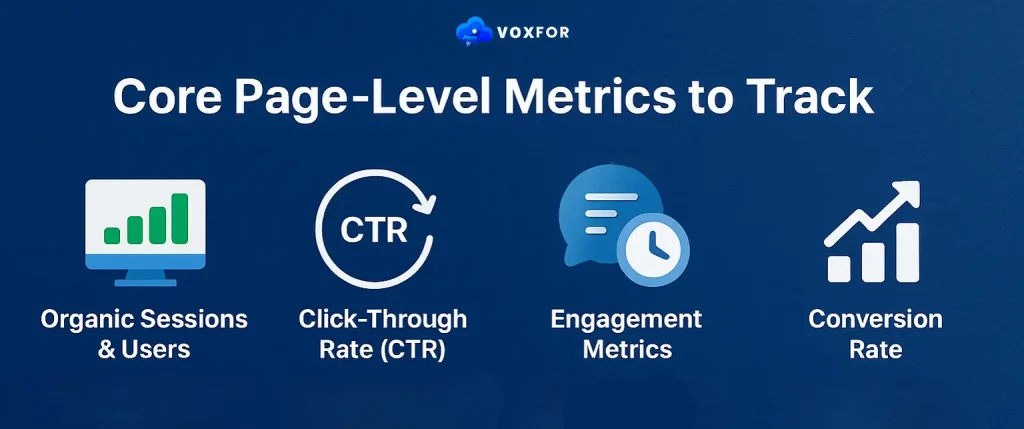
Organic Sessions & Users: Monitor unique visitor counts revealing whether pages consistently attract new audiences or rely on repeat visits. Expected growth ranges 10-20% monthly during active optimization cycles.
Click-Through Rate (CTR): Aim for benchmark CTR of 3-5% baseline, though position 1 averages 39.8% and position 5-10 drops to under 5%. Identify underperforming keywords in positions 5-20 with below-average CTR, then optimize title tags and meta descriptions.
Engagement Metrics: Average time on page should exceed 2 minutes for deep engagement. Scroll depth and pages per session reveal whether content captivates visitors. Low engagement despite high traffic suggests content-intent mismatch.
Conversion Rate: B2B SaaS benchmarks average 2.4% visitor-to-lead conversion, while eCommerce typically achieves 2-3%. Track conversions by page and query, identifying which organic traffic drives business value.
Step-by-Step Analysis Process
Step 1: Segment Organic Traffic In GA4, navigate Acquisition > Traffic acquisition, filtering for organic search only. This isolates search-driven visitors from other channels, enabling accurate organic-specific analysis.
Step 2: Identify Top & Underperforming Pages Review Landing Pages report identifying which pages attract the most organic sessions. Sort by engagement rate and conversion rate, identifying high-traffic/low-conversion pages as optimization opportunities.
Step 3: Analyze Keyword Performance Google Search Console’s Performance report reveals which keywords drive impressions and clicks. Identify keywords with high impressions but low CTR, these indicate relevance issues in title/description.
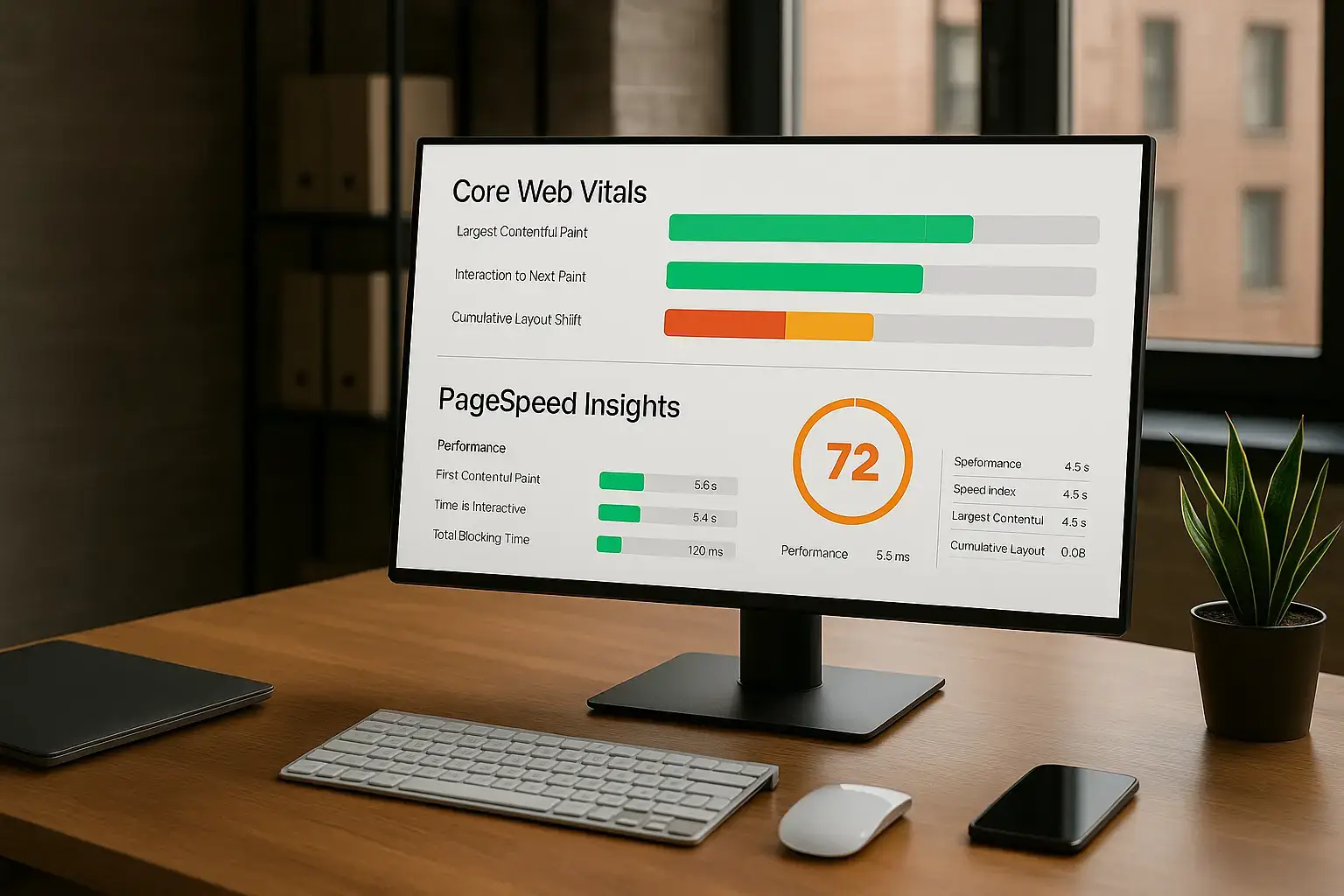
Step 4: Examine Page Speed & Technical Health Mobile page load times should target under 2.5 seconds; desktop under 1.5 seconds. LCP (Largest Contentful Paint) should be ≤2.5 seconds; CLS (Cumulative Layout Shift) ≤0.1. Slow pages suffer lower rankings and higher bounce rates regardless of content quality.
Step 5: Benchmark Against Competitors Analyze competitors’ organic traffic trends identifying content strategies capturing market share. Review competitor backlink profiles and keyword coverage, spotting opportunities you’re missing.
Optimization Strategies
Title Tag & Meta Description Optimization: Concise, benefit-focused titles with natural keyword integration boost CTR by 15-30%. A/B test variations, monitoring CTR changes in Search Console weekly.
Long-Tail Keyword Targeting: Target specific, less-competitive keywords achieving 3-5% CTR, often better than generic terms despite lower volume. These qualified visitors frequently convert better than broad-term traffic.
Content Depth & Freshness: Comprehensive content addressing user questions comprehensively outranks thin alternatives. Update pages quarterly with fresh data, new insights, and improved structure maintaining search freshness signals.
Internal Linking Strategy: Link from high-authority pages to those you want to promote, distributing link equity throughout your site. Clear navigation signals page importance to search engines while keeping users engaged.
Establishing Measurement Discipline
Create Baseline Metrics: Document current organic sessions, CTR, rankings, and conversion rates before optimization. Baselines enable accurate before/after comparison revealing strategy effectiveness.
Set SMART Goals: Define specific, achievable targets, “increase page X CTR from 3% to 4.5% within 90 days”—rather than vague improvements.
Track Monthly or Quarterly: Consistent monitoring reveals trends despite monthly fluctuations. Most meaningful patterns emerge over 3-month analysis windows.
Document Improvements: Note which optimizations generated measurable gains, building playbooks replicable across your site.
Common Analysis Mistakes
Traffic Volume Focus Only: High traffic with low conversion wastes opportunity. Prioritize conversion rate and engagement quality equally.
Ignoring External Factors: Algorithm updates, seasonal trends, and competitor actions affect organic performance beyond your control. Always consider context before conclusions.
Short-Term Decision-Making: SEO compounds slowly, expecting immediate results from changes invites premature conclusions. Patience and systematic tracking reveal true patterns.
Conclusion
Page-level organic traffic analysis transforms intuition into evidence-based optimization. With #1 results capturing 39.8% CTR, top 3 capturing 68.7% of clicks, and benchmarks establishing clear performance targets, systematic measurement reveals exactly where to invest optimization effort.
Set up GA4 and GSC properly, establish baseline metrics, track key KPIs consistently, and benchmark against competitors. The data-driven foundation you establish enables continuous improvement compounding into sustained traffic growth and revenue generation.