 Lifetime VPS Europe
 Lifetime VPS Asia
 Lifetime WooCommerce Hosting
 Lifetime Hosting
 Lifetime Game Dedicated Servers
 Chicago, US
 Tokyo, Japan
 Singapore
 Hong Kong
 Seoul, South Korea
 Amsterdem, Netherlands
 London, UK
 Stockholm, Sweden
 Oslo, Norway
 Vienna, Austria
 Zurich, Switzerland
 Sydney, Australia
 Wordpress Hosting
 VPS Hosting
 DDOS Protection
 Submit Ticket
 Full Management
 Guides
 Videos and Podcasts
 Discover Creative Ideas
 Voxfor Autonomous AI Workers
 Voxfor Mega Menu
 Voxfor Advanced Price Management For WooCommerce
 Voxfor Secure Live Chat and AI Support
 Voxfor Multilanguage
 Voxfor AI Content Summary
 Voxfor Autopilot
Seasonal content marketing is one of the best ROI strategies in 2026, but it needs to be precise in its implementation. Marketing campaigns by season contribute 27 percent of all retail sales made every year across the globe, with those that use a seasonal strategy realizing an average 20 percent uplift in conversion rates and open rates 18 percent above those of a campaign not defined by season. The knowledge of timing, keyword trends, and content optimization distinguishes the industry giants and the companies with poor performance.
Why Seasonal Content Drives Results
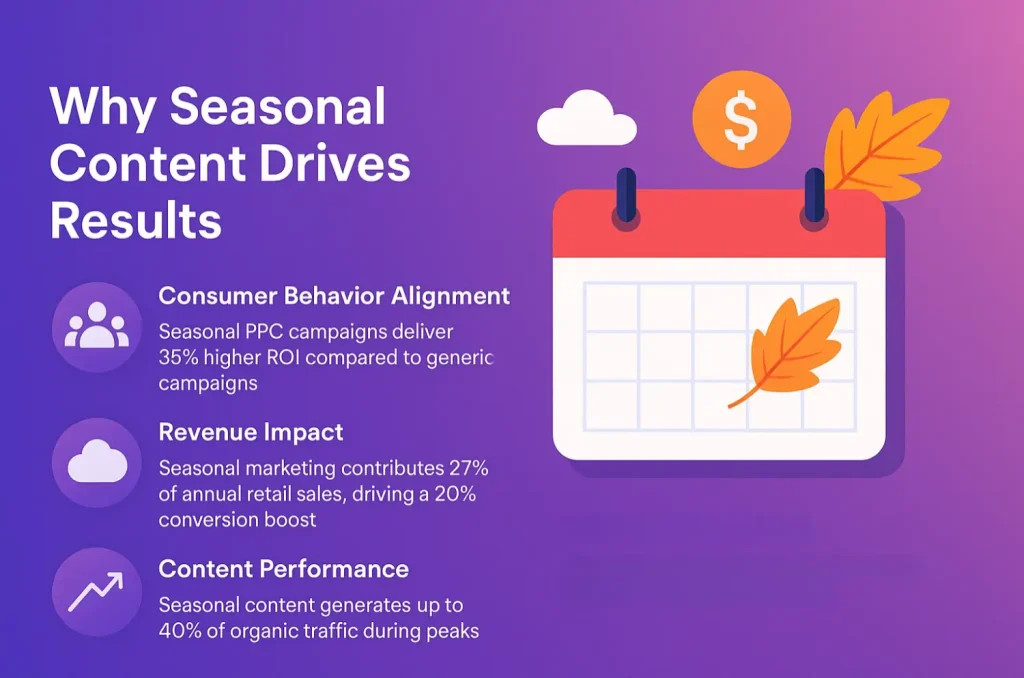
Consumer Behavior Alignment: Seasonal content taps into predictable patterns of consumer interest, purchase intent, and emotional engagement around holidays and cultural events. Seasonal PPC campaigns deliver 35% higher ROI compared to generic campaigns, demonstrating an urgent buying mindset during seasonal periods.
Cloud file storage
Revenue Impact: Seasonal content marketing is one of the best ROI strategies in 2026, but it needs to be precise in its implementation. Marketing campaigns by season contribute 27 percent of all retail sales made every year across the globe, with those that use a seasonal strategy realizing an average 20 percent uplift in conversion rates and open rates 18 percent above those of a campaign not defined by season. The knowledge of timing, keyword trends, and content optimization distinguishes the industry giants and the companies with poor performance.
Content Performance: Seasonal marketing of content generates up to 40% of organic traffic during seasonal peaks, and seasonal display advertisements increase 25% more clicks than non-seasonal advertisements. Seasonal content, added to the evergreen content, results in spikes of traffic, which lead to conversion.
Understanding Seasonal Keywords
What They Are: Seasonal keywords experience predictable spikes in search volume during specific times of year. “Christmas gift ideas” trends heavily in December, while “back to school supplies” peaks in late summer.
Types: Calendar-based keywords (holidays, events), weather-driven terms (summer beach gear, winter heating), and industry cycles (tax preparation spring, enrollment periods) create predictable search patterns.
Discovery Tools: Google Trends reveals search interest over time through 12-month or 5-year analysis, showing clear peaks occurring during specific months annually. Keyword research tools display historical data, identifying peak timing and enabling planning.
Ranking Advantage: The search engines focus on freshness, thus pages that deal with the up-to-date seasonal information beat old ones. Premier placement puts your content in a place to climb with trends and stay top-of-mind during high seasonal times.
Strategic Planning Framework
Start Planning Early: Competitive seasonal periods benefit organizations publishing content weeks or months in advance. Create editorial calendars mapping content across November-December for major holidays, then extend planning into less obvious seasonal opportunities year-round.
Document format comparison
Set Clear Goals: Organize seasonal programs that have clear goals, awareness, conversions, customer retention or revenue goals that allow the performance to be measured against expectations.
Build Content Calendars: Plan the content, schedule, channels of distribution, and culprits throughout the whole season, so execution proceeds in a coordinated manner with proper management of time and deadlines. Identify document peak periods on each seasonal keyword with when the search volumes start increasing, reach a peak, and come back to normal.
Content Format Strategies
Multi-Format Approach: Diverse audiences use various media sources; some of them like detailed posts on blogs, others learn better with images or video clips. The use of gift guides, posts about holidays, back stories, and interactive quizzes keeps it interesting.
Align Format to Theme: Choose formats maximizing seasonal content’s impact, videos showcasing product features for gift guides, printable PDFs for handy checklists, and interactive elements building engagement.
Video Performance: Video content provides the highest ROI, 49 times better than text, and the highest long-term ROI of 748% ROI to B2B firms. Bring the two together, video to reach out to the largest number of people quickly, and long-form to keep growing organically in the long run.
Peak Season Tactics
Personalization: Tailor product recommendations and content to individual user browsing history, location, and interests. A travel site can suggest warming blends for cold climates and iced teas for sunny regions. Segment email lists and audiences based on demographics, interests, and purchase history.
Limited-Time Offers: Few motivators match FOMO (fear of missing out); limited-time promotions create urgency, driving immediate conversions. Pair countdown timers with email reminders and social media promotion, building anticipation.
Product Bundling: Seasonal bundling increases average order value by 28%, themed gift sets and complementary products appeal strongly during holidays.
Mobile Optimization: Mobile devices account for 54.5% of holiday purchases, with 57% of Cyber Monday sales originating from mobile. Ensure all seasonal content optimizes for mobile browsing.
Email & Social Effectiveness
Email Performance: Holiday season emails generate 18% higher open rates than non-seasonal campaigns, with email marketing delivering a 2.8% conversion rate for B2C brands, one of the most effective channels during peak periods.
Social Channels: 61% of Gen Z use TikTok for holiday shopping, with Instagram (67%) and TikTok (62%) top gift inspiration sources. 39% of planned holiday spending occurs during the five-day Thanksgiving-to-Cyber Monday window, making social timing critical.
SEO Optimization for Seasonal Content
Keyword Integration: Use seasonal keywords naturally in titles, URLs, meta descriptions, “holiday marketing ideas,” “Christmas gift guide,” “content marketing for holiday season”.
Visual Optimization: Apply descriptive file names and alt text to seasonal images and videos.
Content Refresh: Update previous years’ seasonal posts with current links, data, and schema markup, boosting visibility.
Conclusion
The mastery of seasonal content marketing involves planning before peak times, dealing with keywords on time, search and mobile optimization and performance measurement. Get vacations planned 6-8 weeks, map opportunities around key words over the year, develop multi-format content that meets the needs of the intended audience, and review outcomes systematically.