Lifetime VPS Europe
 Lifetime VPS Asia
 Lifetime WooCommerce Hosting
 Lifetime Hosting
 Lifetime Game Dedicated Servers
 Chicago, US
 Tokyo, Japan
 Singapore
 Hong Kong
 Seoul, South Korea
 Amsterdem, Netherlands
 London, UK
 Stockholm, Sweden
 Oslo, Norway
 Vienna, Austria
 Zurich, Switzerland
 Sydney, Australia
 Wordpress Hosting
 VPS Hosting
 DDOS Protection
 Submit Ticket
 Full Management
 Guides
 Videos and Podcasts
 Discover Creative Ideas
 Voxfor Autonomous AI Workers
 Voxfor Mega Menu
 Voxfor Advanced Price Management For WooCommerce
 Voxfor Secure Live Chat and AI Support
 Voxfor Multilanguage
 Voxfor AI Content Summary
 Voxfor Autopilot

To have an effective link-building plan, it is crucial to identify quality backlink opportunities: 94 percent of online content has zero backlinks, but the average of top-ranking pages is 3.8x more backlinks than the average position of pages 2-10. The difference between the content that gets links and the content that does not is not by chance but by design. The systematic examination of competitor backlinks, the exploration of your business environment, and the application of the necessary outreach will help find and get the niche-relevant competitor backlinks that would lead to an increase in the ranks, traffic, and revenues.
Why Backlink Identification Matters
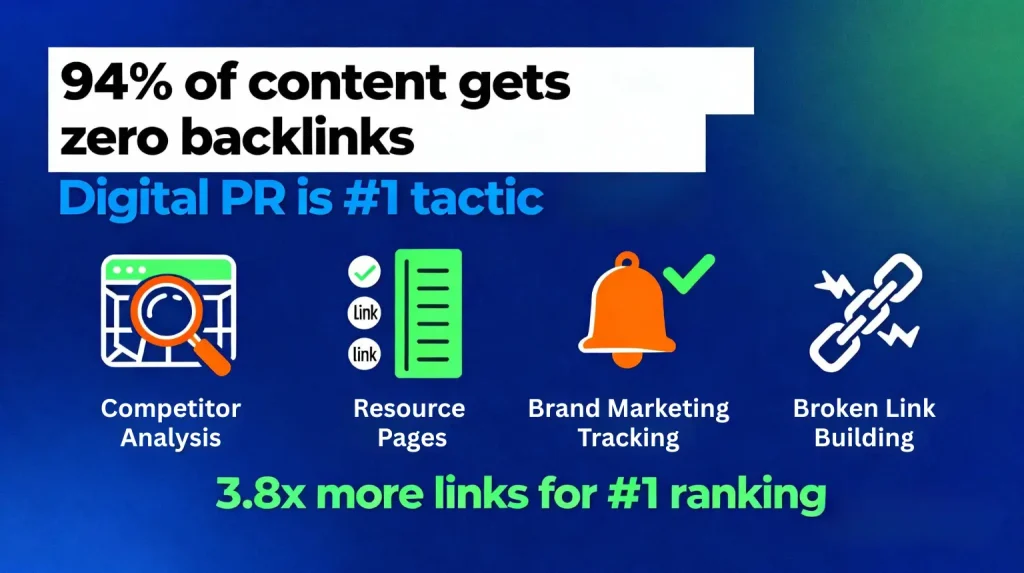
Backlinks still rank among the top-3 ranking factors at Google, and there have been records of pages in the position 1 to have an average Domain Authority of 72, and top-10 results have an average of 35+ Domain Authority. Nevertheless, not every backlink is created equal. 66.6% of the SEO professionals reckon that unique backlink opportunities have more advantages than copying competitors’ profiles, an essential point of information that reminds all that generic link-building has diminishing advantages.
Digital PR has become the best connection-building strategy in 2025, with 48.6% of SEO professionals overwhelming preferring guest posting (16%), and the creation of linkable assets (12%). However, it is impossible to implement Digital PR effectively without the identification of relevant journalists, publications, and influencers in your niche, which cannot be done without systematic opportunity identification.
Step 1: Define Your Niche and Core Topics
Digital PR has become the best connection-building strategy in 2025, with 48.6% of SEO professionals overwhelming preferring guest posting (16%), and the creation of linkable assets (12%). However, it is impossible to implement Digital PR effectively without the identification of relevant journalists, publications, and influencers in your niche, which cannot be done without systematic opportunity identification.
Step 2: Conduct Competitor Backlink Analysis
Start with Ahrefs, SEMrush, or Majestic: Ahrefs provides industry-leading Site Explorer with 13 trillion backlinks indexed, AI link-gap suggestions, and SERP volatility alerts. SEMrush offers comprehensive competitor research showing competitor keywords, backlink profiles, and even ad strategies. Both platforms reveal referring domain patterns, anchor text distribution, and linking context.
Identify Competitor Linking Patterns: Use Backlink Analytics sections in these tools to expose where competitors receive links and from which domain authorities. Look for patterns: Do competitors consistently receive links from industry blogs, Trade publications, Resource pages, Authority directories, This reveals your niche’s linking ecosystem.
Find Content Gap Opportunities: These tools expose “link gaps”, high-relevance sources linking to competitors but not to you. This represents your most immediate opportunity: outreach to sites already recognizing topical authority in your space, only lacking your perspective.
Step 3: Research Industry-Specific Opportunities
Identify Industry Publications and Blogs: Blogs, publications and trade journals in the industries will always have links to quality content in their verticals. Use search engines to find sources of authority in your niche, industry, or topic by typing in [Your Niche] blog, [Your Industry] news, or [Your Topic] publication.
Find Resource Pages and Directories: Many niches maintain curated resource lists, directories, roundups, and top-resource collections linking to relevant sites. Search “[Your Niche] resources,” “[Your Topic] directory,” or “[Industry] tools” to find these link-worthy pages.
Locate Expert Roundups and Interviews: Expert roundups aggregate insights from multiple industry specialists, offering backlink opportunities for contributing thought leaders. Identify sites running regular roundups and position yourself as a potential interviewee.
Step 4: Monitor Unlinked Brand Mentions
Use Brand Monitoring Tools: Platforms like Mention, Brand24, or Talkwalker monitor brand mentions across the web, identifying sites referencing your company without linking. These represent “low-hanging fruit”, sites already acknowledging your relevance, only needing gentle encouragement to add links.
Claim Unclaimed Mentions: This strategy works equally well for key executives and team members; search for online mentions of company leaders and identify pages missing backlinks. A polite outreach request often secures these effortless links.
Step 5: Implement Advanced Strategies
Broken Link Building: 39% of SEOs use broken link building, identifying broken links on relevant sites and offering their content as a replacement. This provides value to site owners while earning you a link.
Newsjacking: 32% of SEOs use newsjacking tactics, creating timely content around industry news and pitching to relevant journalists.
Email Outreach: Email is the top link-building outreach channel with 45.1% adoption among professionals, followed by communities and partnerships (23%).
Measuring Backlink Opportunity ROI
Link Building ROI measures the value generated from efforts compared to costs, tracking metrics including organic traffic, keyword rankings, referral visitors, and conversions. Apply the ROI formula: (Revenue from Link Building – Investment Cost) ÷ Investment Cost × 100
For example: $20,000 revenue from backlinks – $5,000 investment ÷ $5,000 × 100 = 300% ROI.
54% of SEO experts successfully build between 5-20 high-quality backlinks monthly, requiring consistent effort but delivering documented results.
Conclusion
To find the opportunities for backlinks, it is necessary to combine the tools (Ahrefs, SEMrush), approaches (competitor analysis, brand monitoring, broken link building), and patience. As you discover linking sources pertaining to your niche systematically, you will be in a position to achieve the lasting growth of authority that will translate into rankings, traffic and revenue.