 Lifetime VPS Europe
 Lifetime VPS Asia
 Lifetime WooCommerce Hosting
 Lifetime Hosting
 Lifetime Game Dedicated Servers
 Chicago, US
 Tokyo, Japan
 Singapore
 Hong Kong
 Seoul, South Korea
 Amsterdem, Netherlands
 London, UK
 Stockholm, Sweden
 Oslo, Norway
 Vienna, Austria
 Zurich, Switzerland
 Sydney, Australia
 Wordpress Hosting
 VPS Hosting
 DDOS Protection
 Submit Ticket
 Full Management
 Guides
 Videos and Podcasts
 Discover Creative Ideas
 Voxfor Autonomous AI Workers
 Voxfor Mega Menu
 Voxfor Advanced Price Management For WooCommerce
 Voxfor Secure Live Chat and AI Support
 Voxfor Multilanguage
 Voxfor AI Content Summary
 Voxfor Autopilot

Discover how to display your Linux Group, understand user permissions, and master group management. This in-depth guide explores commands like id, groups, and whoami, delves into file ownership, and provides best practices for securing your system. Whether you are a novice user or a seasoned administrator, you will find everything you need to know about viewing and managing your groups, permissions, and advanced security settings.
Inbound Marketing Strategy
Turn technical readers into inbound marketing growth
Helpful tutorials attract qualified visitors, but reliable hosting keeps those readers engaged. Voxfor VPS gives growing websites the speed, uptime, and control needed to support stronger inbound marketing campaigns.
Introduction to Linux Groups and Permissions
Linux is a powerful multiuser operating system that efficiently manages users, groups, and a well-structured permissions model. Understanding how groups work and how to display your group memberships empowers you to control file access, collaborate effectively, and maintain a secure environment.
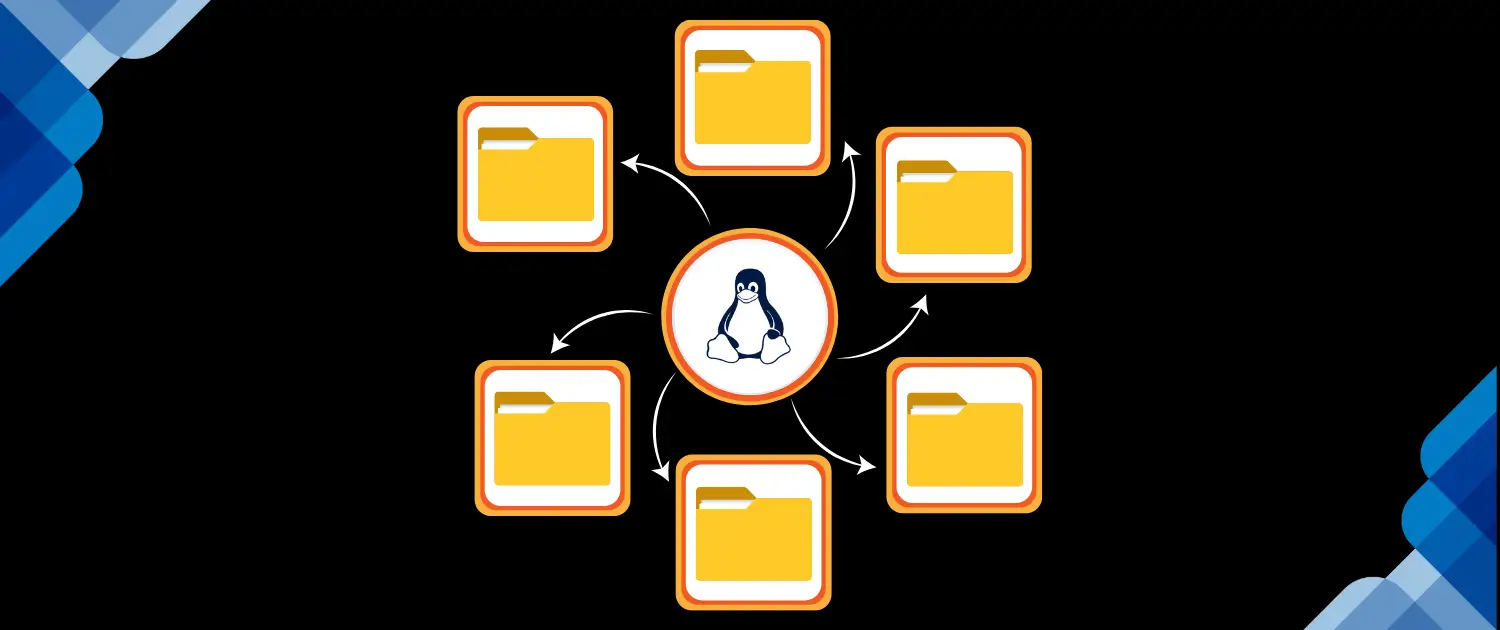
Every Linux user belongs to at least one group, typically called the primary group. Many users also belong to additional groups called supplementary groups. System administrators can easily grant or restrict permissions across multiple users by grouping users requiring similar access levels.
Key topics in this guide include:
- Viewing your group memberships
- Navigating the User ID (UID) and Group ID (GID) framework
- Managing file permissions with chmod, chown, and other tools
- Exploring advanced permissions with SetUID, SetGID, sticky bits, and Access Control Lists (ACLs)
- Avoiding common permission mistakes and following best practices
With these topics in mind, you will develop a deep understanding of how Linux’s permission system operates, how to check your privileges, and how to configure secure access for others.
Understanding User and Group IDs in Linux
The Importance of UIDs and GIDs
Linux’s multi-user capability relies on numerical identifiers known as User IDs (UIDs) and Group IDs (GIDs). Each user on a Linux system is assigned a unique UID, and a GID identifies every group.
- UID (User ID): A numeric identifier for a user. The root user typically has UID 0, while ordinary users generally have UIDs starting at 1000 or 500 (depending on the distribution).
- GID (Group ID): A numeric identifier for a group. Each group on the system has its own GID.
Whenever a user logs in, the system checks /etc/passwd for the user’s UID and primary GID and references /etc/group for supplementary groups. This mechanism ensures the system knows which resources each user can access.
Primary vs. Supplementary Groups
A user’s primary group is the default group assigned to them, usually specified in /etc/passwd. Beyond that, users can belong to multiple supplementary groups. For instance, a user might be part of a developers group for programming tasks, a docker group to run Docker commands, and an admin group for administrative privileges.
These group memberships help streamline permissions management. Instead of granting access to individual users one by one, administrators can assign or revoke privileges for an entire group, making the process more efficient.
Where These IDs Are Stored
- /etc/passwd: Contains essential information about user accounts, such as username, UID, GID, home directory, and shell. Encrypted passwords are often moved to /etc/shadow for security.
- /etc/group: Group-related data, including group name, GID, and members.
Correctly configuring these files is essential to maintaining a secure and well-organized system. The kernel relies on these files to identify who owns which processes and files.
Security Implications
UIDs and GIDs form the bedrock of Linux’s security model. Misconfigurations can inadvertently grant unauthorized access or block legitimate users. By carefully assigning UIDs and GIDs, you ensure that every file, process, and resource is accessed only by those who should have access. This foundation sets the stage for effectively viewing your groups and managing file permissions.
How to Show Your Group on Linux
Understanding your current group memberships is crucial for troubleshooting permissions or verifying proper access. Linux offers several commands to display this information.
Using the id Command
The id command is one of the most comprehensive tools for identifying your user and group affiliations. Simply type:
idYou will see output like this:

uid=1001(john) gid=1001(john) groups=1001(john),10(wheel),1002(developers)- uid=1001(john): Your numeric UID and username.
- gid=1001(john): Your numeric GID and group name for the primary group.
- groups=1001(john),10(wheel),1002(developers): A list of your supplementary groups.
If you have the necessary privileges (such as root access or sudo rights), you can also check another user’s group memberships:
id usernameUsing the groups Command
The group’s command provides a concise list of the groups you belong to. Type:
groups
You might see:
john wheel developersThe first name (john) is your primary group, and the remaining names (wheel, developers) are your supplementary groups. To check another user’s groups:
groups usernameUsing whoami for Verification
While whoami does not list group memberships, it tells you the current username of the shell you operate in. For example:
whoamiOutput might be:

johnThis command is convenient if you switch users via su or sudo su – and must verify which user is active.
Checking Group Information Manually
You can manually inspect /etc/group or use the getent command for more detailed verification:
cat /etc/group | grep john
or
getent group developers
The first method directly searches for lines matching “john” in /etc/group, while the getent approach fetches group information from system databases (including remote services like LDAP if configured).
Practical Tips
- Aliases: Add an alias to your shell configuration for quick checks: alias mygroups=’id -nG’.
- Prompt customization: Some advanced prompts display your username and hostname, helping you keep track of your active user session.
- Scripting: If writing a script, use id -G or id -nG to parse numeric or name-based group memberships.
By mastering these commands, you will quickly determine your group memberships or those of other users, streamlining tasks like file sharing and permission troubleshooting.
Exploring File Permissions in Linux
Groups in Linux are closely tied to file permissions. When you run ls -l in a directory, you might see:

-rw-r--r-- 1 john developers 4096 Sep 1 12:00 example.txtLet’s break down the components:
- -rw-r–r–: The file permission bits.
- 1: Number of hard links.
- john: The file owner (user).
- developers: The group that owns the file.
- 4096: File size in bytes.
- Sep 1 12:00: Last modification date.
- example.txt: The file name.
Permission Bits
The string -rw-r–r– is divided into three sections for owner, group, and others:
- Owner permissions (rw-): The owner can read and write.
- Group permissions (r–): Group members can only read.
- Other permissions (r–): Everyone else can only read.
The leading – indicates a regular file (a d would indicate a directory).
Role of Group Ownership
Group ownership becomes critical when multiple users need similar file access. By assigning the developers group to example.txt, everyone in that group can read the file (as determined by the group permission bits). This is a more efficient method than assigning permissions to individual users.
Changing Permissions with chmod
Use chmod to modify file permissions. There are two main approaches:
Symbolic mode:
chmod g+w example.txt
This grants write permission (+w) to the group (g).
Numeric (octal) mode:
chmod 640 example.txt
Here, 640 translates to:
- 6 = owner can read (4) and write (2).
- 4 = group can read (4).
- 0 = others have no permissions.
Verifying Permissions
After using chmod, run ls -l again to confirm that the changes took effect. This verification step helps catch typos or mistakes.
Directory Permissions
Directory permissions slightly differ in their meaning:
- Read (r): Users can list the directory contents.
- Write (w): Users can create or delete files in the directory.
- Execute (x): Users can enter (cd into) the directory.
For group-shared directories, set the group ownership to the relevant group and configure the right combination of read, write, and execute bits.
Ownership and Group Management
Beyond basic file permissions, you must also know how to manage file ownership and group memberships. Two commands, chown (change ownership) and chgrp (change group), are crucial.
Changing Owner and Group with chown
To change the owner (user) of a file:
sudo chown newowner example.txt
To change both the owner and group simultaneously:
sudo chown newowner:newgroup example.txtRecursive Changes
Appending the -R flag applies changes recursively to all files and subdirectories:
sudo chown -R newowner:newgroup /path/to/directory
Use this with caution to avoid breaking essential system directories.
Using chgrp
If you only need to change the group:
sudo chgrp developers example.txt
The -R flag also works for recursive group changes:
sudo chgrp -R developers /path/to/directoryCreating and Deleting Groups
To create a new group:
sudo groupadd developers
To delete a group:
sudo groupdel developers
Ensure no critical files or active users rely on the group before deleting it.
Adding Users to Groups
It’s possible to include a user in a group that already exists with usermod:
sudo usermod -aG developers john
- -aG appends the user to the specified group, preserving their membership in other groups.
- Omitting a removes the user from any other groups.
Best Practices for Group Management
- Restrict privileged groups: Groups like a wheel or sudo grant broad privileges. Limit membership to essential administrators.
- Use meaningful group names: Descriptive names (e.g., finance, hr) make the system more understandable.
- Document group roles: Record why each user is in each group, simplifying audits and troubleshooting.
- Review memberships regularly: Roles change over time, so ensure that users only remain in groups that match their responsibilities.
You create a well-organized environment and avoid security lapses by diligently managing ownership and groups.
Advanced Permission Settings and Special Bits
Linux offers more than just standard read, write, and execute bits. You can also use SetUID, SetGID, and the sticky bit for specialized situations.
SetUID
When the SetUID bit is set on an executable, users who run that program temporarily gain the file owner’s privileges. A classic example is the passwd command, which requires root-level access to modify system passwords.
To set the SetUID bit:
sudo chmod u+s /usr/local/bin/customscript
Use SetUID carefully; a misconfigured script can become a security risk, allowing privilege escalation.
SetGID
When set on an executable, SetGID makes the program run under the file’s group privileges. When set on a directory, any new file within inherits the directory’s group ownership, a common practice for shared-team directories.
sudo chmod g+s /var/shared
Sticky Bit
The sticky bit prevents users from removing or renaming files they do not own in a shared directory. For example, /tmp is world-writable but uses the sticky bit to stop users from altering each other’s files.
sudo chmod +t /var/sharedChecking Special Bits
When you list files with ls -l, you might see letters like s or t instead of x:
- SetUID: -rwsr-xr-x
- SetGID: -rwxr-sr-x
- Sticky: drwxrwxrwt
Considerations
- Limit SetUID/SetGID: Only use these bits when necessary. Audit any program that requires them.
- Monitor Sticky Directories: Keep an eye on shared directories to prevent misuse.
- Use Auditing Tools: Tools like auditd can track the uses of these special bits for security reviews.
To customize your system’s security and collaboration model, implement these advanced settings wisely.
Using Access Control Lists (ACLs) for Granular Permissions
Traditional Unix permissions cover most use cases, but sometimes you need even more fine-grained control. Access Control Lists (ACLs) let you assign specific permissions to individual users or groups, regardless of traditional ownership.
Enabling ACLs
First, ensure that your filesystem supports ACLs. Modern file systems like ext4, xfs, and btrfs typically do. Sometimes, you must mount them with the acl option:
sudo mount -o remount,acl /dev/sda1 /mnt/dataCheck your distribution’s documentation for precise steps.
Viewing ACLs
Use getfacl to see the ACLs for a file or directory:
getfacl example.txt
Example output:
# file: example.txt
# owner: john
# group: developers
user::rw-
user:david:rw-
group::r--
mask::rw-
other::r--
This shows that David has explicit permission to read and write, even though he might not be part of the developer’s group.
Setting ACLs
Use setfacl to add ACL entries:
sudo setfacl -m u:david:rw example.txt- -m modifies the ACL.
- u:david:rw grants user david read and write access.
To remove an ACL entry:
sudo setfacl -x u:david example.txtDefault ACLs
You can also set default ACLs on directories so that new files inherit specific ACL rules:
sudo setfacl -m d:u:david:rw /var/sharedThis ensures that any new file created in /var/shared automatically grants david read-write access.
Best Use Cases
ACLs are ideal in organizations where multiple teams or users need distinct access levels to the same resources. However, beware of overcomplicating your permission structure. Regularly document and audit any ACL usage to keep permissions transparent and maintainable.
Common Mistakes and Best Practices
Effective permission management involves being vigilant about potential pitfalls. Below are common mistakes and best practices to keep in mind.
Common Mistakes
- Misusing the -R flag: Applying recursive changes to the wrong directory can break the system. Always double-check the path.
- Removing x from directories: The execute bit (x) on a directory allows users to enter or search it. Removing x can unintentionally lock out legitimate users.
- Forgetting -a in usermod: Failing to use -a (append) when adding a user to a group with usermod -G removes them from all other groups.
- Unsecured SetUID/SetGID: An improperly secured SetUID or SetGID binary can lead to privilege escalation.
- Missing ACL documentation: If not documented over time, ACLs can become confusing, leading to security issues or difficulty troubleshooting.
Best Practices
- Utilize groups primarily: Rely on group ownership before resorting to ACLs, keeping the environment more straightforward and transparent.
- Regular audits: Periodically check who belongs to critical groups and confirm that file permissions align with current needs.
- Enforce the least privilege: Only grant the minimum permissions necessary for each user or group.
- Backup ACL settings: Use rsync –acls or tar –acls to preserve ACLs during backups.
- Version control or backups for config files: Track changes to files like /etc/passwd and /etc/group. This makes reverting mistakes much simpler.
Adhering to these guidelines prevents headaches and security breaches, ensuring a stable and secure Linux environment.
Practical Examples and Use Cases
Collaborative Directory for a Development Team
Scenario: A development team needs to share resources in /srv/devprojects with read-write access for all team members but no access for outside users.
Create a group (if needed):
sudo groupadd devteam
- Add users to the group:
sudo usermod -aG devteam alice
sudo usermod -aG devteam bob
sudo usermod -aG devteam charlie
- Change ownership of the directory:
sudo chown -R root:devteam /srv/devprojects
- Set permissions and enable SetGID:
sudo chmod -R 2770 /srv/devprojects
The 2 sets the SetGID bit so new files inherit the devteam group.
770 ensures that only the owner (root) and devteam have full permission.
Sensitive Files in a Finance Department
Scenario: The finance department stores confidential files in /srv/finance, accessible only to the finance team.
Create the finance group (if not existing):
sudo groupadd finance
- Add finance members:
sudo usermod -aG finance diana
sudo usermod -aG finance edward- Change group ownership:
sudo chown -R root:finance /srv/finance
- Set permissions:
sudo chmod -R 750 /srv/finance
- This ensures finance members can read and execute (cd into) the directory, while others have no access.
Granular Access with ACLs
Scenario: The marketing team has a shared directory /srv/marketing for their group. A non-marketing user (reportinguser) needs read access to a specific file without joining the marketing group.
Set base permissions:
sudo chown -R root:marketing /srv/marketing
sudo chmod -R 770 /srv/marketing- Grant read access via ACL:
sudo setfacl -m u:reportinguser:r /srv/marketing/MonthlyReport.xlsNow reportinguser can read that file without gaining access to everything else.
Public Upload Directory with Sticky Bit
Scenario: You want a publicly writable directory /srv/uploads, but users should only be able to delete their files.
Create the directory and set world-writable permissions:
sudo mkdir /srv/uploads
sudo chmod 777 /srv/uploads
- Enable the sticky bit:
sudo chmod +t /srv/uploads
Users can delete only their files in /srv/uploads with the sticky bit set.
These examples highlight how to apply Linux permission and group concepts in real-world scenarios, ensuring collaboration and security.
Conclusion
Linux’s permissions model is critical to any secure, multiuser environment. Knowing how to show your group memberships with commands like id and groups is the first step in understanding and troubleshooting permission-related issues. From there, managing file ownership and permissions with chmod, chown, and chgrp lets you precisely control access and maintain an organized system.
Advanced features like SetUID, SetGID, and the sticky bit enable specialized security scenarios, while Access Control Lists (ACLs) address the need for fine-grained permissions beyond traditional Unix ownership. By following best practices such as using groups effectively, employing the least privilege principle, and documenting ACL usage, you can protect sensitive data and keep your system running smoothly.
Mastering these tools and techniques equips you to navigate almost any permission challenge on a Linux system. Whether you are setting up team directories, securing finance files, or enabling public uploads, a firm grasp of Linux permissions underpins every aspect of system administration and security. With the proper knowledge, you can tailor your permissions model to fit your needs, balancing accessibility, collaboration, and robust protection for your data.
About the writer

Vinayak Baranwal wrote this article. Use the provided link to connect with Vinayak on LinkedIn for more insightful content or collaboration opportunities