In the landscape of modern business, the year 2026 marks a pivotal era where the barriers to entry for digital entrepreneurship have effectively dissolved. We stand in a period where the tools of creation, once the exclusive domain of expensive agencies and specialized software, have been democratized to an unprecedented degree. The convergence of generative Artificial Intelligence, sophisticated web infrastructure, and intuitive user interface design has created a “Golden Age” for the independent creator. However, this accessibility brings with it a new challenge: in a sea of limitless creation, how does a brand achieve distinction?
The answer lies in the strategic synthesis of two core pillars: Visual Identity and Technical Performance. The visual identity is the face of the brand, encapsulated primarily in the logo. It is the shorthand for the company’s values, the visual anchor that captures attention in a scrolling newsfeed or a crowded marketplace. The technical performance is the backbone, the invisible infrastructure that ensures the promise made by the visual identity is kept through speed, reliability, and security.
This comprehensive report is designed for the modern entrepreneur, the startup founder, and the small business owner who seeks to navigate this complex ecosystem without the burden of enterprise-level costs. Our objective is to provide an exhaustive analysis of the best free logo makers available in 2026, dissecting their capabilities, their hidden costs, and their best use cases. We move beyond simple listicles to offer a deep, nuanced understanding of how these tools function and why they matter.
Furthermore, we cannot discuss the “face” of a business without discussing its “home.” A logo requires a digital environment in which to live, e.g., a website, an application, or a digital store. Therefore, this report integrates the critical role of hosting infrastructure, specifically examining Voxfor. As a premier managed hosting company, Voxfor represents the ideal partner for the lean startup: offering high-performance, lifetime VPS solutions that mirror the efficiency and accessibility of the free design tools we will analyze. By the end of this document, you will possess not just a list of tools, but a holistic roadmap for launching a robust, professional brand in 2026.
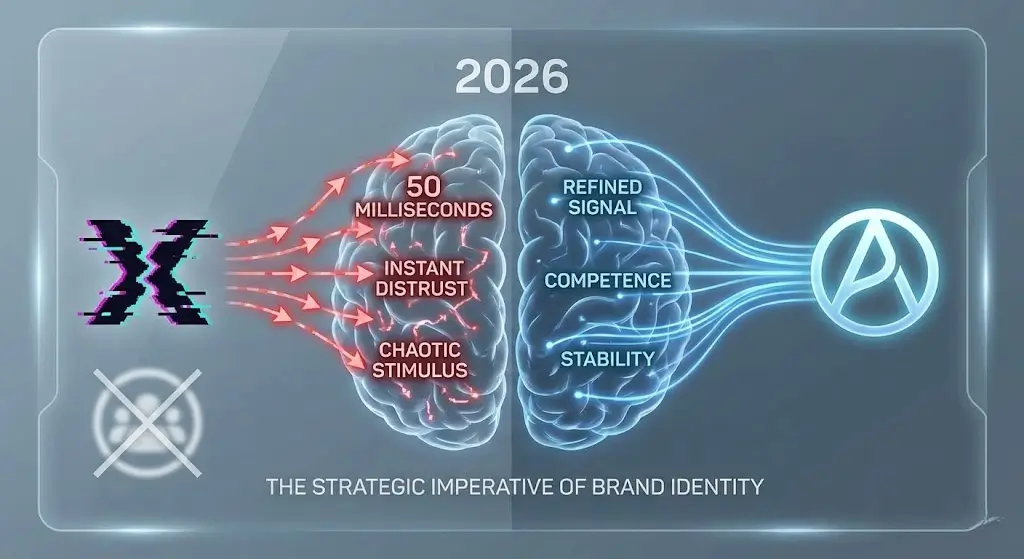
A logo has been said to be the handshake of a business. Next, in 2026, the handshake occurs in milliseconds. Research on cognitive psychology and user experience (UX) design still confirms that in 50 milliseconds of exposure, consumers form an opinion regarding a website or a brand. This quick judgment is centered on the logo. It is a shortcut heuristic that transmits industry, professionalism and vibe prior to one reading a single word of copy.
When an entrepreneur employs a logo generator, there is no simple process of assembling shapes and text; they are creating a psychological stimulus. The first image that would make an automatic distrust reaction is a chaotic or pixelated logo, where they are cutting corners in one place. What other corners are they cutting in other places? On the other hand, a refined, harmonized logo is indicative of competency and stability.
It is the psychological signaling that is the reason why the tool used is important. At the beginning of the 2020s, free tools tended to create generic and clipart-laden designs that indicated amateur. When the technology of sophisticated AI and the use of vectors is created in 2026, the free tools available at the time will be able to create a piece of art that would not be differentiated in a creative studio. It has narrowed down, however, only to people who are knowledgeable about what tools to employ and the manner of their usage.
To evaluate the tools in this report effectively, we must first establish the criteria for a successful logo in the current market context. The aesthetic trends of 2026 prioritize three key attributes: Scalability, Simplicity, and Motion-Readiness.
Scalability refers to the logo’s ability to retain clarity across vastly different mediums. A modern brand must look as sharp on a 16-pixel favicon (the tiny icon in a browser tab) as it does on a 4K monitor or a physical billboard. This requirement makes the file format, specifically the Vector (SVG), critical. As we will see, many “free” tools fail this test by only providing Raster (JPEG/PNG) images, which blur when enlarged.
Simplicity is a response to information overload. The most recognizable brands in the world have simplified their marks over the last decade. In 2026, complex crests and intricate illustrations are largely out of vogue for corporate identities, replaced by bold geometric shapes and clear typography. This trend favors AI tools that can be prompted to produce “minimalist” or “flat” designs.
Motion-Readiness is the newest frontier. With high-speed internet and advanced displays, logos are rarely static. They bounce when a page loads, they morph in loading screens, and they animate in social media intros. While a static logo maker creates the base image, the potential for that image to be animated (using tools like Lottie files) is a consideration we must keep in mind.
The tools we review allow for infinite color customization, but strategic choice is vital. In 2026, color trends have shifted towards a “digital-native” palette,s colors that pop on OLED and Retina screens.
Nevertheless, technical performance is also influenced by the color. The high-contrast logos will enhance the adaptability of the logo to the needs of the visually impaired guests, who will be the most important to the SEO and legal requirements of 2026. In our case, as we examine such tools as Adobe Express or Canva, we will seek out features that enable users to choose available, compatible color schemes.
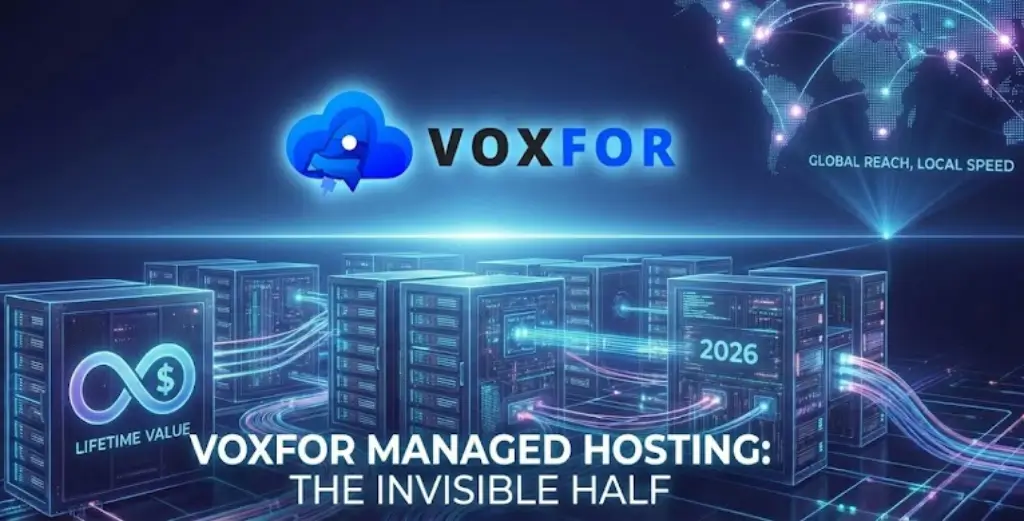
In the case when the visual promise is the logo, the operational delivery is the infrastructure. It does not make sense to take the time to construct a gorgeous visual presence and place it on a slow and unreliable server. Slow site cuts across the message of the slick logo. Here is the point when Voxfor comes into the story as a critical facilitator of brand success.
Founded in 2017, Voxfor has spent nearly a decade building a reputation for “unmatched speed and reliability.1 In the context of 2026, where user patience is measured in nanoseconds, Voxfor infrastructure acts as the engine room for the brand.
One of the most compelling parallels between the “Free Logo Maker” market and Voxfor is the focus on cost-efficiency without sacrificing quality. Many entrepreneurs turn to free design tools to minimize recurring overheads (monthly subscriptions to Adobe Creative Cloud, for example). Voxfor mirrors this philosophy in the hosting space with its unique Lifetime VPS and Lifetime Hosting plans.
In a subscription-fatigued world, the ability to pay once for a server and secure it for life is transformative for a startup’s burn rate. It creates a “set it and forget it” financial model for infrastructure, allowing the business owner to redirect capital towards marketing, product development, or customer acquisition. This aligns perfectly with the mindset of using a free logo maker: maximize value, minimize drag.
A logo designed in Recraft AI might be viewed by a customer in Tokyo, a partner in London, and a prospect in New York. To ensure the brand experience is consistent for all of them, the hosting infrastructure must be globally distributed.
Voxfor robust network spans strategic global hubs:
This geographic diversity ensures low latency. When a user in Seoul accesses your site, the data travels a short distance from the Seoul data center rather than crossing the Pacific. This results in a “snappy” experience that reinforces the professionalism suggested by your logo.
For the non-technical entrepreneur, server specs can be daunting. However, Voxfor simplifies this with enterprise-grade standards accessible to all.
Finally, Voxfor provides the shield. Features like DDoS protection and managed security ensure that the brand you work hard to build is not tarnished by cyberattacks or downtime.5 Their 24/7 expert Linux support acts as an insurance policy, ensuring that there is always a human expert ready to assist.6
To understand the tools available in 2026, we must recognize the schism in the design software market. We are currently witnessing a “war of methodologies” between Template-Based Design and Generative AI Design.
For years, tools like Canva, Hatchful, and Ucraft dominated the free market. Their mechanism is simple: professional designers create thousands of “shells” or templates. The user selects a template and swaps the text, colors, and icons.
Pros:
Cons:
Tools like Recraft AI, Ideogram, and Bing Image Creator represent the new wave. They do not use templates. Instead, they use Large Language Models (LLMs) and diffusion models to “dream” a logo from scratch based on a text prompt.
Pros:
Cons:
This is the single most important technical concept for a logo designer to understand.
In 2026, the “Holy Grail” of free logo makers is a tool that provides Generative AI creativity with Vector output. As we will see, tools like Recraft AI are leading this charge.7
We will now proceed to a granular analysis of the top tools. We have categorized them by their primary mechanism and strength.
Overview:
Canva is arguably the most recognizable name in amateur design. By 2026, it will have evolved from a simple graphic editor into a comprehensive visual suite. Its strength lies not just in making a logo, but in building a whole brand around it.
The User Experience:
Canva interface is the gold standard for usability. The “Magic Switch” and drag-and-drop mechanics feel fluid. For logo creation, users typically start by searching a vast library of templates categorized by industry (e.g., “Cafe Logos,” “Tech Logos”).8
AI Integration:
Canva has integrated AI through “Magic Media” (powered by engines like Stable Diffusion and their own Dream Lab). This allows users to generate an icon from text and then place it into a traditional template layout. This hybrid approach is powerful for those who want AI creativity but need the structure of a template.9
The “Free” Trap:
While Canva is free to use, it has significant limitations for logo design:
Workarounds:
Resourceful users in 2026 often use Canva to design the logo, download it with a white background, and then use a separate free tool (like Adobe Express free background remover or Recraft vectorizer) to clean it up.
Best For:
Social media influencers and small businesses who primarily need their logo for Instagram posts, YouTube thumbnails, and digital headers, where a rectangular background is acceptable.
Overview:
Adobe Express is the accessible, browser-based sibling of Photoshop and Illustrator. It brings Adobe legendary font library and rendering engine to the masses.
The User Experience:
Express feels slightly more “pro” than Canva. The templates are often cleaner, adhering more strictly to design principles. The integration of Adobe Fonts is a major differentiator, offering typography that looks significantly more bespoke than the standard Google Fonts found in other tools.
AI Capabilities:
Powered by Adobe Firefly, the generative fill and text-to-image features are ethically sourced (trained on Adobe Stock images), which makes them safer for commercial use compared to some other models. The “Text Effects” feature is particularly fun for creating logos with unique textures (e.g., letters made of gold foil or dripping slime).
Limitations:
Like Canva, many of the “best” features, including high-res resizing and certain download formats,s are gated behind a Premium subscription. However, Adobe often allows limited free “credits” for a generation that replenish monthly.
Best For:
Users who want a “corporate” or “high-design” aesthetic and appreciate high-quality typography.
These tools represent the bleeding edge of 2026 technology. They are for the bold creator who wants something truly unique.
Overview:
If there is a breakout star in the 2026 logo market, it is Recraft AI. Unlike almost every other image generator that outputs pixels, Recraft was built to output Vectors. This fundamental difference makes it arguably the most powerful tool for logo design specifically.7
The “Infinity” Capability:
Recraft allows you to type a prompt like “minimalist owl logo, geometric style, blue and orange” and receive a scalable SVG file. This is revolutionary because it eliminates the need for a separate “tracing” or “vectorizing” step. The output is print-ready immediately.14
Style Control:
One of the frustrations with AI is inconsistency. Recraft solves this with “Style Sets.” You can select “Vector Art,” “Icon,” or “Line Art” to ensure the AI adheres to a specific aesthetic language. This is crucial for creating a cohesive brand identity where the logo matches the website icons.7
The Cost of “Free”:
Recraft free tier is generous (30 credits/day), but it comes with a catch regarding intellectual property. Images generated on the free tier are considered Public. This means they appear in the community gallery, and you do not hold exclusive ownership rights to them.15
Best For:
Tech startups, app developers, and print-focused businesses that absolutely need vector files.
Overview:
For years, AI struggled to spell. You would ask for a logo that said “Coffee,” and it would generate “Cofffeee.” Ideogram solved this. In 2026, it is the premier AI tool for Wordmarks and Typography-heavy logos.17
Key Features:
Limitations:
Ideogram outputs Raster images. While the text is readable, it is pixel-based. Users will need to upscale or vectorize the output for professional use.
Best For:
Brands where the name is the logo (e.g., fashion labels, bands, artisan coffee shops).
Overview:
Accessing the power of DALL-E 3, Bing Image Creator is the most accessible “brainstorming” tool. It requires no complex signup (just a Microsoft account) and is free.19
The Creative Engine:
DALL-E 3 has a profound semantic understanding. It creates complex, illustrative logos better than almost any other model. If you need a logo that tells a story (e.g., “A lighthouse shining a beam that turns into digital code”), Bing is the tool to visualize it.20
Limitations:
Best For:
Concept art and ideation. Use Bing to dream up the idea, then use Recraft or a designer to execute it cleanly.
These tools fill specific niches in the market.
Overview:
While less “flashy” than the AI tools, Namecheap offers something incredible: True Free Ownership.
The Value Proposition:
Unlike Canva or Ucraft, which gate their best formats, Namecheap allows you to download the Vector (SVG) and high-res PNGs for free. There is no watermark. There is no charge. You simply design and download.21
How It Works:
It uses a wizard-style interface. You select fonts you like, colors you prefer, and an icon from a standard library. The AI then mixes these ingredients into hundreds of layouts.
Output Quality:
The designs are clean and functional, if a bit generic. You won’t get the wild creativity of Recraft, but you get a solid, usable business logo that is technically perfect for print and web.
Best For:
Bootstrapped entrepreneurs who have a $0 budget but need a professional file format.
Overview:
Designed by the e-commerce giant Shopify, Hatchful is built for one purpose: getting a store open fast.22
The Social Pack:
The killer feature of Hatchful is that it doesn’t just give you a logo; it gives you a zip file containing the logo resized for:
Limitations:
The customization is limited. You can change colors and fonts, but you can’t move elements around freely like in Canva. Also, the output is PNG (Raster), not Vector.
Best For:
Dropshippers and Shopify store owners who need to fill their social media assets in one click.
Overview:
Ucraft offers a very stripped-down canvas. It gives you access to the Noun Project icon library (over 1 million icons) and a text editor.23
The Freemium Model:
It is free to design and download a small PNG. However, if you want the high-res SVG, you have to pay (approx. $7-10).24 This places it in a different category than Namecheap (free SVG) or Recraft (free public SVG).
Best For:
Designers who know exactly what icon they want and just need a tool to pair it with text and align it perfectly.
To ensure your brand survives the technical demands of 2026, you must navigate the file format landscape.
| Format | Full Name | Type | Best Use | Available Free In |
| JPEG | Joint Photographic Experts Group | Raster | Photos, Email signatures | All Tools |
| PNG | Portable Network Graphics | Raster | Web Logos (supports transparency) | Canva (Paid), Namecheap, Hatchful |
| SVG | Scalable Vector Graphics | Vector | Websites, Icons, Animation | Recraft, Namecheap |
| EPS | Encapsulated PostScript | Vector | Print (Billboards, Business Cards) | Recraft, Namecheap |
Your choice of hosting provider, such as Voxfor, interacts directly with your file formats.
One of the most complex aspects of using free tools in 2026 is copyright.
In the United States and many other jurisdictions, current legal frameworks (as of 2026) suggest that purely AI-generated images cannot be copyrighted. If a human did not create it, a human cannot own it.25
This is why the Voxfor brand story is relevant. Voxfor built its brand on service and infrastructure, things that cannot be copied. A logo is just a symbol. The true value of your brand is the reliability you provide. While you should strive for a unique logo, do not let legal paralysis stop you from launching. Speed is life.
You have chosen your tool, designed your logo, and navigated the legalities. Now, it is time to bring the brand to life. Here is the step-by-step launch protocol for 2026.
To finalize your decision, refer to this comparison of the ecosystem in 2026.
| Feature | Recraft AI | Namecheap | Canva | Hatchful | Ideogram |
| Primary Power | Vector Generation | Free Ownership | Ease of Use | Social Speed | Text Rendering |
| Output Format | SVG (Vector) | SVG (Vector) | PNG (Raster)* | PNG (Raster) | PNG (Raster) |
| Skill Level | Moderate | Low | Low | Low | Moderate |
| Cost | Free (Public) | Free (Private) | Freemium | Free | Freemium |
| Best For | Tech/Startups | Bootstrappers | Influencers | E-Commerce | Creative Brands |
By combining the creative freedom of these AI tools with the structural permanence of Voxfor Lifetime Hosting, you are not just drawing a picture; you are building an asset. You are creating a brand that is visually distinct, legally sound, and technically superior. The tools are in your hands. The infrastructure is ready. The rest is up to you.

Hassan Tahir wrote this article, drawing on his experience to clarify WordPress concepts and enhance developer understanding. Through his work, he aims to help both beginners and professionals refine their skills and tackle WordPress projects with greater confidence.



 Lifetime VPS Europe
 Lifetime VPS Asia
 Lifetime WooCommerce Hosting
 Lifetime Hosting
 France Lifetime Dedicated Servers
 Germany Lifetime dedicated servers
 Lifetime Game Dedicated Servers
 Chicago, US
 Tokyo, Japan
 Singapore
 Hong Kong
 Seoul, South Korea
 Amsterdem, Netherlands
 London, UK
 Stockholm, Sweden
 Oslo, Norway
 Vienna, Austria
 Zurich, Switzerland
 Sydney, Australia
 Wordpress Hosting
 VPS Hosting
 DDOS Protection
 Submit Ticket
 Full Management
 Guides
 Videos and Podcasts
 Discover Creative Ideas
 MetaAgentOS High-Ticket Support System
 Voxfor Mega Menu
 Voxfor Advanced Price Management For WooCommerce
 Voxfor Secure Live Chat and AI Support
 Voxfor Multilanguage
 Voxfor AI Content Summary


