 Lifetime VPS Europe
 Lifetime VPS Asia
 Lifetime WooCommerce Hosting
 Lifetime Hosting
 Lifetime Game Dedicated Servers
 Chicago, US
 Tokyo, Japan
 Singapore
 Hong Kong
 Seoul, South Korea
 Amsterdem, Netherlands
 London, UK
 Stockholm, Sweden
 Oslo, Norway
 Vienna, Austria
 Zurich, Switzerland
 Sydney, Australia
 Wordpress Hosting
 VPS Hosting
 DDOS Protection
 Submit Ticket
 Full Management
 Guides
 Videos and Podcasts
 Discover Creative Ideas
 Voxfor Autonomous AI Workers
 Voxfor Mega Menu
 Voxfor Advanced Price Management For WooCommerce
 Voxfor Secure Live Chat and AI Support
 Voxfor Multilanguage
 Voxfor AI Content Summary
 Voxfor Autopilot
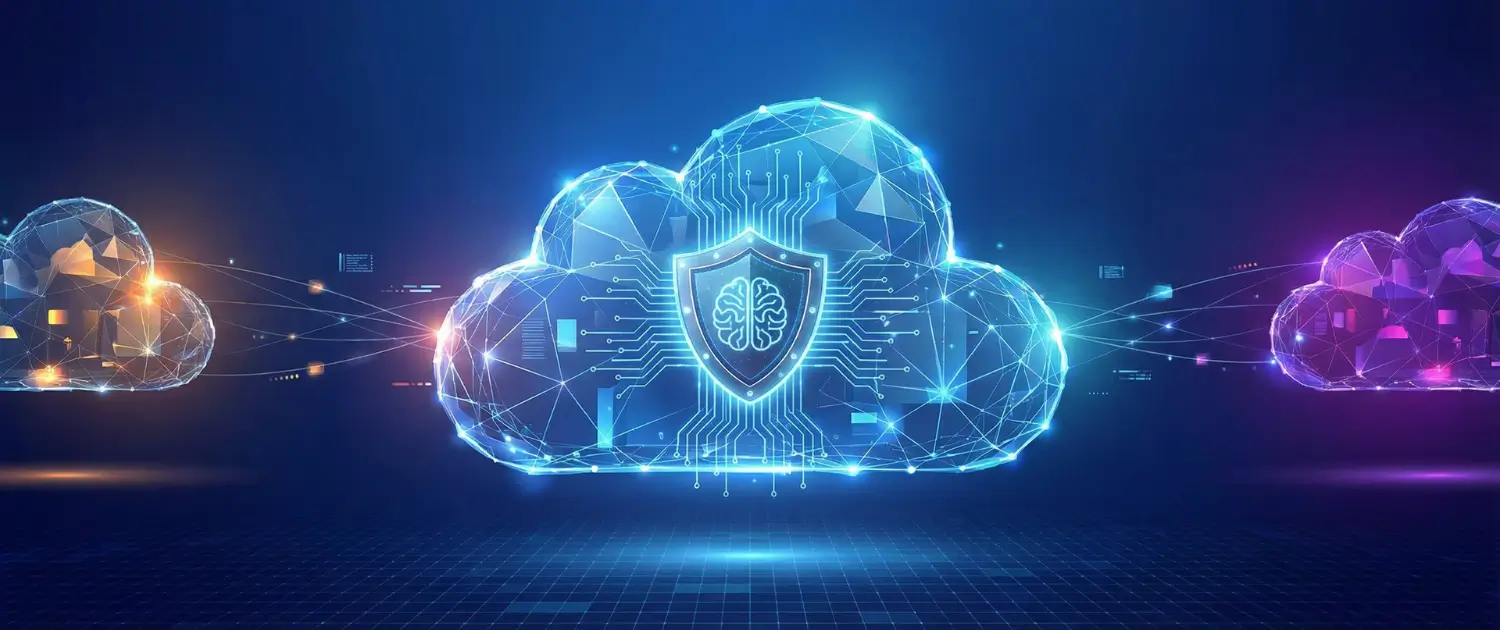
One of the biggest deals in the history of artificial intelligence, a tens of billions of dollars cloud deal between Google and Anthropic has been signed and will radically alter the competitive environment of AI creation. The agreement gives Anthropic access to up to one million of Google bespoke Tensor Processing Units (TPUs), as well as making both companies the leaders in the growing race of AI infrastructure.
Inbound Marketing Strategy
Turn technical readers into inbound marketing growth
Helpful tutorials attract qualified visitors, but reliable hosting keeps those readers engaged. Voxfor VPS gives growing websites the speed, uptime, and control needed to support stronger inbound marketing campaigns.
The Deal Strategic Architecture between Google and Anthropic

Under the agreement announced in late October 2025, Anthropic will gain access to more than a gigawatt of computing capacity set to come online throughout 2026. It is the biggest TPU purchase in the history of Google and is a key transition in the way AI companies organize their computing infrastructure. Instead of buying chips in bulk, Anthropic will lease computing capabilities in the data centers of Google, which will enable the business to develop and deploy subsequent generations of its Claude language models.
The financial scope is staggering. The industry analysts project that an average one-gigawatt data center will cost about 50 billion dollars, of which almost 35 billion goes into chip costs. This structure goes further into entrenching the relationship between the two businesses, as over the last few years Google has already poured in about 3 billion dollars into Anthropic.
“Anthropic and Google have a long standing partnership and this latest expansion will help us continue to expand compute we need to define the frontier of AI,” stated Krishna Rao, Anthropic’s Chief Financial Officer. The collaboration signifies the Anthropic swift climb in the AI market, and the business expects to reach a yearly rate of 9B USD in revenue by the conclusion of 2025 and 26B USD in 2026.
Google TPU Advantage: Breaking Nvidia’s Monopoly

The acquisition is a strategic win of Google in its quest to take on Nvidia that has a vast market share in AI hardware. Nvidia currently controls approximately 92% of the data center GPU market, a position that has allowed it to charge premium prices that some industry insiders refer to as the “Nvidia tax”. Analysts estimate that Google can operate its TPU capabilities for approximately 20% less than entities relying on Nvidia GPUs.
TPUs differ fundamentally from traditional GPUs. While Nvidia’s graphics processing units were originally designed for rendering visuals and later adapted for AI workloads, Google’s TPUs are custom-built application-specific integrated circuits designed exclusively for machine learning tasks. This specialization allows TPUs to perform excellently in deep learning applications, achieving processing speeds 15 to 30 times higher than GPUs for some workloads, and achieving energy efficiency improvements of 30 to 80 times more per watt.
Google initiated TPU development in 2013, launching the first generation in 2015 to enhance its web search capabilities. The firm has since shipped seven generations of the technology, with the most recent ‘Ironwood’ chip being the state of the art in AI acceleration hardware. By making its technology available through a cloud platform, Google is hoping to establish itself as an infrastructure of last resort for AI companies who don’t want to use Nvidia’s expensive and often in short supply GPU.
“Anthropic’s decision to significantly expand its utilization of TPUs demonstrates the strong price-performance and efficiency its teams have experienced with TPUs for several years,” said Thomas Kurian, CEO of Google Cloud. The endorsement of Anthropic, one of the leading AI startups, can encourage other companies to look at TPU-based infrastructure, which could rebalance the competitive landscape in AI chip market.
Anthropic’s Multi-Cloud Strategy: Diversification as Defense
Even after partnering with Google, Anthropic is sticking to its multi-cloud approach that has a balanced distribution of computational workloads across three platforms. The company uses Google’s TPUs, Amazon’s Trainium chips, and Nvidia’s GPUs, and each platform is optimized for specific tasks such as training, inference, and research.
This diversification approach is part of hard-won lessons from the fast-changing AI industry. By not relying on any single vendor, Anthropic can optimize for cost, performance and energy efficiency, and still remain flexible as hardware technologies continue to advance. According to insiders familiar with the company’s strategy, this approach allows every dollar spent on computing to yield greater returns compared to models tied to a single vendor.
Amazon remains Anthropic “primary training partner” and most deeply embedded infrastructure provider, having invested $8 billion in the company, more than double Google confirmed $3 billion equity stake. Under a partnership announced in November 2024, Anthropic is also collaborating closely with Amazon Annapurna Labs on the design and optimization of future generations of Trainium accelerators, AWS custom-designed chips for training AI models.
“We are developing low-level kernels that let us interface directly with the Trainium silicon, and contributing to the AWS Neuron software stack,” Anthropic explained in a blog post. This level of technical collaboration suggests that Anthropic essentially uses Amazon’s chip division as a custom silicon partner, actively influencing design decisions to ensure the hardware meets its specific needs.
The Google transaction does not reduce Amazon’s role, but rather represents Anthropic’s approach of keeping the multiple infrastructure partnerships in place to ensure that the best technology is accessible regardless of which platform proves more effective for certain workloads.
Enterprise Growth Fueling Infrastructure Demands

The massive infrastructure investments are necessary to support Anthropic’s explosive enterprise growth. The company now serves more than 300,000 business customers, representing a 300-fold increase from fewer than 1,000 business customers just two years ago. The number of large accounts—customers representing more than $100,000 in run-rate revenue—has grown nearly sevenfold in the past year alone.
Anthropic’s revenue trajectory has been equally remarkable. The company’s run-rate revenue grew from approximately $1 billion at the beginning of 2025 to over $5 billion by August 2025, making it one of the fastest-growing technology companies in history. Claude Code, the company’s autonomous coding assistant, achieved $500 million in annualized revenue within just months of its full launch in May 2025, with usage growing more than tenfold in three months.
This dramatic growth has been fuelled by enterprise adoption across a wide range of industries. SK Telecom in South Korea also increased the quality of customer service by 34 percent using Claude. Commonwealth Bank of Australia Scam losses on customers decreased by 50%. The European Parliament used Claude to translate 2.1 million historical documents into several languages. Novo Nordisk decreased their clinical documentation time by 99.9% from over 10 weeks to 10 minutes with a 50% reduction in review cycles.
“The global demand for Claude is extraordinary—from financial services in London to manufacturing in Tokyo, enterprises are trusting Claude to power their mission-critical operations,” said Chris Ciauri, Anthropic’s Managing Director of International. To keep up with this growth, Anthropic is planning to grow its customer support staff by a factor of fivefold in 2025 and is doubling its international staff.
Google’s Broader AI Infrastructure Strategy
The Anthropic partnership is a major part of Google’s overall plan, which is to dominate the infrastructure of AI. Google Cloud has positioned itself as the go-to partner for AI startups, powering 60% of global generative AI startups through its startup program, which offers $350,000 in cloud credits and access to dedicated GPU clusters. Nine out of the top ten AI labs use Google’s infrastructure, and nearly all generative AI unicorns run on Google Cloud.
This approach contrasts sharply with competitors’ strategies. While Microsoft invested nearly $14 billion in OpenAI, Amazon committed $8 billion to Anthropic, and Oracle secured a $300 billion five-year commitment starting in 2027, Google is betting on capturing the next generation of AI companies early, before they scale into global giants.
“The next generation of AI companies will likely determine which platforms dominate the long-term infrastructure economy,” explained industry analysts. By embedding Google Cloud services—from TPU access to Vertex AI and model hosting—into these companies’ workflows early, Google increases the likelihood of securing their loyalty as they scale.
Google’s infrastructure advantage is structural. Its decade-long investment in custom TPUs, culminating in the inference-optimized Ironwood chip, provides an end-to-end hardware and software stack that is more cost-effective and efficient than competitors’ reliance on third-party suppliers. This full-stack control, from silicon to software, is mirrored in its dual-pronged approach to AI models, where it develops proprietary state-of-the-art Gemini models while simultaneously fostering a developer ecosystem with open-source alternatives like Gemma.
In Q2 2025, Google’s cloud segment reported an operating income of $2.8 billion (up over 1.5 times YoY from the same period last year). The increased interest in TPUs is expected to attract more AI startups and new customers to Google’s cloud, enabling the company to take advantage of its huge investments in chip technology.
The Competitive Landscape: A Multi-Polar AI Infrastructure World
The Google-Anthropic acquisition plays out against the backdrop of intensifying competition in AI infrastructure. In September 2025, Nvidia and OpenAI made a $100 billion deal, where Nvidia’s huge chip purchases would be linked to compute capacity worth up to more than 5 million US households. Advanced Micro Devices recently secured a lucrative six-gigawatt deal with OpenAI to use its Instinct MI450 series chips. Broadcom scored its own ten-gigawatt deal with OpenAI for application-specific integrated circuits.
These developments indicate that even the biggest names in AI are reluctant to rely exclusively on any single hardware provider, creating openings for competition. Nvidia’s competitors are gaining ground rapidly. Micron Technology (MICRON) has risen 119% this year as record demand for high-bandwidth memory to power AI servers. AMD up 69%, Intel up 81% and Lam Research’s up 106%.
For Anthropic, the multi-vendor approach provides insurance against supply constraints and pricing pressures. The company’s ability to distribute workloads among Google’s TPUs, Amazon’s Trainium chips, and Nvidia’s GPUs ensures it can optimize for different metrics, cost, performance, energy efficiency depending on the specific workload.
Industry observers note that no entity, including Google, is currently aiming to fully replace Nvidia GPUs. Completely replacing this technology is impossible at this stage of AI development. Although Google provides its own chip solutions, Google continues to be one of Nvidia’s biggest customers as it needs to make sure flexibility is available for customers with a given algorithm or model that may change in unknown ways.
Implications for the Future of AI Development
Completely replacing this technology is impossible at this stage of AI development. Although Google provides its own chip solutions, Google continues to be one of Nvidia’s biggest customers as it needs to make sure flexibility is available for customers with a given algorithm or model that may change in unknown ways.
Third, the deal highlights the massive computational requirements of modern AI models. The fact that Anthropic needs access to up to one million TPU providing more than a gigawatt of computing power is evidence of the vast scale of resources needed to train and deploy the most advanced language models. This creates high barriers to entry for new competitors, and it concentrates the development of AI capability in companies with massive amounts of money and access to massive computational resources.
Fourth, the partnership exemplifies the convergence of AI model development and infrastructure provision. At the same time, Google is building their own Gemini models, and is also providing infrastructure to Anthropic which competes directly with Gemini. The dynamic relationship between cloud providers and their customers, where they compete against each other and enable each other, is becoming increasingly prevalent in the AI industry.
The collaboration also reflects the maturation of Google’s TPU technology. When Google first introduced TPUs to its cloud platform in 2018, adoption was limited. The current arrangement with Anthropic—the largest TPU commitment in Google’s history, suggests that the technology has reached a level of maturity and performance that makes it a viable alternative to Nvidia GPUs for demanding AI workloads.
Looking Ahead: The Infrastructure Arms Race
As Anthropic targets $26 billion in revenue by the end of 2026—more than double OpenAI’s projected 2025 earnings—its infrastructure requirements will continue expanding. The company has stated it will “continue to invest in additional compute capacity to ensure our models and capabilities remain at the frontier”.
Meanwhile, Google has announced $75 billion in capital investments for AI in 2025, which shows they are serious about becoming a leader in AI not just in terms of the models like Gemini, but in terms of the chips that power them. The company is also looking at new distribution channels for its TPUs and recently struck deals to place its chips in smaller cloud players’ data centers, such as London-based Fluidstack.
For the larger AI industry the Google-Anthropic deal represents a pivotal moment in the ongoing infrastructure arms-race. As computational demands keep rising and organisations search for alternatives to Nvidia’s pricey GPU, Google TPUs provide an attractive solution that balances performance, efficiency and cost. If successful, the resulting work from the partnership will help accelerate the migration towards using specialized AI chips and multi-cloud infrastructure deployment strategies that essentially re-define how the next generation of AI systems are constructed and deployed.
The stakes might not be any greater. The firms dominating AI infrastructure will probably have massive power over the success of AI applications and the rate at which the technology would develop. The move by Google to invest in TPUs and make early acquisition of AI startups is a calculated move to make sure it is in the middle of determining the future of AI not only through its models, but also by enabling innovation throughout the industry in general.
About Author

Netanel Siboni is a technology leader specializing in AI, cloud, and virtualization. As the founder of Voxfor, he has guided hundreds of projects in hosting, SaaS, and e-commerce with proven results. Connect with Netanel Siboni on LinkedIn to learn more or collaborate on future projects.