
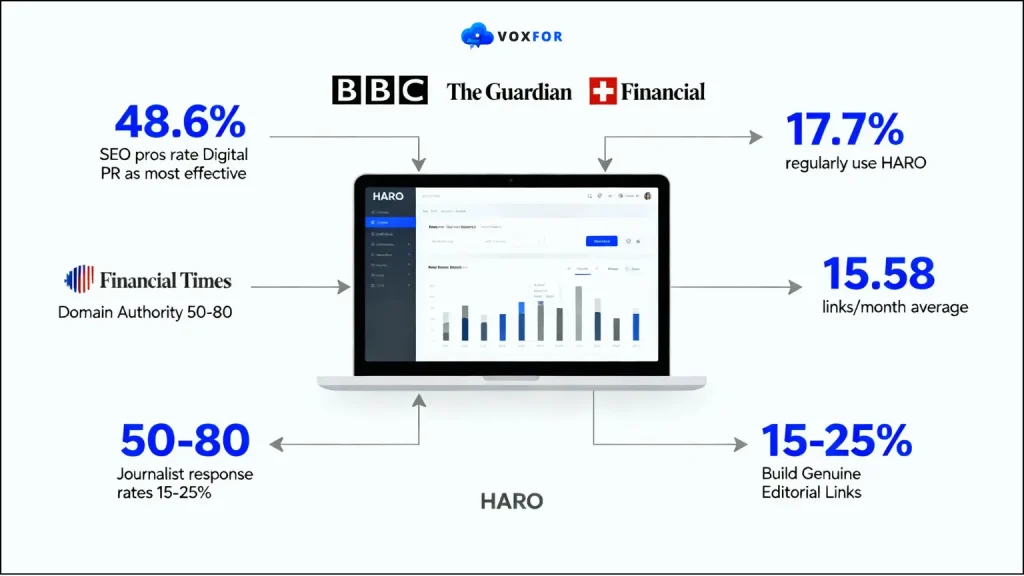
HARO (Help a Reporter Out) remains one of the highest-ROI off-page SEO tactics available in 2025. 48.6% of SEO professionals rate digital PR as the most effective link-building strategy, yet only 17.7% actively use HARO regularly, a massive adoption gap representing an enormous opportunity. Properly executed HARO campaigns generate 15.58 links per month on average, with backlinks averaging DA 50-80 from major publications like BBC, The Guardian, and Financial Times.
High-Authority Backlinks: HARO connects journalists seeking expert commentary with subject matter experts, generating editorial backlinks from established media outlets. These aren’t purchased or artificial; they’re naturally earned through genuine expertise recognition.
Natural Link Profile: Unlike manipulative link-building tactics, HARO backlinks appear organically within journalistic content, signaling authentic authority to search engines. Websites earning HARO links average Domain Authority between 50-80, substantially boosting your domain’s credibility.
Brand Visibility: In addition to ranking, HARO placements create thought leadership. When you are found by the audience on credible publications, brand perception becomes stronger, resulting in a traffic increase, inquiries, and business development.
HARO operates through straightforward mechanics: Journalists leave special requests on the topic, the experts answer with valuable information, the journalists choose the best sources, and published articles contain the expert attribution with the backlinks. Solicitations come 2-3 times a day, with a segregated industry/topic filtering so you can filter your area of expertise.
Response rates given an average of 15-25% given throughout all the responses sent in, that is, about 1 out of 4-7 pitches published. The average response rates begin at 1-3% (first-time operator), 4-6 (operating), 7-20 (optimized).
Verify Publication Authority: Not all HARO-published articles appear in authoritative outlets. Research the journalist and publication before responding; quality matters more than quantity. A single mention in Forbes outweighs dozens of placements in low-authority blogs.
Topical Relevance: Respond only to queries matching your actual expertise. 47% of journalists report receiving rarely relevant outreach, meaning personalized, on-topic responses stand out dramatically.
Response Timing: HARO queries typically feature 12-24-hour deadlines. Responding quickly dramatically increases selection odds; early responses benefit from less competition.
Lead with Value: Journalists seek sources solving their editorial challenges, not self-promotion platforms. Provide unique insights, data, or perspectives directly addressing their query before mentioning your credentials.
Keep It Concise: Busy journalists appreciate brevity. Your response should answer their question clearly in 2-3 paragraphs maximum, making their job easier.
Include Credentials Naturally: Response rates given an average of 15-25% given throughout all the responses sent in, that is, about 1 out of 4-7 pitches published. The average response rates begin at 1-3% (first-time operator), 4-6 (operating), 7-20 (optimized).
Personalization Matters: Response rates given an average of 15-25% given throughout all the responses sent in, that is, about 1 out of 4-7 pitches published. The average response rates begin at 1-3% (first-time operator), 4-6 (operating), 7-20 (optimized).
Follow-Up Professionally: After earning coverage, send brief thank-you notes and remain helpful for future stories. Providing access to credible sources is more valuable than offering story ideas alone, making reliable expert availability a competitive advantage.
Engage on Social Media: Think critically about the articles by journalists, share their works, and establish authentic relationships. These relationships create opportunities for the future with an extreme amount of effort.
Maintain Consistent Participation: Regular HARO engagement builds reputation. Journalists develop relationships with responsive, reliable experts, prioritizing them for future queries.
Track Multiple Metrics: Beyond link counts, monitor referral traffic from published articles, keyword ranking improvements, and brand search increases. A single TechCrunch article about Userpilot’s funding triggered a cascade of additional coverage and substantial referral traffic.
Monitor Domain Authority Growth: Monitor the effects of HARO backlinks on your domain in terms of authority using Ahrefs, SEMrush, or Moz.
Analyze Content Performance: Identify which response types generate the highest-quality placements, refining your approach for better results.
A SaaS startup using HARO strategically gained 15 high-quality backlinks (DA 50+) with 8 media mentions in 6 months, yielding a 300% organic visibility increase. An e-commerce brand earned 12 new backlinks and 5 feature articles in 4 months, with a 25% increase in search volume for the brand. These documented results show HARO’s ROI when executed strategically.
With digital PR rated 48.6% effective yet only 17.7% utilizing it, HARO represents a significant untapped opportunity. Organizations committing to consistent, high-quality HARO participation build authoritative backlink portfolios that competitors miss, establishing sustainable organic visibility advantages.





 Lifetime VPS Europe
 Lifetime VPS Asia
 Lifetime WooCommerce Hosting
 Lifetime Hosting
 France Lifetime Dedicated Servers
 Germany Lifetime dedicated servers
 Lifetime Game Dedicated Servers
 Chicago, US
 Tokyo, Japan
 Singapore
 Hong Kong
 Seoul, South Korea
 Amsterdem, Netherlands
 London, UK
 Stockholm, Sweden
 Oslo, Norway
 Vienna, Austria
 Zurich, Switzerland
 Sydney, Australia
 Wordpress Hosting
 VPS Hosting
 DDOS Protection
 Submit Ticket
 Full Management
 Guides
 Videos and Podcasts
 Discover Creative Ideas
 MetaAgentOS High-Ticket Support System
 Voxfor Mega Menu
 Voxfor Advanced Price Management For WooCommerce
 Voxfor Secure Live Chat and AI Support
 Voxfor Multilanguage
 Voxfor AI Content Summary


