
 Lifetime VPS Europe
 Lifetime VPS Asia
 Lifetime WooCommerce Hosting
 Lifetime Hosting
 Lifetime Game Dedicated Servers
 Chicago, US
 Tokyo, Japan
 Singapore
 Hong Kong
 Seoul, South Korea
 Amsterdem, Netherlands
 London, UK
 Stockholm, Sweden
 Oslo, Norway
 Vienna, Austria
 Zurich, Switzerland
 Sydney, Australia
 Wordpress Hosting
 VPS Hosting
 DDOS Protection
 Submit Ticket
 Full Management
 Guides
 Videos and Podcasts
 Discover Creative Ideas
 Voxfor Autonomous AI Workers
 Voxfor Mega Menu
 Voxfor Advanced Price Management For WooCommerce
 Voxfor Secure Live Chat and AI Support
 Voxfor Multilanguage
 Voxfor AI Content Summary
 Voxfor Autopilot
Ethical link building separates industry leaders from those facing Google penalties. 94% of marketers believe backlinks will remain SEO’s top ranking factor, yet unethical tactics trigger 60%-90% organic traffic drops when discovered. White-hat strategies deliver sustainable, compound growth, while black-hat approaches risk manual penalties requiring months of recovery. The choice is clear: ethical link building builds lasting authority, brand trust, and resilience against algorithm updates.
SEO growth and hosting
Support sustainable SEO with hosting built for reliable experiences
Ethical link building brings visitors in, but fast and stable hosting keeps them engaged. Voxfor VPS gives websites dedicated resources for long-term SEO and conversion growth.
Why Ethical Link Building Matters
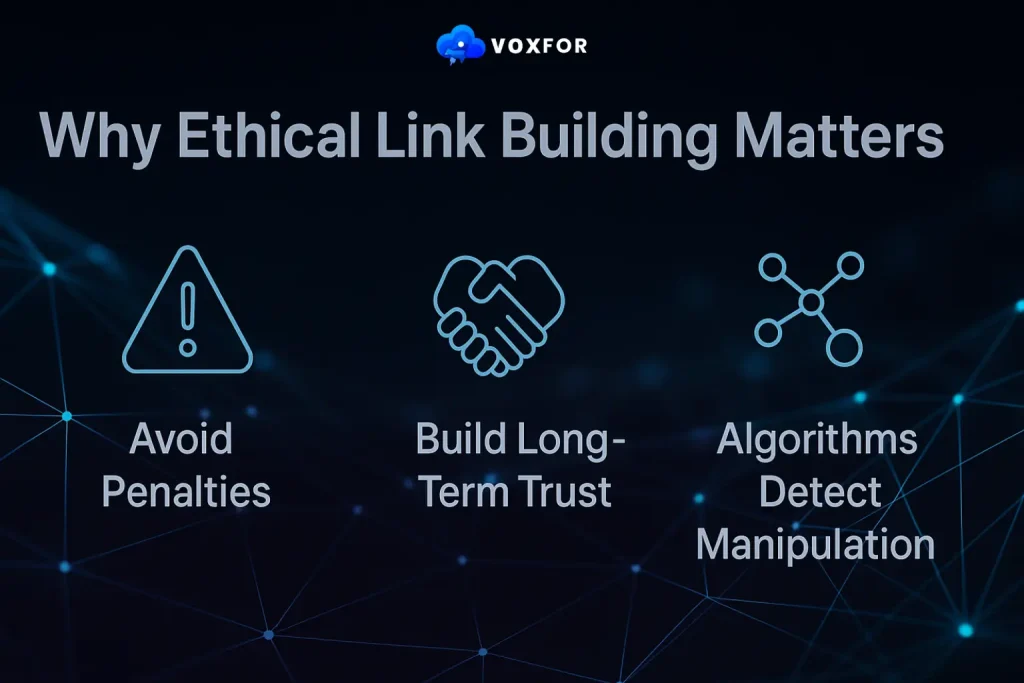
Google Penalties Are Devastating: When Google detects unethical link building, penalties can eliminate your site from search results overnight. Sites on page 2 receive less than 1% of traffic, a catastrophic revenue loss. J.C. Penney’s infamous penalty in 2011 demonstrates that even major corporations aren’t exempt from enforcement. Recovery requires significant time and resources, specialized SEO work, fresh content creation, and extensive link audits.
Trust Compounds Over Time: White-hat strategies may not deliver instant results, but they protect your brand, build genuine trust, and create lasting competitive advantages. 53% of marketers confirm backlinks will remain essential for sustainable long-term growth, making ethical approaches the only viable long-term strategy.
Algorithm Sophistication: Google Penguin, Panda, and Hummingbird algorithms automatically detect manipulative link patterns, while Google webspam team conducts manual reviews imposing penalties when unethical tactics are discovered.
Core Ethical Link Building Principles
Prioritize Content Quality First: High-caliber, relevant, user-centric content is the foundation of earned links. Search engines reward content solving genuine problems with original perspectives, making it naturally attractive for linking. Ask yourself: Is this worth linking to? Does it solve problems? Is it original?
Focus on Relationship-Based Outreach: Honest, personalized outreach mentioning specific content you appreciated dramatically improves acceptance rates compared to generic templates. Engage thoughtfully on social media, comment on relevant posts, and build genuine relationships before requesting links.
Embrace Natural Link Discovery: Rather than forcing links through manipulation, create resources others naturally discover and reference. Infographics, original research, comprehensive guides, and videos attract organic linking because they genuinely help audiences.
Maintain Editorial Standards: Partner only with reputable sites maintaining high editorial quality and avoiding spam directories, private blog networks, or keyword-stuffed anchor text. One quality link from an authority site outweighs dozens of low-quality placements.
Proven Ethical Strategies
Guest Posting Done Right: Strategic guest posting on reputable publications attracts new audiences and earns authoritative backlinks when content provides genuine value. Follow editorial guidelines, avoid over-promotion, and provide one or two relevant backlinks maximum, quality over quantity always.
Digital PR and Press Coverage: Positioning your brand as a newsworthy source attracts journalist coverage from authoritative outlets generating high-quality backlinks. Use HARO (Help a Reporter Out) to connect with journalists seeking expert sources, then disassociate from any unnatural links using Google Disavow Tool.
Influencer Collaborations: Genuine partnerships with relevant influencers create co-authored content, expert roundups, and webinars naturally incorporating backlinks while providing mutual value. Frame collaborations as win-win arrangements, never one-sided requests.
Resource Page Inclusion: Contribute genuinely valuable resources to niche-relevant resource pages, filling gaps your content uniquely addresses. Personalize pitches mentioning specific aspects of existing resource pages and explaining unique value your content adds.
Broken Link Building: Identify broken links on authority sites within your niche, then offer superior replacement content addressing the original topic’s intent. Your replacement must genuinely exceed the original resource’s value, demonstrating tangible benefits for site owners.
Community Engagement: Participate authentically in industry forums, online communities, and social media groups, providing thoughtful insights and valuable contributions. As community trust builds, members naturally link to your work as authoritative resources.
Avoiding Black-Hat Pitfalls
Never Buy Links: Purchased links violate Google guidelines and trigger algorithmic penalties when detected. The temporary ranking boost isn’t worth the permanent damage.
Avoid Link Farms and Networks: Private blog networks, link farms, and automated link generation tools create unnatural patterns triggering algorithmic detection and manual penalties. Recovery from these penalties is lengthy and expensive.
Don’t Manipulate Anchor Text: Excessive exact-match keyword anchor text appears manipulative to algorithms, triggering anchor text manipulation penalties. Use natural, varied anchor text reflecting genuine editorial linking.
Skip Irrelevant Exchanges: Links from contextually irrelevant sites signal manipulation, regardless of domain authority. Relevance and editorial context matter more than raw authority.
Measuring Ethical Success
Track Quality Metrics: Monitor Domain Authority growth, referring domain diversity, referral traffic quality (bounce rate, pages per session, conversions), and keyword ranking improvements. Focus on sustainable, compound growth, not rapid spikes indicating manipulation.
Long-Term Timeline: Expect 3-6 months before seeing significant improvements. Ethical link building compounds like interest, gains seem small initially but snowball into substantial results over time.
Algorithm Update Resilience: White-hat strategies withstand algorithm updates, maintaining steady rankings despite Google constant refinements. Black-hat sites experiencing dramatic ranking drops during updates confirm the value of ethical approaches.
The Future of Link Building
53% of marketers confirm backlinks remain as important as today for sustainable long-term growth, while 94% believe backlinks will stay SEO’s top ranking factor. As AI advances and search sophistication increases, ethical link building’s importance grows, not diminishes.
Sustainable link-building strategies in 2026 emphasize quality over quantity, relationship-based approaches over manipulation, and long-term value over short-term gains. Organizations implementing these principles today position themselves for dominance as algorithms evolve.
Conclusion
Ethical link building offers undeniable advantages: sustainable growth, brand trust, penalty avoidance, and lasting authority. With 94% believing backlinks remain top-ranking factors, 60%-90% organic traffic drops from penalties, and white-hat strategies delivering compound growth, the business case overwhelms arguments for shortcuts.



