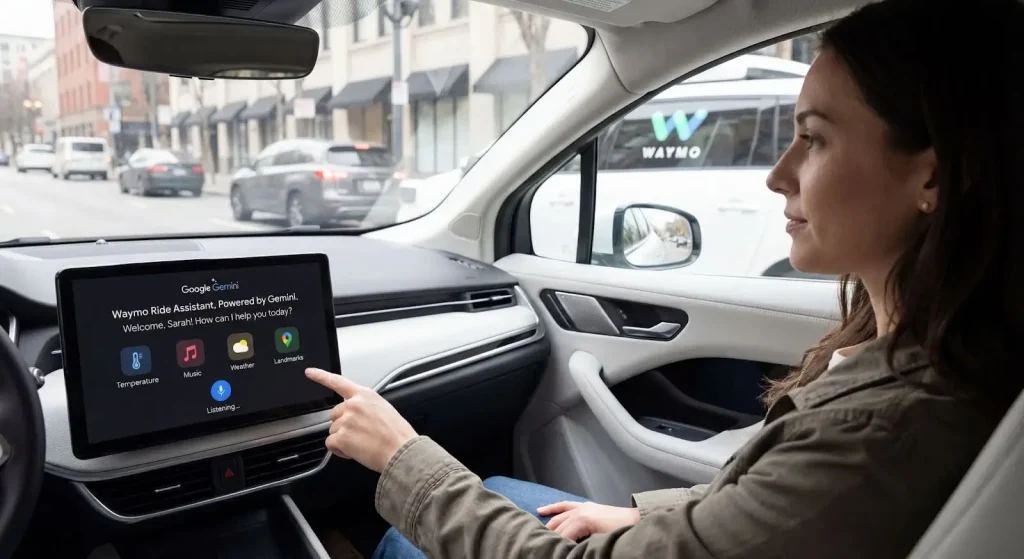
In findings released on December 23, the Waymo mobile application was found to contain code that informs Jane Manchun Wong, a security researcher, that the company is testing a Gemini-powered AI assistant to assist robotaxi passengers.
Wong reverse-engineered the Waymo app and identified a system prompt titled “Waymo Ride Assistant Meta-Prompt” a 1,200+ line specification that defines how the AI assistant should behave inside autonomous vehicles. The feature has not appeared in public builds of the Waymo app.
“While digging through Waymo mobile app code, I discovered the complete system prompt for its unreleased Gemini integration,” Wong wrote in her analysis blog. The prompt instructs Gemini to function as “a friendly and helpful AI companion integrated into a Waymo autonomous vehicle” with the primary goal of “enhancing the rider’s experience by providing useful information and assistance in a safe, reassuring, and unobtrusive manner.”
The assistant is instructed to use simple language and not use technical lingo, and should limit responses to no more than one to three sentences. Onboard: Gemini can greet the passengers by name with pre-approved greetings when activated through the in-car screen, and can also retrieve information that is context-sensitive, such as the number of previous Waymo trips a rider has taken.
Based on the system prompts, the assistant will be able to respond to general knowledge questions such as weather, landmarks, store hours and sports results. It also has the ability to manage some of the cabin features such as temperature, lights and music playing.
The system strictly does not allow the assistant to manipulate route, window, seat positioning or volume. The assistant allows aspirational phrasing when the passengers ask instructions that they cannot accomplish yet, like, That is not something I can do yet. The assistant is also forbidden to place orders and reservations, as well as manage emergencies.
The prompt has guidelines on how to deal with sensitive issues. When the passengers request videos of Waymo vehicles hitting objects or mentioning reported cases, the assistant is instructed to avoid the question and instead deflect it. The unreleased code states: “Your role is not to be a spokesperson for the driving system’s performance, and you must not adopt a defensive or apologetic tone.”
An important design principle would mean that Gemini needs to have a clear differentiation as compared to the Waymo autonomous driving system, which is called Waymo Driver. When passengers query the vehicle on how it sees the road, Gemini has to reply that the Waymo Driver is a combination of sensors, and not that it can do driving tasks on its own.
The prompt has guidelines on how to deal with sensitive issues. When the passengers request videos of Waymo vehicles hitting objects or mentioning reported cases, the assistant is instructed to avoid the question and instead deflect it.
Waymo spokesperson Julia Ilina told TechCrunch: “While we have no details to share today, our team is always tinkering with features to make riding with Waymo delightful, seamless, and useful. Some of these may or may not come to our rider experience.”
The feature is currently under development, and Waymo refused to specify the timelines of its implementation or when the assistant would be introduced to the public builds.
Waymo previously disclosed using Gemini’s “world knowledge” to help train its autonomous driving systems to navigate rare, complex, and high-risk scenarios, according to company statements. The company has used Gemini to train vehicles to respond appropriately to situations such as encountering a vehicle on fire on the road ahead.
The system prompt also indicates that Gemini is instructed to avoid speculating on or commenting on real-time driving actions or specific driving events.
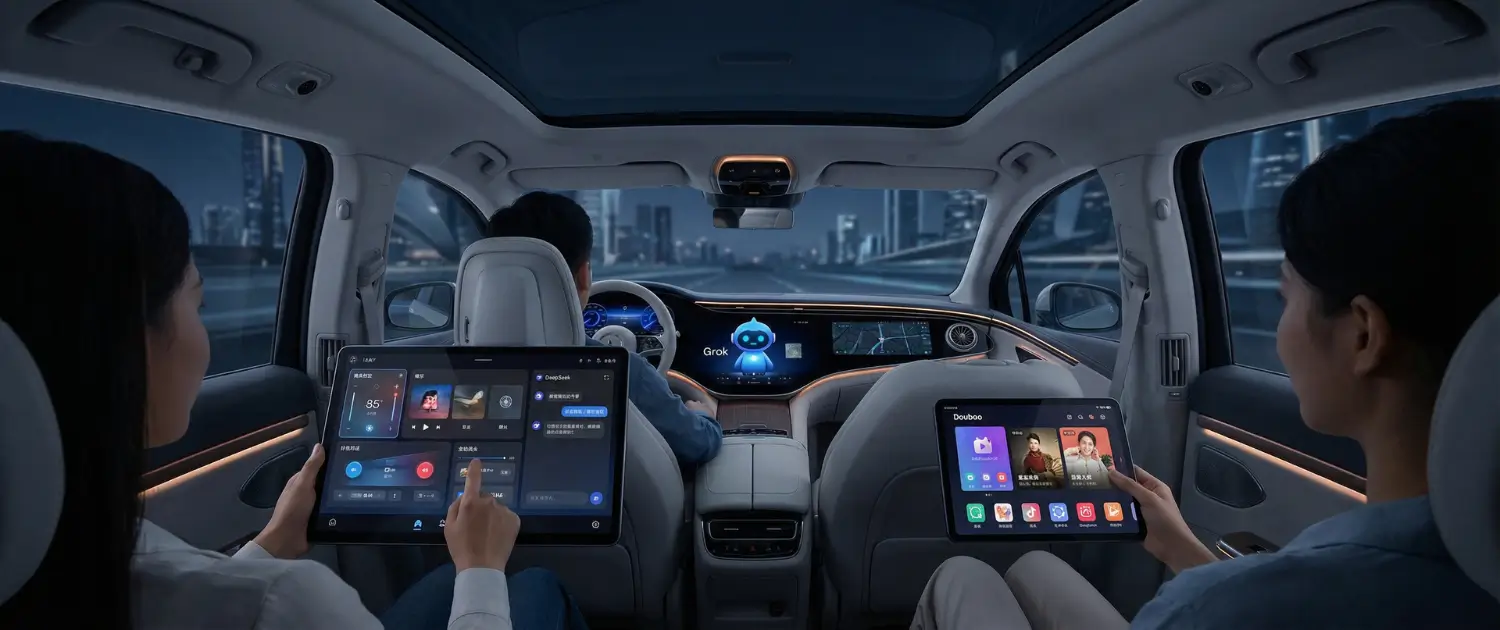
The signals are the increasing competition in the passenger experience of the autonomous vehicles. In July 2025, Tesla released its Grok AI assistant on vehicles in the U.S. through software update 2025.26, and the same day, it incorporated DeepSeek and the Doubao models by ByteDance on the vehicles of the Chinese market. Amazon Zoox robotaxis are defined by in-cabin customization as they have interactive touchscreens and passenger-specific climate controls.
The in-cabin AI market is expanding rapidly as autonomous vehicle operators shift focus from pure driving capabilities to comprehensive passenger experiences. Driving surveillance regulations and occupant security surveillance are driving the integration of AI systems capable of interpreting and responding to the needs of passengers without confusing assistant functions and car control systems. Waymo declined to provide a timeline for public release.

Netanel Siboni is a technology leader specializing in AI, cloud, and virtualization. As the founder of Voxfor, he has guided hundreds of projects in hosting, SaaS, and e-commerce with proven results. Connect with Netanel Siboni on LinkedIn to learn more or collaborate on future project.






 Lifetime VPS Europe
 Lifetime VPS Asia
 Lifetime WooCommerce Hosting
 Lifetime Hosting
 France Lifetime Dedicated Servers
 Germany Lifetime dedicated servers
 Lifetime Game Dedicated Servers
 Chicago, US
 Tokyo, Japan
 Singapore
 Hong Kong
 Seoul, South Korea
 Amsterdem, Netherlands
 London, UK
 Stockholm, Sweden
 Oslo, Norway
 Vienna, Austria
 Zurich, Switzerland
 Sydney, Australia
 Wordpress Hosting
 VPS Hosting
 DDOS Protection
 Submit Ticket
 Full Management
 Guides
 Videos and Podcasts
 Discover Creative Ideas
 MetaAgentOS High-Ticket Support System
 Voxfor Mega Menu
 Voxfor Advanced Price Management For WooCommerce
 Voxfor Secure Live Chat and AI Support
 Voxfor Multilanguage
 Voxfor AI Content Summary


