
As applied to organizations with VPS environments, whether operating a single application or managing multi-cloud infrastructure, deployment of AI firewalls is not only more effective security, but a fundamental change in the direction of proactive and intelligent defense that stays ahead of the competition, increasingly weaponizing their own AI.
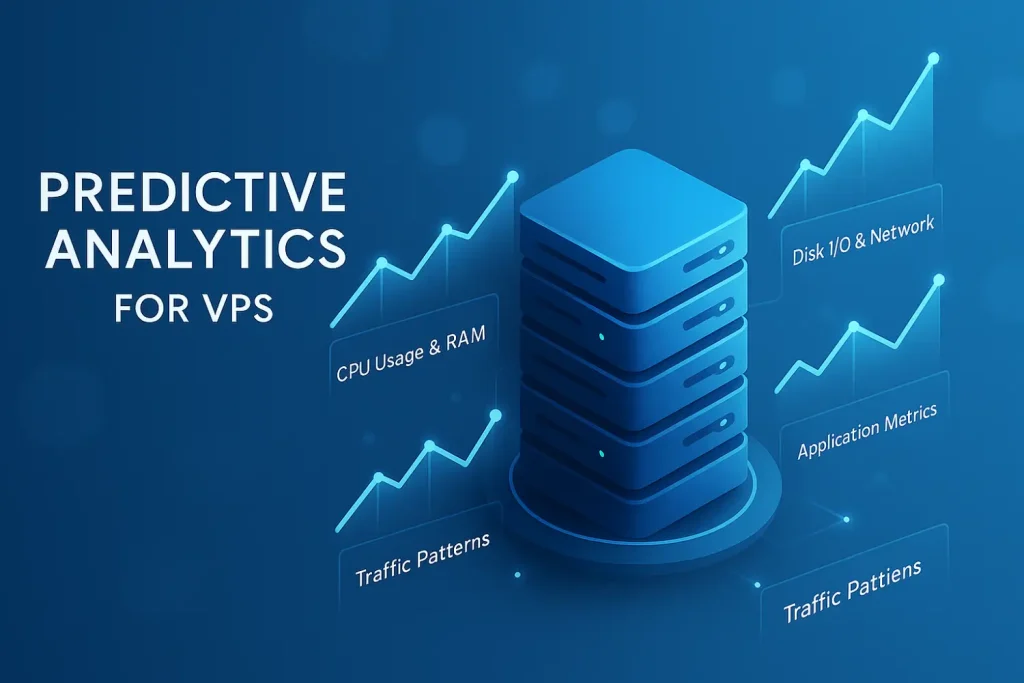
Predictive analytics integrates both machine learning with statistical algorithms to predict the possible future based on past and current data. In contrast to the traditional approach to the management of hosting, where hosting responds to issues once they have been identified, AI systems are based on the patterns defining how resources are utilized to forecast their needs before the issue affects the performance.
For VPS environments, predictive models analyze continuous data streams:
These predictions are optimized by the machine learning system, which adjusts to deviations in the use patterns and other external influences. Gradually, it develops an advanced idea of the correlation between the business activities and the resources and is able to predict the spikes in traffic and the resources needed accurately.
Cost Optimization: Companies that have applied ML-based cost optimization realize 25-40 percent savings of the use of cloud and they do not lose performance. Instead of provisioning resources excessively on just-in-case scenarios, AI systems suggest the precise amount of resources required, and this gets rid of any unnecessary resources, without compromising trustworthiness.
Traffic Forecasting: The predictive analytics allows scaling on demand before traffic peaks. E-commerce solutions expect peaks of traffic, media organizations expect the popularity of content, and SaaS providers automatically expand during peak traffic periods. The outcome is smooth user experiences devoid of emergency scaling incidences and unforeseen outages.
Downtime Prevention: The predictive analytics allows scaling on demand before traffic peaks. E-commerce solutions expect peaks of traffic, media organizations expect the popularity of content, and SaaS providers automatically expand during peak traffic periods. The outcome is smooth user experiences devoid of emergency scaling incidences and unforeseen outages.
Resource Optimization: AI will also be able to keep identifying excessively provided resources that are wasting budget without value generation. Organizations ensure optimal performance at a minimum cost by suggesting rightsizing of underutilized instances and smart consolidation of the workloads.
E-Commerce Platforms: During flash sales and promotional campaigns, predictive analytics forecasts traffic volume weeks in advance. AI automatically allocates additional CPU, memory, and bandwidth—then deallocates these resources when demand normalizes. One retail company reported a 25% cost reduction after implementing ML-driven resource management.
SaaS Applications: Predictive models are models used by multi-tenant SaaS providers to predict the per-tenant resource demands. The system is capable of dynamically modifying allocations according to the usage patterns of individual customers so that the performance remains constant without unwarranted cost build-up.
Startup Applications: With virality, the traffic of media companies becomes erratic. Predictive analytics uses a signal of viewer engagement and past patterns to predict the demand peaks so that infrastructure can scale gradually without affecting the performance.
Define Clear Objectives: Establish whether you’re prioritizing traffic peak prediction, downtime reduction, or cost optimization. This focus guides tool selection and measurement frameworks.
Ensure Data Quality: The quality of input data directly affects the AI effectiveness. Companies need to collect detailed logs of the CPU, memory, and network statistics, as well as business-related data (marketing campaigns, product releases, seasonal events).
Choose Appropriate Models: Different scenarios require different algorithms. Some organizations benefit from linear models for straightforward predictions, while others need neural networks for complex multi-variable forecasting. Match the model to your specific requirements.
AWS Services: Amazon Forecast enables time-series forecasting for VPS resource planning. AWS SageMaker provides ML model development and deployment capabilities specifically designed for predictive analytics.
Google Cloud AI: AutoML and TensorFlow frameworks integrate seamlessly with VPS performance data for powerful predictive insights.
Azure Machine Learning: Azure ML platform offers integrated tools for data preparation, model training, and deployment with strong support for cloud resource optimization.
Cloud Cost Optimization: Platforms like Scalr provide ML-based cost optimization with automated rightsizing and intelligent resource allocation.
As VPS hosting evolves, predictive analytics integration becomes a standard rather than a premium feature. Edge computing, hyper-personalized resource allocation, and autonomous security monitoring represent emerging trends. Organizations adopting these technologies today establish competitive advantages tomorrow.
By implementing AI-driven predictive analytics for VPS resource management, businesses transform hosting from a reactive, problem-solving exercise into a proactive, strategic advantage—delivering consistent performance, controlled costs, and minimal disruption.





 Lifetime VPS Europe
 Lifetime VPS Asia
 Lifetime WooCommerce Hosting
 Lifetime Hosting
 France Lifetime Dedicated Servers
 Germany Lifetime dedicated servers
 Lifetime Game Dedicated Servers
 Chicago, US
 Tokyo, Japan
 Singapore
 Hong Kong
 Seoul, South Korea
 Amsterdem, Netherlands
 London, UK
 Stockholm, Sweden
 Oslo, Norway
 Vienna, Austria
 Zurich, Switzerland
 Sydney, Australia
 Wordpress Hosting
 VPS Hosting
 DDOS Protection
 Submit Ticket
 Full Management
 Guides
 Videos and Podcasts
 Discover Creative Ideas
 MetaAgentOS High-Ticket Support System
 Voxfor Mega Menu
 Voxfor Advanced Price Management For WooCommerce
 Voxfor Secure Live Chat and AI Support
 Voxfor Multilanguage
 Voxfor AI Content Summary


