Lifetime VPS Europe
 Lifetime VPS Asia
 Lifetime WooCommerce Hosting
 Lifetime Hosting
 Lifetime Game Dedicated Servers
 Chicago, US
 Tokyo, Japan
 Singapore
 Hong Kong
 Seoul, South Korea
 Amsterdem, Netherlands
 London, UK
 Stockholm, Sweden
 Oslo, Norway
 Vienna, Austria
 Zurich, Switzerland
 Sydney, Australia
 Wordpress Hosting
 VPS Hosting
 DDOS Protection
 Submit Ticket
 Full Management
 Guides
 Videos and Podcasts
 Discover Creative Ideas
 Cybersecurity Services
 Voxfor Mega Menu
 Voxfor Advanced Price Management For WooCommerce
 Voxfor Secure Live Chat and AI Support
 Voxfor Multilanguage
 Voxfor AI Content Summary
 Voxfor Autopilot

On Tuesday, October 28, 2025, Amazon announced that it would cut around 14,000 corporate jobs, which is the largest number of layoffs in the company since 1994 that marking the start of the seismic change in the manner in which artificial intelligence is transforming the modern work environment. This is a definite sign that the warnings that CEO Andy Jassy had previously given regarding job displacement due to AI were not speculative but a roadmap.
Inbound Marketing Strategy
Turn technical readers into inbound marketing growth
Helpful tutorials attract qualified visitors, but reliable hosting keeps those readers engaged. Voxfor VPS gives growing websites the speed, uptime, and control needed to support stronger inbound marketing campaigns.

Amazon layoffs impact corporate workforce as AI transformation accelerates.
The Official Announcement and Strategic Rationale
In a memo released on the corporate blog of Amazon, Senior Vice President of People Experience and Technology, Beth Galetti, explained why the company decided to downsize its corporate workforce by about 14,000 positions. The retrenchments constitute about 4 percent of the number of 350,000 corporate employees of Amazon, although Reuters published a report on Monday that the number of job cuts might ultimately be 30,000.
Galetti explained that the work we are doing today continues this effort to make it even greater by decreasing bureaucracy, layers, and reallocation of resources so that we are investing in our biggest bets and what is most important to our customers in their current and future needs. She stressed that such AI generation is the most revolutionary technology that we have observed since the Internet, which can allow companies to be inventive than ever before.
The affected employees will be given 90 days to find their positions internally, with the recruiting teams at Amazon giving preference to internal candidates. The individuals who will not be able to get new jobs will be provided with severance packages, outgoing services, health insurance benefits, and other transition services.
Andy Jassy’s AI Vision Becomes Reality
This workforce reduction directly fulfills predictions made by CEO Andy Jassy in June 2025, when he candidly told employees that generative AI would reduce Amazon’s total corporate workforce. “As we deploy more Generative AI and agents, the nature of our work will evolve. We will require fewer individuals in some current roles while needing more in others,” Jassy stated.
During Amazon’s July earnings call, Jassy emphasized that companies face a choice: embrace AI transformation and shape the change, or “wish it away and have it shape you”. He described how AI is already transforming coding, finance, business process automation, and customer service operations throughout Amazon.
The CEO’s vision extends beyond Amazon. Jassy has stated that AI’s impact will redefine how “billions” work and live across companies and sectors, though he acknowledged “many of these agents are still in development”.

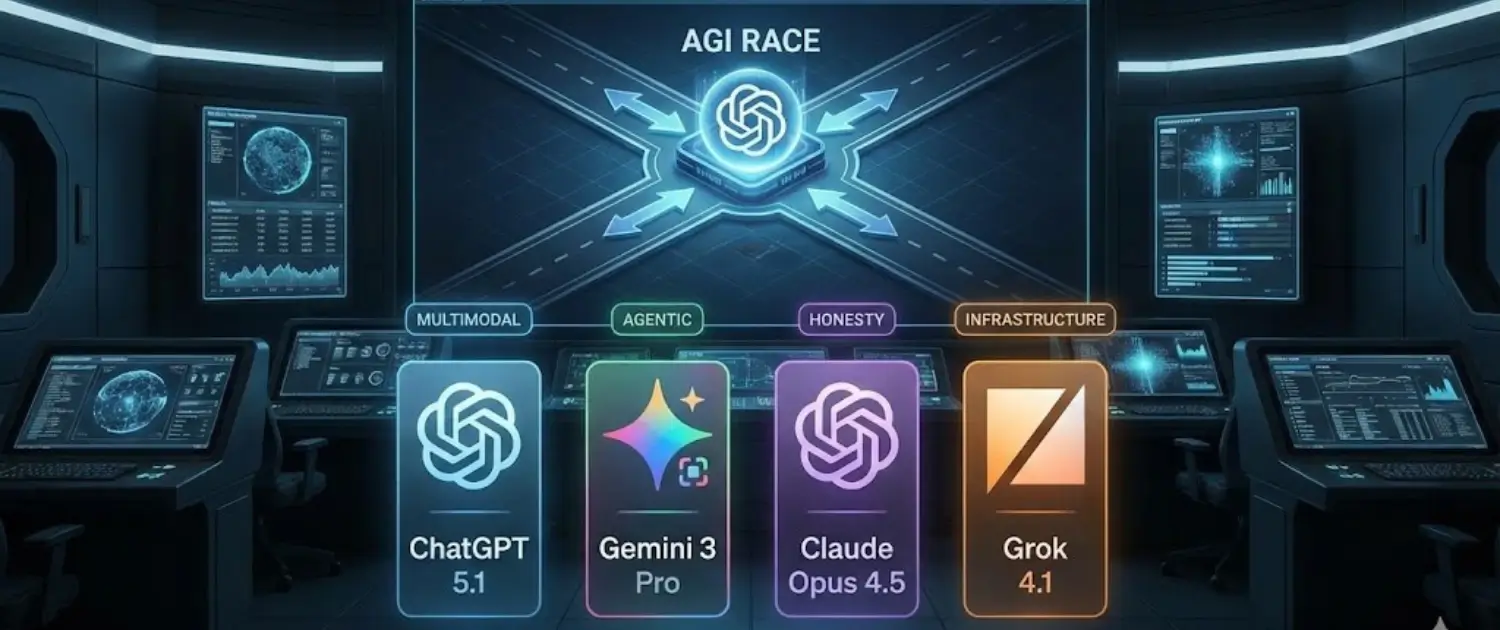
AGI development accelerates at an unprecedented pace, reshaping corporate strategies
The AGI Race Accelerates at Dizzying Speed
Amazon’s workforce restructuring coincides with a dramatic acceleration in artificial general intelligence development. While earlier surveys placed AGI’s arrival around 2040-2060, recent forecasts from AI entrepreneurs suggest it could emerge as early as 2026-2035.
A 2025 AI Index framework scores GPT-5 as roughly halfway to AGI, achieving 57% on a battery of diverse capability tests compared to GPT-4’s 27%. The analysis found that task completion capabilities have been doubling roughly every seven months, meaning AI systems could soon handle complex tasks, taking humans days or weeks.
In August 2025, MIT Technology Review reported that aggregate predictions place at least half the probability that AI systems will meet a variety of AGI milestones by 2028. In an interview, Anthropic CEO Dario Amodei has said that, by 2026, powerful AI might become possible.
This high rate of development is driving huge corporate investments. In 2024, increasing by 18.7 percent, generative AI drew in privately financed investment globally of up to 33.9 billion U.S. dollars. Amazon by itself declared a multi-billion-dollar investment in North Carolina, Pennsylvania, and Australia to accelerate cloud infrastructure and innovation in AI.
Corporate America Embraces the AI Workforce Shift
Amazon is far from alone in restructuring its workforce around AI capabilities. Over 89,000 tech workers have been laid off in 2025 across more than 200 companies, with some analyses suggesting over 50,000 layoffs were directly tied to AI and automation adoption.

AI automation transforms corporate workforce structures across the tech industry.
Recent high-profile examples illustrate the trend:
Accenture eliminated over 11,000 employees in 2025, citing an inability to reskill certain roles for an AI-first model. CEO Julie Sweet acknowledged, “Every new wave of technology has a time where you have to train and retool. That time is now”.
Meta told employees in October 2025 that their jobs were being replaced by technology, with an internal memo stating, “many routine decisions can now be handled efficiently by technology”.
Intel announced 21,000-25,000 job cuts (15-24% of workforce) during 2024-2025, redirecting investment from legacy operations toward AI chip and foundry operations.
The Future of Jobs Report 2025 by the World Economic Forum estimates that 92 million jobs will have been lost by automation by the decade against the 170 million new jobs that will be created. This will constitute a net addition of 78 million jobs but there is a lot of structural tension with transition.
Who Gets Displaced: The Skills Divide Widens
Goldman Sachs estimates a large scale effect of AI adoption on the U.S. workforce because 6-7 percent of the U.S. workforce may be jobless as a result of AI adoption. The disproportionate exposure is not chance, particular jobs and industries are exposed.
Stanford Digital Economy Lab research revealed a 13% decline in entry-level recruitment for AI-exposed jobs since the rise of large language models. Roles in software development, customer service, and clerical work are currently most susceptible.
Employment growth has fallen below trend in marketing consulting, graphic design, office administration, and telephone call centers amid reports of AI-related efficiency gains. Technology-sector employment as a share of overall employment has decreased steadily since November 2022.
Microsoft conducted a study of 40 jobs that AI would probably take over, such as interpreters, translators, customer service representatives, writers, journalists, and market research analysts. On the other hand, some of the safe jobs are roboticists, physician assistant, oral surgeon, massage therapist as well as highway maintenance workers.
The Productivity Paradox: More Output, Fewer Workers
Despite workforce reductions, AI is driving substantial productivity gains. PwC’s 2025 Global AI Jobs Barometer found that industries most exposed to AI experienced three times higher growth in revenue per employee. Wages are rising twice as quickly in AI-exposed industries compared to those least exposed.
Indeed’s GenAI Skill Transformation Index reports that generative AI users save an average of 5.4% of work hours weekly, approximately 2.2 hours in a 40-hour workweek. More than a quarter (26%) of jobs posted on Indeed could be “highly” transformed by GenAI, while 54% face “moderate” transformation.
Vanguard research estimates that by 2035, the average automation rate across all U.S. jobs will exceed 20%, equivalent to freeing up one day of work per week. This 20% productivity lift spread over 10 years would put GDP growth near 3% during the 2030, the fastest trend since the late 1990s.
Current Adoption Rates Signal More Disruption Ahead
The integration of AI in the workplace is still at its infancy and thus it can be concluded that the transformation is still in its initial phases. According to the survey by McKinsey of 2025, there is an increasing organizational usage, with 78 percent of organizations currently using AI in at least one business activity, compared to 72 percent in 2024. Nevertheless, a survey of the U.S. showed that only 9.3 percent of companies had utilized generative AI in production within the past two weeks.
Gallup reported that 27% of white-collar employees frequently use AI at work, an increase of 12 percentage points since 2024. Adoption varies dramatically by sector: technology (50%), professional services (34%), and finance (32%) lead implementation.
The opportunity windows are created by the adoption gap. WEF has cautioned that 39 percent of employees in the world will require reskilling in 2030, but most organizations have not operationalized transition strategies. However, now 38 percent of the companies provide AI-related training, in spite of 82 percent business leaders recognizing it as important.
The Human Cost: Trust, Transparency, and Transformation
Amazon strategy brings out an important conflict in the artificial intelligence upgrades. Companies are afraid of losing the jobs they are trying to bring by inviting employees to accept AI and at the same time reminding them that the company will take away their jobs.
According to Forbes analysis, enterprise AI needs the people-centric approach that is concerned with redefining human-specific work. The lack of trust, apparent value propositions, and the lack of a cohesive vision can probably lead to the failure of AI initiatives. According to the PwC research, the real performance is improved when the AI triggers the overall transformation of the organization by reconsidering the value creation instead of performing the tasks.
The culture that surrounds AI at the workplace is contradictory. Although 2 out of 3 workers claim optimism, 3 out of 4 are concerned with replacement. It is estimated that about 56-57 percent of the employees conceal their AI usage or show AI output as their own output, implying that the tools are still taboo despite their extensive use.
What Comes Next: Permanent Restructuring or Temporary Disruption?
Goldman Sachs economists estimate that temporary unemployment from AI adoption typically increases the U.S. jobless rate by 0.3 percentage points for every 1 percentage point gain in technology-driven productivity growth. However, such displacement tends to disappear after two years.
Amazon has signaled continued workforce evolution. Galetti’s memo stated that looking ahead to 2026, the company expects to continue hiring in key strategic areas while finding additional places to remove layers and realize efficiency gains.
Neil Saunders, GlobalData managing director, termed the layoffs as being one of the continued attempts by Amazon to improve its efficiency and focus: Markets around the world are narrowing and the costs under the carpet are rising. This is not a situation that Amazon can escape and it should act to ensure it continues to record good financial results. This in a great way means the replacement of human resource with technological infrastructure.
To further discuss the technical bottlenecks and progress metrics of AGI, the recent research frameworks will offer a full evaluation of the existing capabilities and projections of the timeline.
The Bottom Line: The 14,000-person layoff at Amazon is not its first act of cost-cutting, but it is a historical event as it marks the beginning of AI-driven workforce transformation turning to speculation of the future and becoming a reality. As AGI schedules speed up, companies start adopting it, and the productivity is becoming real, the twenty-twenties are turning out to be the decade in which the employment relationship between the company and the employee is fundamentally rewritten by artificial intelligence. It is not merely a race concerning the creation of smarter machines anymore, it is about which survives the transition.
About Author

Netanel Siboni is a technology leader specializing in AI, cloud, and virtualization. As the founder of Voxfor, he has guided hundreds of projects in hosting, SaaS, and e-commerce with proven results. Connect with Netanel Siboni on LinkedIn to learn more or collaborate on future project.