How New Claude Models and VPS Hosting Are Changing Developer Workflows
Last edited on July 4, 2026

The newest model story from Anthropic is progressing quickly. Claude Fable 5 and Claude Mythos 5 were introduced on June 9, 2026 as Anthropic fifth-generation Claude models. Fable 5 is the best of the widely released models, according to Anthropic, while Mythos 5 is the same underlying model, except with some restrictions removed for other applications, like cybersecurity and some applications in the biology domain. In terms of capabilities, Anthropic also considers Mythos-class models to be more capable than the Opus tier.

But it’s not just that that was an important move. What followed made it more so important. This U.S. government directive was issued on June 12th, which led to Anthropic halting access to Fable 5 and Mythos 5. Later on July 1, anthropic released Fable 5 globally, whereas Mythos 5 was limited to a few select organizations. While this isn’t a full knock-down, knock-down on Mythos 5, AP reported it’s currently being restored only for select, government-approved U.S.-based organizations, which suggests the public version of the game is called Fable 5, and the restricted-access version is Mythos 5 and a frontier level.

That’s because that’s not just a benchmark narrative, it’s a story of frontier AI that’s more than “which model scored higher?” Now it’s a matter of capability, safety, access, deployment, and operation in the real world. It’s not like it said in the rollout language, but it says it in Anthropic’s own notes on the Fable 5 redeployment, and access, safeguards, and governance are now baked into the product itself.

Build and Launch Your AI Ideas on Voxfor VPS

Turn your AI-powered ideas into real online products with Voxfor VPS. Whether you are building with Claude, creating automation tools, testing AI agents, launching a SaaS platform, or deploying your first business app, Voxfor VPS gives you the speed, control, and stable server environment you need to move from idea to live project faster.

What Claude Fable 5 and Mythos 5 can actually do

Anthropic says Fable 5 and Mythos 5 can work autonomously for longer than any previous Claude models. In the launch material, the company highlights stronger performance in software engineering, knowledge work, vision, memory, and life sciences research. One of its most practical examples came from Stripe early testing: Anthropic says Fable 5 handled a codebase-wide migration in a 50-million-line Ruby codebase in one day, a task Stripe estimated would have taken a team more than two months by hand. Anthropic also says Fable 5 can stay focused across millions of tokens, use persistent notes to improve its own output, and rebuild web app code from screenshots.

On the product side, Anthropic positions Fable 5 for ambitious, long-running, asynchronous work. It says the model can run inside agent systems for days at a time, plan across stages, delegate to sub-agents, write its own tests, and handle complex enterprise workflows with less supervision. That is a meaningful shift from “good chatbot” to “serious execution layer.”

Mythos 5 is the more sensitive part of the story. Anthropic says it is the same underlying model as Fable 5, but with safeguards lifted in some areas, especially around cybersecurity. The company launched it through Project Glasswing, and says it has the strongest cybersecurity capabilities of any model in the world. Project Glasswing itself was created because Anthropic believed Mythos-class systems had reached a point where they could outperform almost all humans at finding and exploiting software vulnerabilities, and Anthropic later said Glasswing partners had already found more than 10,000 high- or critical-severity security flaws using Mythos Preview.

Anthropic’s own positioning of the current Claude lineup suggests a practical stack for builders: Sonnet 5 for lower-cost day-to-day throughput, Fable 5 for the hardest generally available coding and knowledge tasks, and Mythos 5 for vetted high-risk security and science environments. That is not Anthropic’s exact sentence, but it is a fair inference from its model docs, pricing, and access rules. Sonnet 5 is available everywhere today, with introductory pricing of $2 per million input tokens and $10 per million output tokens through August 31, 2026, then standard pricing of $3 / $15. Fable 5 is priced at $10 / $50.

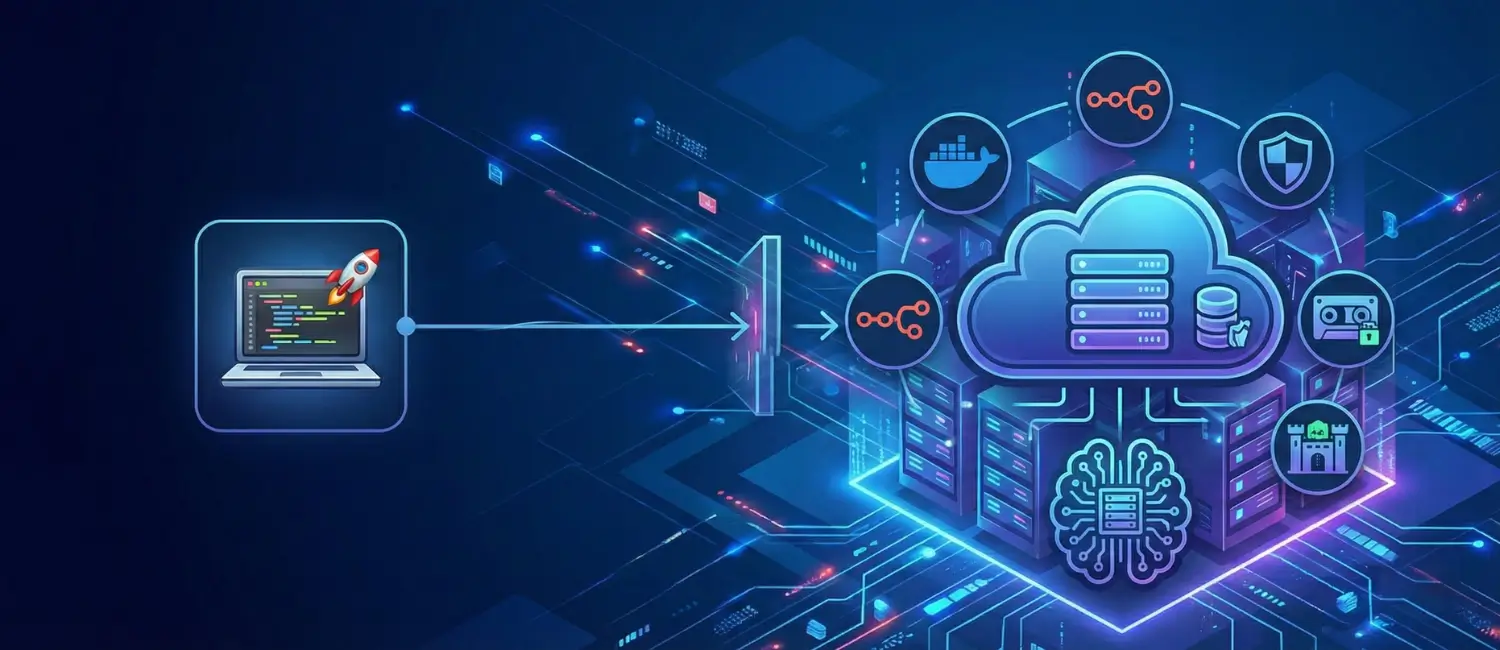
The simple graphic below turns that product positioning into something easier to picture.

choosing the right claude model for vps deployment

How this changes the way developers think

The biggest shift is not that developers suddenly stop coding. The shift is that developers move up one level. Before, the main job was often writing everything line by line. With models like Fable 5 and Sonnet 5, the higher-value job increasingly becomes framing the problem, defining constraints, reviewing output, testing edge cases, and deciding what goes live. That is the shift Anthropic’s examples keep pointing toward: longer-horizon work, fewer turns, more autonomy, and more reliable follow-through.

You can see that change in Anthropic published partner feedback. On the Fable 5 page, Anthropic highlights early claims that the model opens long-horizon problems that were previously out of reach, improves agentic coding and prototyping, handles more capable engineering in fewer turns, and can “one-shot” some apps that previously needed many prompts. Anthropic also cites GitHub view that the direction of travel is toward developers handing more ambitious work to agents across the software lifecycle. Those comments are still vendor-picked testimonials, so they should not be read as neutral benchmarking. But taken together, they strongly suggest that the developer role is shifting from manual builder to technical director and finisher.

Sonnet 5 reinforces the same theme from a cheaper angle. Anthropic says partners described Sonnet 5 as more agentic than previous Sonnet models, better at finishing multi-step tasks, stronger at checking its own output without being told, and attractive on price. That matters because, for many real businesses, the workflow change will not start with the most expensive frontier model. It will start with the model that is good enough, cheaper, and easier to scale and then escalate hard jobs to Fable 5 when needed. That is the most practical reading of Anthropic’s current lineup.

Here is the mindset shift in plain language.

Old and New mindset developer chart

How this can turn an idea into a business faster

This is where these new models become more than an AI talking point. Anthropic says Fable 5 can turn screenshots into code, sustain multi-day coding sessions, carry complex enterprise workflows with less oversight, and understand diagrams, charts, tables, and PDFs. That means the distance between “I have an idea” and “I have something working” gets shorter, especially for people who can describe a product clearly but do not want to spend weeks on the first version.

For founders, solo builders, and small teams, that changes the first business milestone. The first milestone no longer has to be “build every layer from scratch.” It can be:

A problem people already have.
A simple product experience.
A working first version.
A place to deploy it.
A real user test.
A payment or signup flow.

That is why these models matter commercially. Anthropic’s own examples and partner feedback focus on reduced time, fewer turns, more autonomous task completion, and stronger one-shot app creation. Even if those gains vary in the real world, the broad direction is clear: a motivated builder can get to first proof faster than before.

There is also a useful business pattern emerging from Anthropic’s current lineup. A small team can use Sonnet 5 for frequent ideation, bug fixing, automation, and routine implementation because it is cheaper and broadly available; then use Fable 5 when a task becomes long-horizon, messy, or unusually difficult. That model split is an inference, but it follows naturally from Anthropic’s pricing, availability, and product descriptions.

The flow from idea to product is now easier to picture than it was a year ago.

Modern_AI_Developer_Workflow

Why VPS is still the bridge to production

AI can help you build faster, but it still does not replace hosting. The minute an idea becomes a real product, you need somewhere stable to run the app, host the database, store files, manage access, restart services, secure ports, and keep things available when users show up. That is exactly where a VPS becomes practical. Google Cloud defines a VPS as a virtual machine that provides virtualized server resources on a shared physical host, with its own operating system and defined resources. Google also points to common VPS use cases that map directly to startup work: application hosting, development and testing, database hosting, and web hosting.

The appeal is simple. A VPS gives you more control than shared hosting, a defined amount of CPU and memory, root access, scalability, improved security through isolation, and the freedom to choose your operating system. AWS makes the same basic point from another angle: a beginner-friendly VPS path can include the server itself, firewall controls, storage, snapshots, load balancers, databases, and CDN support so the project can move from prototype to reliable service without rebuilding everything from zero.

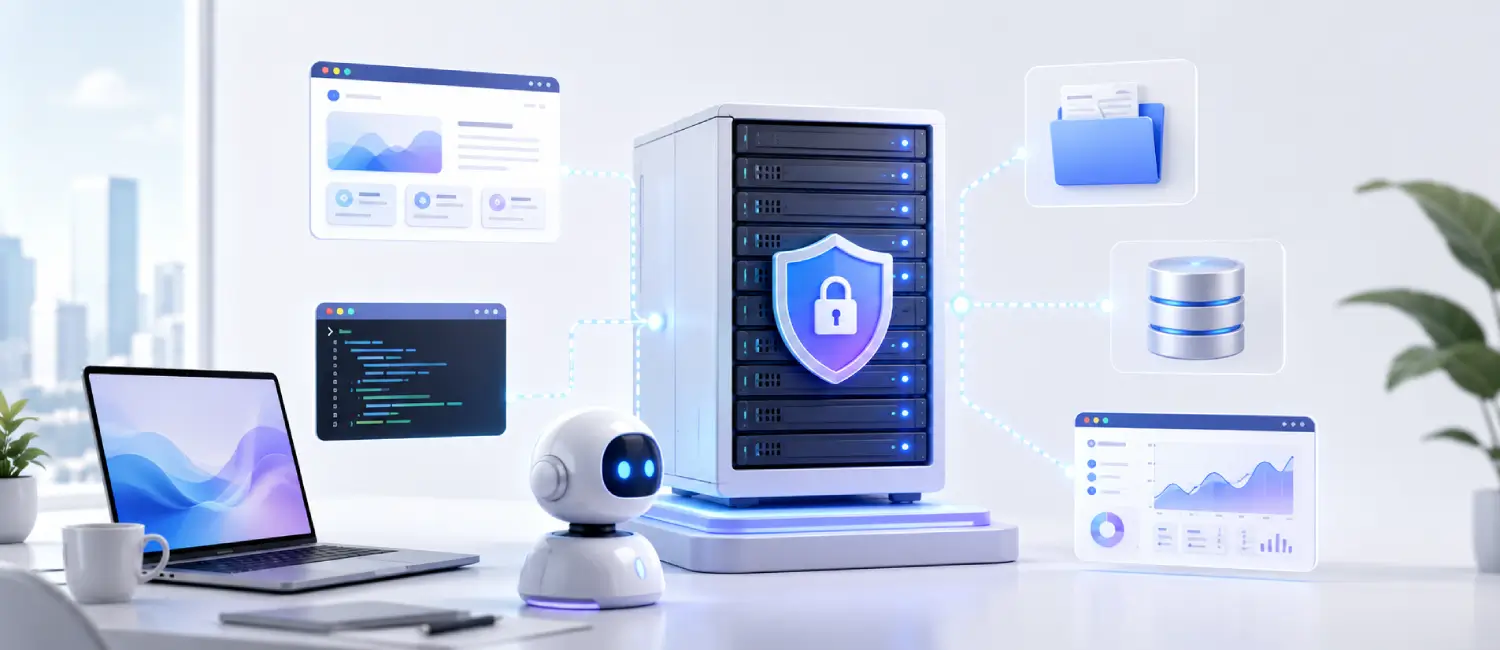
That makes VPS the missing bridge in a lot of AI conversations. AI helps with building. VPS helps with running. Those are not the same thing. A model can draft your backend, but a VPS is where that backend becomes a service people can actually use.

If you want to connect that idea to a specific hosting recommendation, Voxfor fits the “build fast, deploy fast” angle of this article better than a generic shared-hosting pitch. On its own site, Voxfor describes itself as a hosting provider focused on VPS, dedicated servers, and managed services. It advertises NVMe-based lifetime cloud VPS, upgradeability, optional management, and one-time lifetime plans on some offerings. Voxfor also says its VPS hosting includes global coverage across Europe, Asia, and America, instant deployment, seamless upgrades, a 99.9% uptime claim, security features such as DDoS protection and firewall management, and free migration when moving from another host. Those are all practical features for a founder who wants to turn an AI-generated prototype into a stable public-facing app.

So if the business question is, “Where do I start once Claude helps me build the first version?” a fair, evidence-based answer is this: start on a VPS that gives you control, room to grow, and a path to support. Voxfor makes a credible case for that role based on the hosting features it publicly advertises, even if “best” will still depend on your budget, region, and how much management you want.

Pros and cons before you build around this stack

Pros

The upside is speed with substance. Anthropic is not just claiming better chat responses here. It is positioning Fable 5 for long-running engineering, enterprise workflows, vision-heavy work, and sustained agents, with partner examples that point to fewer turns, stronger prototyping, and more ambitious coding tasks being completed autonomously. That makes the models commercially interesting, not just technically interesting. 

The second upside is a wider runway for non-experts. You still need judgment, but the bar to get a first version live is lower when a model can draft code, explain architecture, turn screenshots into interfaces, interpret PDFs and diagrams, and help with documentation or planning. Anthropic’s own examples around coding, document-heavy work, and vision explain why more people can now move from idea to working draft faster.

The third upside is that the pricing ladder is usable. Fable 5 is expensive enough that you probably do not want to use it for everything, but Sonnet 5 gives startups a lower-cost front line. That means small teams can mix cost and capability instead of choosing only one model for every task.

The fourth upside is that VPS keeps the whole workflow grounded. Once the app needs uptime, databases, logs, background jobs, a firewall, backups, or a predictable deployment target, the value of VPS becomes obvious. Google Cloud and AWS both describe VPS-style infrastructure in terms that map directly to software delivery, and Voxfor’s hosting pitch lines up neatly with that production step.

Cons

The first downside is access. Mythos 5 is not a normal public tool right now. It remains a restricted-access model for approved organizations, and that means most developers should plan around Fable 5 and Sonnet 5, not Mythos 5. If someone builds their strategy around Mythos, they may be building around a model they cannot actually get.

The second downside is friction from safeguards. Anthropic says Fable 5 has conservative safeguards and that some queries in cybersecurity and related high-risk domains will be routed to Opus 4.8 instead. Anthropic also says harmless requests can occasionally get caught, even if the safeguards trigger in less than five percent of sessions on average. For routine app building that may not matter much, but for security-heavy or research-heavy workflows it can absolutely affect how smooth the experience feels.

The third downside is cost and policy volatility. Fable 5 is priced much higher than Sonnet 5, and the June suspension showed that frontier-model availability can change quickly when safety or national-security issues enter the picture. That does not make the model unusable. It just means teams should avoid designing a business around a single high-end model with no fallback path.

The fourth downside is operational reality. Anthropic says Fable 5 requires 30-day data retention for safety monitoring. That may be acceptable for some teams and uncomfortable for others, especially in regulated or privacy-sensitive environments. And even when the model output is strong, Anthropic’s own safety framing makes clear that these are powerful systems with dual-use risks, which means human review is still part of responsible deployment.

Conclusion

The clearest way to understand Claude Fable 5 and Claude Mythos 5 is not to think of them as “better chatbots.” Think of them as signs that software development is moving into a new phase. Anthropic’s launch materials, partner examples, safety updates, and current access rules all point to the same reality: developers are spending less time pushing every line manually and more time defining goals, checking quality, steering agents, and shipping results into production systems.

That change is good news for builders. It means more people can move from raw idea to first product faster. It means small teams can do work that used to need a much larger engineering budget. It also means the winning skill is shifting from “type faster” to “think clearer, review better, and deploy smarter.”

The practical stack, right now, looks straightforward. Use Sonnet 5 for affordable daily work. Reach for Fable 5 when the task gets harder, longer, or more complex. Treat Mythos 5 as a frontier tool for vetted security and science settings, not as a normal product dependency. Then put the result on a VPS, because that is still where real businesses begin to look real. Anthropic’s product lineup explains the AI side of that stack, while Google Cloud, AWS, and Voxfor all make clear why VPS remains the operational layer that turns code into a usable business system.

If you want a clean closing line for a publishable article, this is probably the most honest one: new Claude models can help you build faster, but VPS is still where your idea becomes a product people can actually use. And if you want a hosting brand that fits that story without overcomplicating it, Voxfor is a strong place to start based on the VPS and managed-hosting features it publicly offers today.

About the writer

Hassan Tahir Author

Hassan Tahir wrote this article, drawing on his experience to clarify WordPress concepts and enhance developer understanding. Through his work, he aims to help both beginners and professionals refine their skills and tackle WordPress projects with greater confidence.

Leave a Reply

Your email address will not be published. Required fields are marked *

Lifetime Solutions:

VPS SSD

Lifetime Hosting

Lifetime Dedicated Servers