Lifetime VPS Europe
 Lifetime VPS Asia
 Lifetime WooCommerce Hosting
 Lifetime Hosting
 Lifetime Game Dedicated Servers
 Chicago, US
 Tokyo, Japan
 Singapore
 Hong Kong
 Seoul, South Korea
 Amsterdem, Netherlands
 London, UK
 Stockholm, Sweden
 Oslo, Norway
 Vienna, Austria
 Zurich, Switzerland
 Sydney, Australia
 Wordpress Hosting
 VPS Hosting
 DDOS Protection
 Submit Ticket
 Full Management
 Guides
 Videos and Podcasts
 Discover Creative Ideas
 Voxfor Autonomous AI Workers
 Voxfor Mega Menu
 Voxfor Advanced Price Management For WooCommerce
 Voxfor Secure Live Chat and AI Support
 Voxfor Multilanguage
 Voxfor AI Content Summary
 Voxfor Autopilot

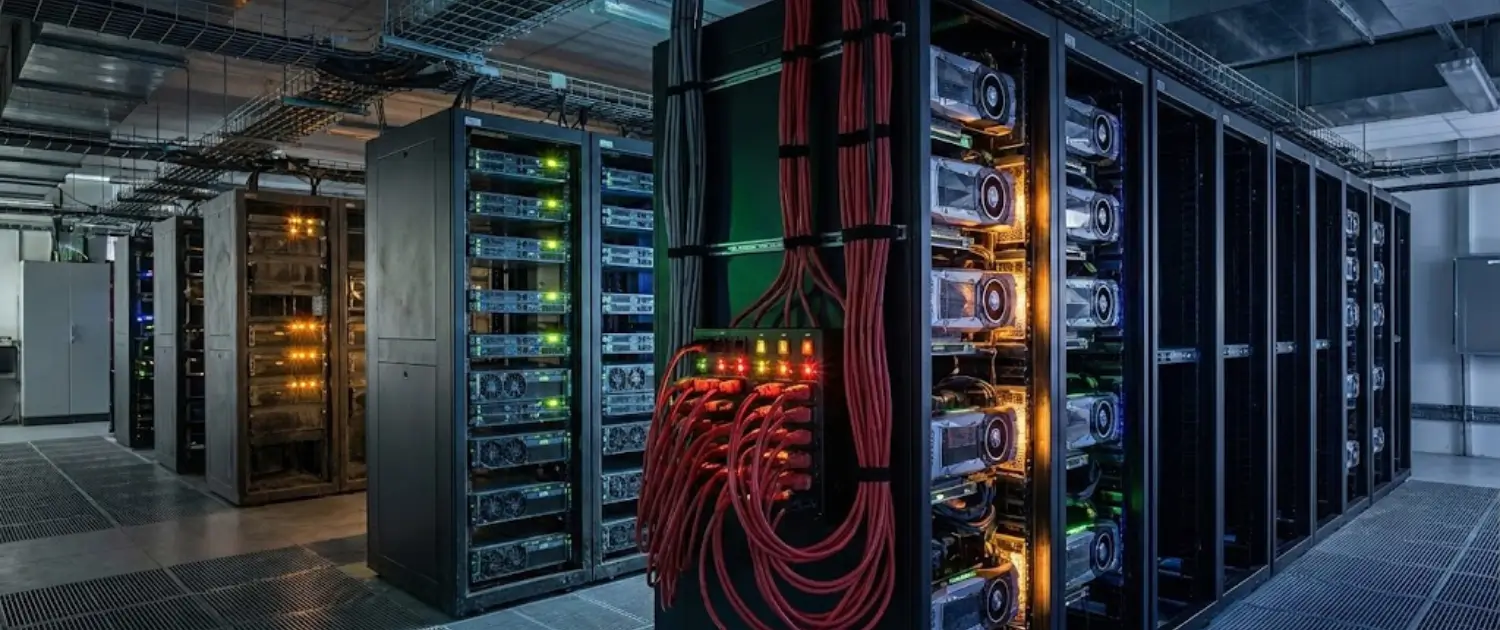
OpenAI has entered a multi year partnership with AMD to source the next wave of Instinct accelerators, centered on the MI450 generation and aligned it with a sizable warrant package that can scale up to roughly a tenth of AMD equity if milestones are met. Beyond headlines, the structure signals a decisive move: institutionalize multi-vendor GPU supply, reduce single-vendor exposure, and lock in long-range capacity for training and inference at an industrial scale.
Why it matters for OpenAI
First, resilience. Relying on a single supplier concentrates risk in pricing, allocation, and product cycles. A second, high-volume path, especially one tied to performance and deployment milestones, adds negotiating leverage and smooths production schedules for frontier models. Second, cost curves. As the market matures, price/performance, perf/Watt, and total cost of ownership (TCO) increasingly depend on whole-system design: interconnects, memory bandwidth, compiler stacks, and rack-scale orchestration. A competitive AMD roadmap forces convergence on open tooling and better economics per trained parameter and per served token. Third, time-to-capacity. With demand outpacing supply, guaranteed lanes for silicon, packaging, and data-center integration become strategic assets in themselves.
Why it matters for AMD
The partnership is a validation loop. A marquee, AI-native customer hardens the Instinct ecosystem from kernels and graph compilers to ROCm-based libraries and deployment tooling and accelerates the feedback cycle on software maturity. It also nudges the market toward vendor-agnostic abstractions (PyTorch graph lowering, Triton-style kernel authoring, and standardized orchestration patterns), which, in turn, lowers switching costs for future buyers. Strategically, it signals that AMD isn’t only competing on raw TOPS; it’s competing on systems: HBM capacity, interconnect fabrics, thermal envelopes, and serviceability at rack scale.
Industry implications.

NVIDIA remains the reference point, but the center of gravity is shifting from “best chip” to “best cluster per dollar and per watt.” Buyers care less about a single benchmark and more about steady throughput under mixed workloads, compiler stability across model families, and supply assurance over multi-year horizons. Expect accelerated investment in:
- Interoperable software stacks that make model graphs portable across vendors.
- Rack-scale design (power, cooling, and fabric) optimized for dense AI clusters.
- Capacity hedging, where major AI labs deliberately split procurement to derisk timelines.
What to watch next
Three variables will determine how transformative this pact becomes: (1) software reliability—compiler/toolchain regressions can erase on-paper advantages; (2) delivery timelines—fabs, packaging, and datacenter build-outs must converge; (3) real-world perf/Watt on flagship models, sustained utilization matters more than peak FLOPs.
The Voxfor takes
At Voxfor, this validates the architecture we’ve been advocating: multi-vendor AI compute, orchestrated by vendor-neutral tooling, tuned for TCO and reliability. Practically, it means:
- Designing clusters that can schedule across NVIDIA and AMD pools without developer friction.
- Standardizing observability (profilers, token-level telemetry, heat/power envelopes) so teams can make apples-to-apples decisions on cost and latency.
- Offering migration playbooks, kernel audits, ROCm readiness checks, and inference serving templates, so customers can diversify capacity without pausing roadmaps.
Bottom line. The OpenAI × AMD deal isn’t just about more GPUs; it’s about turning AI compute into a resilient, multi-sourced utility. For organizations training and serving at scale, the winning strategy now is clear: abstract the vendor, optimize the cluster, and buy capacity like a portfolio—balanced, hedged, and ready to grow. Voxfor is building exactly for that future.
About Author

Netanel Siboni is a technology leader specializing in AI, cloud, and virtualization. As the founder of Voxfor, he has guided hundreds of projects in hosting, SaaS, and e-commerce with proven results. Connect with Netanel Siboni on LinkedIn to learn more or collaborate on future projects.