Lifetime VPS Europe
 Lifetime VPS Asia
 Lifetime WooCommerce Hosting
 Lifetime Hosting
 Lifetime Game Dedicated Servers
 Chicago, US
 Tokyo, Japan
 Singapore
 Hong Kong
 Seoul, South Korea
 Amsterdem, Netherlands
 London, UK
 Stockholm, Sweden
 Oslo, Norway
 Vienna, Austria
 Zurich, Switzerland
 Sydney, Australia
 Wordpress Hosting
 VPS Hosting
 DDOS Protection
 Submit Ticket
 Full Management
 Guides
 Videos and Podcasts
 Discover Creative Ideas
 Cybersecurity Services
 Voxfor Mega Menu
 Voxfor Advanced Price Management For WooCommerce
 Voxfor Secure Live Chat and AI Support
 Voxfor Multilanguage
 Voxfor AI Content Summary
 Voxfor Autopilot

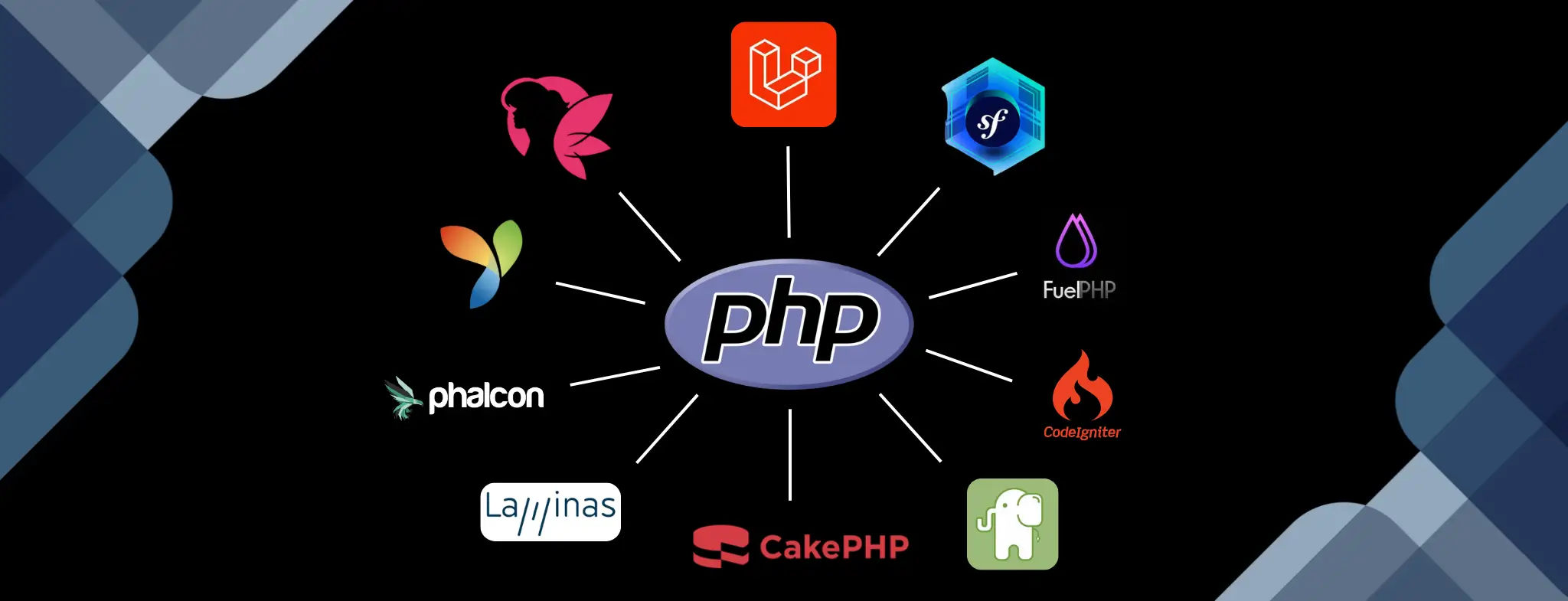
Laravel is the most popular PHP framework on the market, with 75 percent, and is supported by elegant syntax and a large ecosystem. Symfony controls business applications that are based on a solid architecture. CodeIgniter is also perfect in that it has a soft learning curve and is aimed at beginners. Phalcon (C-based) is 2X faster to execute to achieve peak performance. Depending on your project size, Laravel is favored in a startup, Symphony in an enterprise, and Slim or Lumen in API-driven ones.
Inbound Marketing Strategy
Turn technical readers into inbound marketing growth
Helpful tutorials attract qualified visitors, but reliable hosting keeps those readers engaged. Voxfor VPS gives growing websites the speed, uptime, and control needed to support stronger inbound marketing campaigns.
Key Decision Factors: The size of the project, knowledge of the team, performance needs, community support and long-term maintenance needs.
Why PHP Frameworks Matter in 2026

The PHP language remains the most dominant server-side programming language on the internet, with 77 percent of all sites on the internet being driven by it. This has been made possible by a long-term success due to the rich ecosystem of contemporary frameworks provided by PHP, which facilitates development, better security, and reduces time-to-market.
Modern PHP frameworks provide structured architecture, reusable components, and built-in security tools that reduce development time by 40-60% compared to building from scratch. They enforce best practices, facilitate team collaboration, and ensure code maintainability across the application lifecycle.
Here, we discuss the 10 current, popular, and marketable PHP frameworks that all developers would need to learn in 2026. All framework analyses will contain an overview, target audience, key features, pros/cons and official documentation links.
Framework Comparison Table: At-a-Glance Overview
| Framework | Release Year | Architecture | Best For | Learning Curve | Performance | Market Share |
|---|---|---|---|---|---|---|
| Laravel | 2011 | MVC | Full-stack web apps | Easy (1-3h) | Good | 75% |
| Symfony | 2005 | Component-based | Enterprise apps | Steep (2-8h) | Excellent | 15% |
| CodeIgniter | 2006 | MVC (loose) | Beginners/prototypes | Very Easy (1-2h) | Very Good | 5% |
| CakePHP | 2005 | MVC | Rapid development | Easy (2-4h) | Good | 3% |
| Yii | 2008 | MVC/Component | High-performance apps | Moderate (3-5h) | Excellent | 4% |
| Laminas | 2006 | Component-based | Enterprise/custom | Steep (4-8h) | Excellent | 2% |
| Phalcon | 2012 | MVC (C ext.) | High-traffic/APIs | Moderate (3-6h) | Outstanding | 1% |
| Slim | 2010 | Micro-framework | APIs/microservices | Easy (2-3h) | Excellent | 6% |
| FuelPHP | 2011 | HMVC | Modular apps | Moderate (3-5h) | Good | <1% |
| PHPixie | 2012 | HMVC | Read-heavy/websites | Easy (1-2h) | Very Good | <1% |
1. Laravel: The Developer’s Choice for Modern Web Applications
What Is Laravel?
Laravel is an open-source PHP framework created by Taylor Otwell in 2011, designed as a “framework for web artisans.” It follows the MVC (Model-View-Controller) architectural pattern with emphasis on elegant syntax, expressive code, and developer happiness.
Market Position: Laravel commands a 75 percent market share of the PHP frameworks with its community of over 2+ million developers around the world.
Who Should Use Laravel?
- Startups building MVPs rapidly
- Small to medium businesses
- Content-focused platforms
- API-first applications
- Teams prioritizing developer experience
Key Features and Advantages
- Eloquent ORM
- Blade Templating Engine
- Artisan CLI
- Laravel Ecosystem: Forge, Vapor, Nova, Horizon, Sanctum, Passport, Livewire
- Built-in Features: Authentication, events, queues, storage abstraction, cache management
Pros
✅ Extensive documentation
✅ Massive ecosystem
✅ Active community
✅ Modern PHP practices
✅ Enterprise-ready options
✅ Regular updates
Cons
❌ Moderate learning curve
❌ Performance overhead compared to micros
❌ Opinionated structure
Official Resources
2. Symfony: Enterprise-Grade PHP Framework
What Is Symfony?
Symfony is a mature, high-performance PHP framework released in 2005, used for flexibility and enterprise capabilities. Powers Drupal, Magento, Laravel (components), and more.
Market Position: Components used by 30+ million PHP apps.
Who Should Use Symfony?
- Enterprise organizations
- Large-scale web apps
- Mission-critical systems
- Custom architecture needs
- Teams experienced in design patterns
Key Features and Advantages
- Modular component system
- Twig templating engine
- Profiler & debug toolbar
- Doctrine ORM
- Symfony Flex
- Long-term support (LTS)
Pros
✅ Enterprise-proven
✅ Excellent documentation
✅ Component reusability
✅ Professional support
✅ Strong community
✅ LTS stability
Cons
❌ Steep learning curve
❌ Complex configuration
❌ Verbose syntax
Official Resources
PHP Framework Performance Benchmarks
| Framework | Requests/Second | Memory Usage (MB) | Avg Response Time (ms) |
|---|---|---|---|
| Phalcon | 3,200 | 0.5 | 15 |
| CodeIgniter 4 | 2,100 | 1.2 | 23 |
| Slim 4 | 1,950 | 1.0 | 25 |
| Yii 2 | 1,800 | 2.1 | 28 |
| Laravel 11 | 1,200 | 3.5 | 42 |
| Symfony 7 | 1,100 | 3.2 | 45 |
| CakePHP 5 | 950 | 2.8 | 53 |
Source: TechEmpower Framework Benchmarks
Frequently Asked Questions (FAQs)
Additional Resources
Official Documentation
- Laravel Docs
- Symfony Docs
- PHP Manual
- CodeIgniter User Guide
- CakePHP Docs
- Yii Guide
- Laminas Docs
- Phalcon Docs
- Slim Docs
- FuelPHP Docs
Community & Learning
Conclusion: Choosing Your PHP Framework Path
The PHP space provides structures to meet all requirements. The choice of the best one will be based on the project, the group of people and the need. Use the tables, decision matrix and FAQs above to make a strategic decision that suits your interests in 2026 and beyond.
About the writer

Hassan Tahir wrote this article, drawing on his experience to clarify WordPress concepts and enhance developer understanding. Through his work, he aims to help both beginners and professionals refine their skills and tackle WordPress projects with greater confidence.