 Lifetime VPS Europe
 Lifetime VPS Asia
 Lifetime WooCommerce Hosting
 Lifetime Hosting
 Lifetime Game Dedicated Servers
 Chicago, US
 Tokyo, Japan
 Singapore
 Hong Kong
 Seoul, South Korea
 Amsterdem, Netherlands
 London, UK
 Stockholm, Sweden
 Oslo, Norway
 Vienna, Austria
 Zurich, Switzerland
 Sydney, Australia
 Wordpress Hosting
 VPS Hosting
 DDOS Protection
 Submit Ticket
 Full Management
 Guides
 Videos and Podcasts
 Discover Creative Ideas
 Cybersecurity Services
 Voxfor Mega Menu
 Voxfor Advanced Price Management For WooCommerce
 Voxfor Secure Live Chat and AI Support
 Voxfor Multilanguage
 Voxfor AI Content Summary
 Voxfor Autopilot
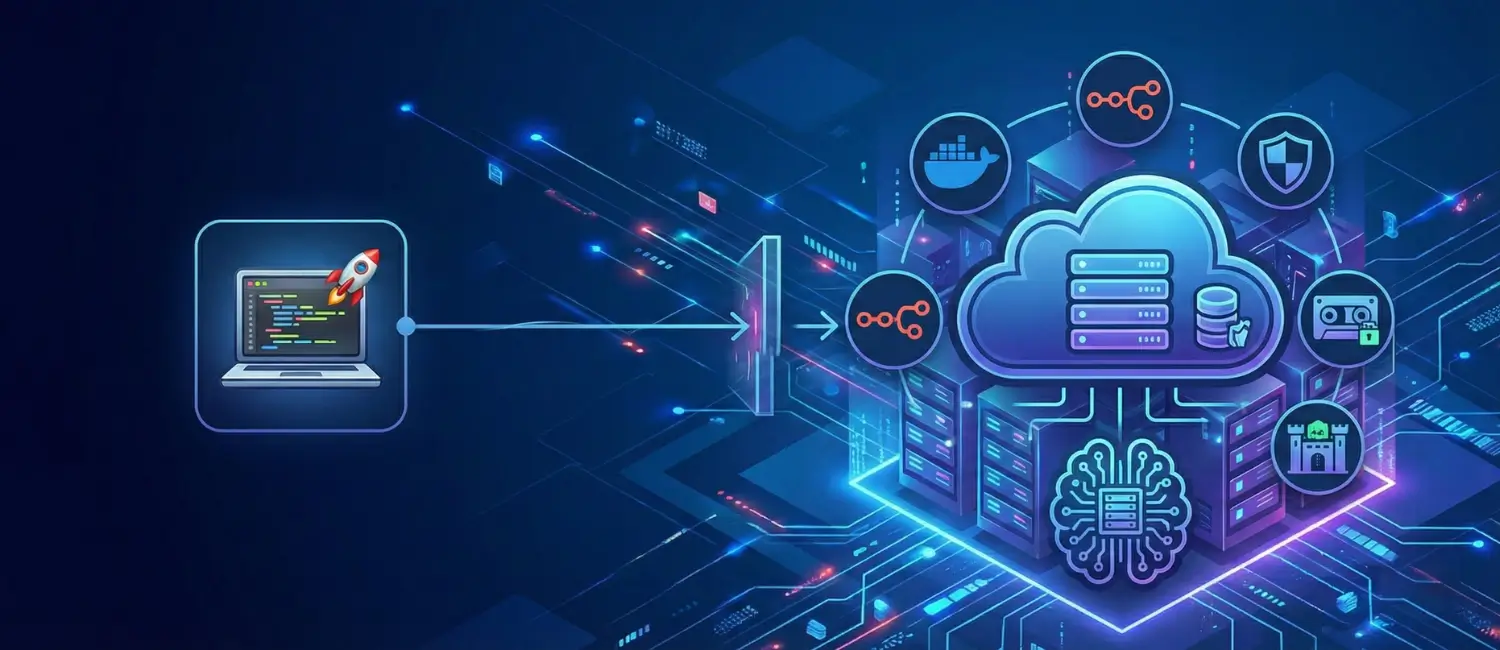
A managed cloud VPS strategy helps an AI MVP move from a local demo to a service real users can reach. The important work is not only choosing compute. It is deployment, secrets, availability, logs, backups, monitoring, security and handoff.
This guide focuses on what a first production engagement should actually deliver: a repeatable deploy path, protected secrets, visible errors, backups, rollback and a handoff the team can operate.
Production Readiness Scorecard
| Area | Ready when |
|---|---|
| Deployment | A repeatable command or pipeline can deploy from a known commit. |
| Secrets | Keys are protected and separated by environment. |
| Access | SSH users, firewall and admin permissions are controlled. |
| Monitoring | Errors, availability and resource usage are visible. |
| Backup | Data and config can be restored. |
| Rollback | A bad release can be reversed. |
First 30 Days of a Managed VPS Engagement
| Phase | Deliverable |
|---|---|
| Discovery | Scope, access, app architecture and risk review. |
| Build | Server setup, runtime, reverse proxy, SSL and deploy path. |
| Stabilize | Logs, monitoring, backup and basic load checks. |
| Handoff | Runbook, credentials cleanup and next-step backlog. |
What Managed Should Mean
Managed should mean there is a named scope: server setup, deployment path, SSL, firewall, backups, monitoring, documentation and support boundaries. It should not mean every product, code or data problem is automatically solved.
For AI MVPs, managed help is valuable when founders or product teams need to keep building while infrastructure is made repeatable.
When a VPS Is Not Enough
Some AI products need more than a single VPS. Heavy local model inference, high concurrency, strict compliance, low-latency global traffic or large vector workloads may need GPU infrastructure, managed databases, queues or multi-server architecture.
A good strategy names those limits early so the MVP does not launch on infrastructure it will immediately outgrow.
Handover Checklist
| Item | Why it matters |
|---|---|
| Deployment runbook | Future releases do not depend on memory. |
| Backup location | Restores can be tested. |
| Monitoring links | Issues can be seen quickly. |
| Access list | Old credentials can be removed. |
| Known limits | Team understands what still needs architecture work. |
Recommended Next Step
Before buying infrastructure, write down the MVP workflow, traffic expectation, data sensitivity, model provider, deployment method and failure tolerance. Then choose a VPS strategy that can be operated, not just launched.
How to Scope an AI MVP Production Move
Use this page to scope the move from localhost to a managed cloud VPS. The useful question is whether the MVP has a real workflow, real users, data sensitivity, deploy process, failure tolerance and owner after launch.
For an AI MVP, avoid treating “it works locally” as a launch plan. Check the repo, runtime, environment variables, model provider, database, queues, SSL, backups, monitoring, rollback path and support boundaries before inviting users.
AI MVP Questions Before You Commit
- Which MVP workflow must run in production, and what output proves it is working?
- Which repo, framework, database, model API, queue, webhook, domain and deployment tools are involved?
- What SSH access, DNS access, env variables, API keys, database access, logs and backup details are required?
- What should happen if deploy fails, jobs queue up, the model API errors, data migration breaks or rollback is needed?
- Who will monitor logs, rotate keys, deploy updates, test backups and handle support after launch?
AI MVP Production Risk Controls
| Risk | Control |
|---|---|
| Unclear production scope | Define runtime, database, model provider, queues, secrets, domain, backups and monitoring before calling the MVP production-ready. |
| Production breakage | Use staging, backups, release tags, migration checks and rollback notes before changing live app behavior or data. |
| Hidden ownership gaps | Document repository access, env files, API keys, monitoring links, backup location, handoff steps and support boundaries. |
| Wrong success metric | Measure successful jobs, availability, error rate, response time, rollback speed, API spend and support tickets. |
What a Good Outcome Looks Like
A good outcome is specific and observable. The AI MVP should be easier to operate, easier to troubleshoot and safer to change. The team should know what changed, why it changed, where the backup lives, which links or dashboards matter, and what should be checked after the next update.
If the work is customer-facing, review it from the visitor's point of view as well as the administrator's point of view. A technically correct setup can still fail if the page is confusing, the checkout path is unclear, the lead form is too broad, or the server location does not match the real audience.
Post-Launch Verification
After the change goes live, verify the public URL, metadata, links, forms, checkout paths, logs and any dashboards that prove the work is functioning. For WordPress and WooCommerce pages, also check that Gutenberg blocks are balanced, Rank Math title and description are intentional, and old risky claims did not remain in cached content.
- Open the public URL in a fresh browser session and confirm the visible title and first screen match the new intent.
- Check every important internal link and any authoritative external source link.
- Confirm the primary CTA leads to the correct Voxfor service or plan page.
- Review analytics, logs or conversion tracking after launch instead of assuming the edit worked.
- Keep the backup path and update script with the article record so rollback is possible.
Related Voxfor Resources
- Cloud VPS hosting
- Managed vs unmanaged VPS hosting
- AI Agent VPS hosting
- Auto deploy GitHub projects to a VPS
Frequently Asked Questions
Why does an AI MVP need managed VPS planning?
Because a working local demo still needs availability planning, deployment, secrets, logs, backups and security before real users depend on it.
Can one VPS run every AI MVP?
No. API-based MVPs often fit one VPS, while heavy inference, high traffic or strict compliance may need more architecture.
What should be ready before moving an AI MVP to production?
The team should know the deploy command, runtime, environment variables, model API, database, domain, SSL path, backup location, monitoring links, rollback plan and who owns incidents after launch.
When is one VPS not enough for an AI MVP?
One VPS may not be enough when the product needs heavy local model inference, high concurrency, strict compliance, multi-region latency, managed databases, queues, GPU resources or separate worker infrastructure.
What should be delivered after setup?
A working deployment, SSL, access controls, backups, monitoring, logs, runbook and clear support boundaries.